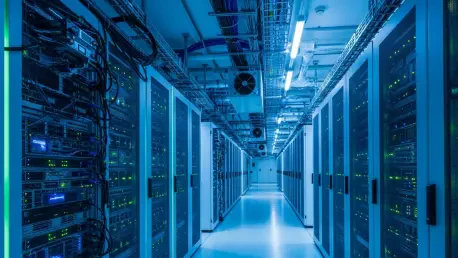

The sheer volume of capital currently flowing into specialized real estate highlights a fundamental transition where digital intelligence is no longer just software but a massive physical industrial complex. Major hyperscalers have aggressively committed to long-term lease agreements to ensure they possess the necessary floor space and cooling capacity for next-generation hardware. This $850 billion commitment represents a definitive bet on the longevity of the current technological cycle, suggesting that the demand for large language models and generative applications remains insatiable. Unlike previous cycles where infrastructure followed demand, the current environment sees corporations securing capacity years in advance to avoid being locked out. This creates a dynamic where the availability of physical transformers and power grids becomes the primary bottleneck for innovation. The scale of these deals has reshaped the real estate landscape, turning data centers into the most valuable assets in property portfolios.
Scaling Infrastructure for Artificial Intelligence
Architectural Evolution: High-Density Cooling
Designing facilities to accommodate the thermal output of modern processing units required a complete overhaul of traditional cooling methodologies and structural engineering standards. Liquid cooling systems, once reserved for niche supercomputing applications, have now become the baseline requirement for these massive lease agreements. Hyperscalers are demanding facilities capable of supporting over 100 kilowatts per rack, a figure that dwarfs the 10 kilowatts standard only a few years ago. This transition has forced developers to reconsider site selection, prioritizing proximity to high-voltage transmission lines and reliable water sources rather than traditional fiber optic hubs. Furthermore, the structural integrity of these buildings must now account for the immense weight of fluid-filled cooling systems and dense hardware arrays. Consequently, the leases signed reflect a premium for sites that offer immediate scalability without requiring extensive retrofitting of existing electrical infrastructure.
Strategic Expansion: The Megascale Campus
Strategic partnerships between cloud providers and specialized real estate investment trusts have facilitated a rapid expansion that bypasses traditional bureaucratic delays in urban construction. By securing multi-decade leases, tech giants provide the necessary collateral for developers to break ground on massive campus projects that often exceed several million square feet. These megascale campuses act as sovereign digital territories, equipped with private substations and dedicated security perimeters to protect proprietary hardware. The contractual nature of these agreements has also shifted, with many contracts now including first right of refusal for adjacent land and future power allocations. This ensures that a single provider can dominate a local geographic zone, creating a cluster effect that attracts further ancillary tech services. The sheer momentum of this construction cycle suggests that the physical footprint of the cloud will continue to expand, driven by the computational needs of neural networks.
Financial and Environmental Growth Factors
Resource Management: Energy and Grid Stability
Securing the electricity needed to run these massive installations has become as critical as the hardware itself, leading to unprecedented deals between tech firms and utility providers. Many of the leases finalized this year are contingent upon the development of dedicated renewable energy projects, such as solar farms or small modular nuclear reactors. This move toward energy independence is a response to the strain that massive data centers place on local municipal grids, which were never designed to handle such concentrated loads. In some jurisdictions, the massive energy demand has led to a moratorium on new construction, making existing leases and permitted sites even more valuable. Companies are now employing advanced grid-interactive technologies that allow data centers to act as massive batteries, shedding load or feeding power back into the system during peak demand hours. This sophisticated interplay highlights how infrastructure is reinventing the entire global energy ecosystem.
Strategic Implementation: Modular Ecosystems
The transition toward a hardware-centric AI economy demanded that executives prioritize physical supply chain resilience over traditional software development cycles. Decision-makers recognized that securing long-term leases was only the first step in a broader strategy that involved deep integration with energy grids and local governments. Moving forward, companies adopted a more decentralized approach to data center placement to avoid single points of failure in power or connectivity. They also invested heavily in modular data center designs that allowed for rapid deployment in emerging markets where digital infrastructure was previously lacking. These steps proved essential for maintaining a competitive edge as the global race for computational supremacy intensified. Leaders who successfully balanced the need for aggressive expansion with the realities of environmental constraints set the standard for growth. The focus shifted from building larger facilities to creating more intelligent, self-sustaining ecosystems.