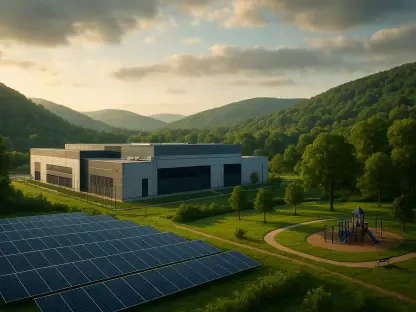

The rugged coastlines of Scotland are no longer defined solely by their historical maritime industries but are now becoming the epicenter of a massive six-billion-dollar technological shift that promises to redefine the region as a primary hub for green artificial intelligence operations across the European continent. This monumental investment aims to capitalize on the unique environmental conditions of the North, where the natural ambient temperature provides a significant reduction in the cooling costs that typically plague high-density computing environments. As global demand for AI processing power continues to escalate, the requirement for sustainable solutions has moved from a corporate preference to a logistical necessity. Scotland’s existing renewable energy infrastructure, particularly its extensive offshore wind farms, offers a direct pipeline of carbon-neutral power. By anchoring these facilities here, developers are betting on a future where the carbon footprint of digital intelligence is minimized.
Optimizing High-Performance Computing: Natural Resource Integration
Thermal Management: Geographic Efficiency and Airflow
The implementation of massive data clusters requires a sophisticated approach to thermal management, especially when dealing with the high-wattage GPUs currently dominating the market for large language model training and real-time inference. Scotland’s geographic positioning provides an inherent advantage by allowing operators to use ambient air cooling for the majority of the calendar year, which drastically lowers the power usage effectiveness ratio of these facilities. This natural cooling capability allows for higher rack densities than are feasible in warmer climates, enabling the deployment of liquid-cooled systems that can handle the extreme heat output of modern AI accelerators without the massive energy drain of traditional air conditioning. Furthermore, the availability of freshwater resources in certain Highland regions provides an additional layer of heat rejection capacity that ensures peak performance during the rare periods of warmer weather. Building on this environmental foundation, the project leverages specialized architectural designs that maximize airflow.
The integration of high-capacity networking with decentralized edge computing nodes allows for a more distributed and efficient architecture, reducing the load on central grids while providing faster response times for end-users. This strategic placement ensures that the six-billion-dollar investment translates into a high-performance environment capable of supporting the most demanding computational tasks. Furthermore, the proximity to robust subsea fiber-optic cabling networks establishes Scotland as a vital gateway for transatlantic and continental data flow. These connections ensure that the latency issues often associated with remote data centers are minimized, making the region a viable alternative to established hubs like London or Dublin. This infrastructure is not just about raw speed but also about the reliability of the connection, which is paramount for enterprises running mission-critical AI applications that require constant uptime and high-bandwidth data transfers for modeling.
Sustainable Power: Grid Stability and Storage Solutions
One of the most compelling aspects of this development is the direct integration with Scotland’s vast offshore wind reserves, which allows the data center to bypass much of the traditional national grid congestion. By utilizing power purchase agreements that tie the facility directly to renewable generation sites, the project ensures a consistent supply of clean energy while providing a stable demand base for wind farm operators. This relationship creates a circular economic model where the growth of the technology sector directly funds the expansion of renewable energy capacity, leading to a more robust and sustainable power grid for the entire nation. Additionally, the inclusion of on-site battery energy storage systems allows the facility to manage the variability of wind power, storing excess energy during peak production periods and discharging it when the wind dies down. This capability not only secures the data center’s operations but also provides frequency response services to the national grid.
Stakeholders prioritized the long-term viability of the region by establishing comprehensive frameworks for heat reuse and workforce transition that moved beyond simple infrastructure construction. The project successfully repurposed waste heat from the server halls to support local district heating schemes, proving that industrial-scale computing could provide tangible benefits to nearby residential communities. Educational initiatives were launched in collaboration with technical colleges to ensure that local workers possessed the necessary skills to maintain liquid-cooling systems and advanced neural networking hardware. These actions transformed the facility from a mere data warehouse into a central pillar of the local economy and a model for future green developments. The strategy focused on deeply integrating technology with the natural and social fabric of the region, ensuring that the transition to a high-tech future was both profitable and responsible for the environment.