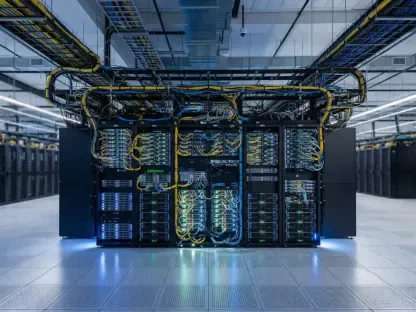

The relentless pouring of capital into massive data centers and high-end silicon has reached a fever pitch, creating a landscape where the sheer scale of investment dwarfs the tangible economic output currently realized by the global enterprise sector. As we navigate 2026, the gap between infrastructure spending and productivity gains has widened significantly, prompting a necessary reevaluation of how digital value is measured. While tech giants continue to deploy trillions into specialized hardware, the actual returns for most organizations remain fragmented and elusive. This discrepancy suggests that a significant market recalibration may be approaching, as financial institutions observe a growing tension between hype and harvest.
Research from global firms underscores that the value gap is no longer just a theoretical concern but a mathematical reality. For current infrastructure investments to break even, the industry needs to see growth rates that far exceed current benchmarks. However, this leaves over a trillion dollars in value that must be generated from as-yet-unidentified sources of economic utility. This situation forces a shift toward more disciplined investment patterns where every dollar spent must be tied to a definitive business outcome rather than speculative potential.
Examining the Disconnect Between AI Spending and Productivity
The current surge in capital expenditure has been largely driven by the belief that generative models will almost immediately revolutionize every aspect of white-collar work. While there have been successes in niche areas, the broader enterprise sector has yet to see the massive surge in GDP-level productivity that was initially predicted. This disconnect is primarily due to the complexity of integrating these models into existing legacy systems and the high costs associated with maintaining them at scale.
Furthermore, the structural integrity of the current boom is heavily dependent on the internal cash flows of a few dominant technology companies. While this provides a temporary buffer against a total collapse, it creates a top-heavy market where the failure of a single major player to hit revenue targets could trigger a broader sell-off. Organizations must recognize that the stability of the infrastructure layer is not guaranteed, especially as smaller providers begin to feel the pressure of high debt and thinning margins.
Why Proactive Infrastructure Evaluation Is Essential
Understanding the health of the AI market is critical for ensuring long-term business continuity and financial stability in an increasingly volatile environment. Following best practices in infrastructure evaluation allows organizations to mitigate the risks associated with supplier instability and unpredictable pricing. Preparation in this area is not merely defensive; it is a strategic requirement for any firm that relies on machine learning as a pillar of its service delivery.
Enhanced operational resilience is a primary benefit of this proactive approach, as preparing for vendor shifts prevents sudden service interruptions that could damage a company’s reputation. Avoiding the trap of over-investing in unproven use cases preserves the capital necessary to weather a potential downturn or to pivot toward more stable technologies. Maintaining a clear view of market health allows firms to pivot before a correction occurs, ensuring they remain agile enough to capitalize on new opportunities when the competitive landscape shifts.
Best Practices for Navigating AI Market Volatility
To survive a potential market correction, enterprises must move beyond speculative investment and adopt a structured, risk-aware approach to AI adoption. The transition from experimentation to industrial-scale application requires a rigorous framework that prioritizes financial transparency and operational flexibility. By moving toward a more disciplined investment model, businesses can ensure that their technological foundations remain secure regardless of broader economic fluctuations.
Monitor Vendor Financial Health and Revenue Integrity
Organizations should scrutinize the financial foundations of their AI providers to ensure they are not over-reliant on circular financing or unsustainable debt. This involves a deep analysis of how a vendor recognizes revenue and whether their growth is supported by actual customer demand or merely by venture capital infusions. Transparency in these financial dealings is a key indicator of a partner’s long-term viability in a tightening market.
A close look at emerging compute providers reveals that reliance on customer prepayments and outside venture capital often signals high vulnerability during a market downturn. Case studies of secondary hyperscalers show that those operating without internal cash flow are susceptible to liquidity crises when the initial hype surrounding a technology begins to fade. Limiting dependency on these high-risk entities is a critical step in protecting the enterprise from the ripple effects of localized failures.
Implement Comprehensive AI Exit Strategies
Enterprises must develop exit plans that allow them to migrate workloads and data if a primary AI vendor faces insolvency or discontinues a critical service. These strategies are essential for maintaining control over intellectual property and ensuring that vital business processes can continue even if the underlying infrastructure is disrupted. Technical modularity and the use of portable data formats are the cornerstones of a successful migration strategy that protects the company from vendor lock-in.
By simulating a scenario where a key large language model provider ceases operations within 12 months, a global firm can successfully map out the costs and logistics of migration. This stress-testing process helps identify potential bottlenecks in the transition and allows for the development of a pre-approved response plan. Having such a strategy in place reduces the panic and financial loss that typically accompany the sudden failure of a major technology partner.
Focus on Transformative Utility Over Marginal Gains
To bridge the value gap, businesses must prioritize AI applications that redefine operations rather than those that offer only minor improvements in individual employee speed. The era of low-hanging fruit has passed, and the next phase of growth will be defined by the ability to integrate automation into the fabric of business logic. This requires a move toward autonomous workflows that can operate at scale without constant human intervention.
A financial services company moved from basic generative AI assistants to fully integrated autonomous auditing systems, achieving a measurable ROI that justified their long-term commitments. This transition showed that the real value of AI lies in its ability to handle complex, high-stakes tasks that were previously impossible to automate. By focusing on these high-impact projects, organizations can demonstrate a clear financial justification for their continued technological investment.
Final Evaluation: Preparing for the Inevitable Recalibration
The path toward a sustainable AI market necessitated a departure from the unchecked spending that characterized earlier growth phases. Leaders who succeeded in this environment adopted a dual-track strategy of aggressive implementation paired with defensive risk management. They integrated stress testing directly into their procurement cycles, ensuring that every new partnership was evaluated for its long-term financial viability. This disciplined approach transformed the way organizations viewed digital transformation, moving it from a speculative bet to a core engineering requirement.
Ultimately, the recalibration underscored the importance of technical flexibility and the need for standardized data formats that facilitate movement between diverse platforms. By focusing on utility and maintaining clear exit paths, the industry ensured that the AI revolution survived its first major financial test. This period of correction eventually paved the way for more stable growth, as the market rewarded companies that prioritized real-world results over the mere accumulation of processing power.