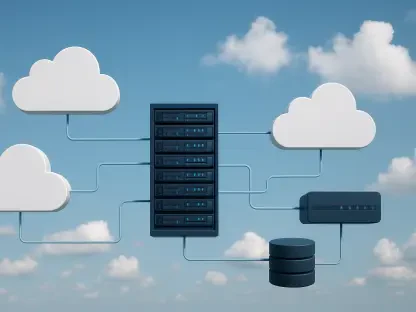

Apple’s longstanding commitment to user privacy faces its most significant technical hurdle yet as the company integrates complex artificial intelligence features that demand more than local silicon can provide. For years, the industry watched as the Cupertino giant localized data processing to the device, but the arrival of high-parameter generative models has forced a shift toward Private Cloud Compute. This infrastructure allows Apple to offload intensive tasks to dedicated servers while promising the same level of end-to-end encryption found on an iPhone. The central irony lies in the fact that much of this infrastructure resides within Google Cloud data centers, a move that places Apple’s proprietary security stack on top of a competitor’s hardware. Maintaining a trustless environment where Google cannot peek into the data packets requires a radical rethinking of server-side architecture. It is no longer enough to just have a secure operating system; Apple must now ensure that the physical host remains completely blind to the operations occurring within the virtualized instances. This transition represents a fundamental change in how consumer privacy is managed at scale, requiring a high degree of transparency to maintain public trust.
Architectural Safeguards and the Trustless Model
Hardware Root: Trust and Secure Enclaves
Apple utilizes custom silicon within its servers to mirror the Secure Enclave technology found in its consumer devices, effectively creating a black box inside Google’s data centers. This hardware root of trust ensures that the operating system running on the server is exactly what Apple intended, with no modifications permitted by the host provider. By using its own proprietary chips, Apple circumvents the traditional vulnerabilities associated with commodity server hardware. Even though the physical server might be located in a Google facility, the cryptographic keys required to unlock user data are never exposed to the host’s management software. This design philosophy assumes that the underlying network and physical environment are inherently untrusted, leading to a system where the hardware validates itself before any data processing begins. The result is a highly isolated execution environment that prevents side-channel attacks or memory scraping by the infrastructure owner. Such a robust isolation layer is critical when the underlying hardware management is handled by a third party that possesses its own competing AI interests.
Stateless Computation: Transparency Protocols
The integrity of Private Cloud Compute is further bolstered by a stateless execution environment that ensures user data is never persisted on disk. Unlike traditional cloud services that might log metadata or store temporary files for troubleshooting, Apple’s server-side AI architecture is designed to wipe all trace of a transaction the moment the result is returned to the user. This ephemeral nature of data processing is a core component of the privacy promise, as it eliminates the risk of data being harvested during a later breach of the physical facility. Furthermore, Apple has invited independent security researchers to audit the source code of the Private Cloud Compute operating system, providing a level of transparency that is rarely seen in the enterprise cloud sector. By allowing external experts to verify the claims of data deletion and encryption, the company builds a layer of social proof that complements its technical safeguards. This open-audit approach is intended to mitigate fears that the partnership with Google might lead to a dilution of Apple’s legendary privacy standards. It ensures that the software stack remains a sovereign entity within the rented halls of a competitor’s data center.
Strategic Implications of the Google Infrastructure Partnership
Mitigation: Physical and Hypervisor Risks
Relying on Google Cloud for the physical layer requires a paradigm where the hardware itself is treated as a potential adversary, necessitating advanced virtualization controls. To achieve this, Apple employs a custom-built hypervisor that limits the host’s ability to monitor or interfere with the virtual machines where AI inference occurs. This hypervisor acts as a gatekeeper, ensuring that even if an administrator at Google Cloud gained access to the physical machine, they would encounter an impenetrable layer of encryption protecting the active memory. This specific implementation of confidential computing is designed to prevent cold boot attacks and other physical intrusion methods that are typically a concern in shared environments. The collaboration highlights a shift in the industry where software-defined security must compensate for a lack of physical sovereignty over the data center floor. By leveraging Google’s global network and power infrastructure while maintaining total control over the processing logic, Apple manages to scale its AI services without the multi-billion dollar capital expenditure required to build a worldwide server footprint from scratch. This balance of power allows for rapid deployment while keeping the core user data shielded from external eyes.
Future Pathways: Sovereign Cloud Autonomy
The technology sector observed as Apple navigated the complexities of third-party hosting while maintaining a rigorous security posture throughout the rollout of its expanded AI features. Analysts noted that the success of the Private Cloud Compute model depended on the successful decoupling of physical access from data access, a feat that required unprecedented coordination between hardware and software teams. In the end, the implementation provided a blueprint for other organizations seeking to utilize public cloud resources without compromising sensitive intellectual property or user information. Moving forward, companies should prioritize the adoption of hardware-based attestation and stateless processing to ensure that their cloud-based operations remain resilient against both internal and external threats. Investing in independent audits of cloud software stacks emerged as a necessary step for building long-term consumer trust in an age of centralized data processing. Ultimately, the partnership proved that with enough technical rigor, it was possible to maintain a private sanctuary within a public infrastructure. Organizations must now look toward sovereign cloud solutions that allow for this level of isolation as a standard requirement for all future high-stakes computational tasks.