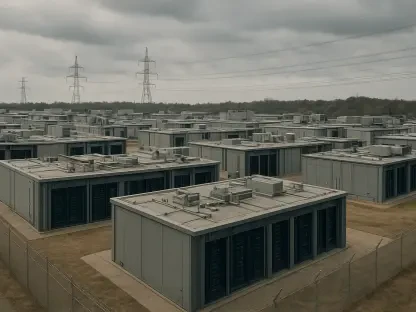

Unlike traditional cloud resellers, HIVE maintains full ownership of its high-value NVIDIA hardware, ensuring long-term asset value after the initial five-year contract concludes. This strategic positioning has culminated in a massive five-year agreement for GPU cloud services, valued at approximately $350 million, executed through its specialized subsidiary, BUZZ High Performance Computing Inc. By securing a high-profile, investment-grade enterprise customer, the company has effectively signaled a major shift from its historical focus on digital asset mining toward becoming a foundational pillar of the global artificial intelligence infrastructure. This deal is not merely a service contract but a transformative pivot that leverages years of experience in managing massive energy loads and high-density computing environments. As the demand for generative AI and complex large language models continues to outpace available supply, this agreement places the firm at the forefront of the high-performance computing sector. The commitment from a large-scale enterprise partner provides a stable foundation for the company to diversify its digital assets, ensuring that its hardware is utilized at peak efficiency while generating consistent, high-margin returns. This transition reflects a broader industry trend where infrastructure providers are moving toward more predictable, recurring revenue models that are decoupled from the inherent volatility of the cryptocurrency markets, focusing instead on the burgeoning needs of the global AI economy.
Financial Milestones: Diversifying the Revenue Engine
The financial implications of this $350 million agreement are profound, as the contract is expected to contribute approximately $70 million in annualized recurring revenue over its five-year term. This influx of capital significantly bolsters the company’s financial profile, pushing its total projected annualized recurring revenue to roughly $180 million. Management has set an aggressive target to reach a $200 million run rate by the end of this calendar year, illustrating the rapid scalability of its current business model. Such predictable cash flow is a game-changer for a company that once relied on the fluctuating rewards of Bitcoin mining, providing a robust financial cushion that allows for more sophisticated long-term capital planning and reinvestment. The agreement underscores the market’s willingness to pay a premium for dedicated, high-performance hardware clusters that are managed by experienced operators capable of maintaining high uptime and performance standards. By securing this investment-grade partner, the organization has demonstrated its ability to compete at the highest levels of the enterprise cloud market, proving that its “dual-engine” growth strategy can effectively bridge the gap between traditional digital asset mining and the specialized requirements of the modern artificial intelligence industry.
Supporting such a massive deployment requires a sophisticated approach to capital expenditure and balance sheet management. To fund the estimated $185 million required for this infrastructure build-out, the company has employed a multi-faceted financial strategy designed to minimize dilution and maximize efficiency. An initial upfront deposit of $35 million from the enterprise customer provided an immediate capital injection to kickstart the hardware procurement process. Furthermore, the company utilized a combination of 0% convertible bonds and specialized equipment financing to cover the remaining costs. This blend of financing tools allows the company to scale its operations without placing undue strain on its existing liquidity, ensuring that it remains agile in a fast-moving market. The use of non-dilutive or low-cost debt instruments reflects a high level of confidence from lenders and investors in the long-term viability of the AI cloud services model. This financial discipline ensures that the company can continue to invest in next-generation hardware while maintaining a healthy balance sheet, ultimately positioning it to capture more market share as enterprise demand for dedicated AI processing power continues to surge throughout 2026 and beyond.
Hardware Foundations: The Power of Blackwell Ultra
At the core of this infrastructure deal is the deployment of 2,016 NVIDIA Blackwell Ultra GPUs, representing some of the most advanced silicon currently available for high-performance computing. These processors are specifically designed to handle the rigorous demands of large language model inference and training, offering a significant leap in performance and energy efficiency compared to previous generations of hardware. By utilizing the Blackwell Ultra architecture, the company can offer its clients a drastically lower cost per token, which is a critical metric for any enterprise looking to scale its AI applications economically. The technical specifications of these chips allow for the processing of billions of parameters with unprecedented speed, making them the preferred choice for organizations developing sophisticated generative AI tools. This deployment ensures that the company’s infrastructure remains at the bleeding edge of technology, providing a competitive advantage over providers who are still relying on older, less efficient GPU models. The focus on high-end hardware also minimizes the risk of obsolescence, as these units are expected to remain highly relevant and capable throughout the duration of the five-year contract.
The physical architecture supporting these GPUs is just as impressive as the silicon itself, utilizing the NVIDIA GB300 NVL72 rack-scale systems. This architecture is engineered for extreme scalability, allowing thousands of GPUs to function as a single, massive computational engine through seamless interconnection. To ensure that data can move between these processors without creating bottlenecks, the system integrates NVIDIA Quantum-X800 InfiniBand networking, which provides the low-latency communication necessary for complex AI workloads. Complementing this is high-performance storage provided by VAST Data, which ensures that the vast amounts of information required for training and inference are always accessible at high speeds. This integrated environment is a far cry from a simple collection of servers; it is a meticulously designed ecosystem where every component is optimized to maximize the throughput of the NVIDIA GPUs. For the enterprise customer, this means that their AI models can be trained faster and run more efficiently, directly impacting their time-to-market and operational costs. This level of technical sophistication demonstrates why high-profile customers are increasingly seeking dedicated infrastructure partners rather than relying on generic, oversubscribed public cloud environments.
Sustainable Computing: Integrating Green Infrastructure
A defining characteristic of this new AI cluster is its home at the Bell AI Fabric facility in Merritt, British Columbia, a site that was specifically chosen for its access to 100% renewable hydroelectric power. In an era where the environmental impact of data centers is under intense scrutiny, the ability to offer carbon-neutral computing is a significant competitive differentiator. Large enterprises and government agencies are increasingly bound by strict environmental, social, and governance (ESG) mandates, making green energy a prerequisite for many infrastructure partnerships. By leveraging the abundant renewable energy resources in Canada, the company provides a sustainable solution that aligns with the global push toward net-zero emissions. This commitment to green power is not just about environmental responsibility; it also offers practical economic benefits. Hydroelectric power is often more stable and cost-effective than fossil-fuel-based energy sources, providing long-term predictability in operational expenses. This alignment of environmental goals and economic efficiency makes the Merritt facility an ideal hub for the next generation of digital infrastructure, proving that high-performance computing does not have to come at the expense of the planet.
To manage the intense thermal output of the NVIDIA Blackwell GPUs, the facility has implemented an advanced closed-loop direct liquid cooling system. Traditional air-cooling methods are often insufficient for the heat density of modern AI hardware and can lead to significant energy waste and water consumption. In contrast, this liquid cooling technology targets heat directly at the chip level, allowing for much higher cooling efficiency and a lower power usage effectiveness (PUE) ratio. Because the system is closed-loop, it eliminates the need for continuous water consumption, which is a critical factor in regions where water resources may be scarce or regulated. This approach not only enhances the overall energy efficiency of the data center but also improves the reliability and lifespan of the expensive hardware by maintaining more consistent operating temperatures. For the end user, this translates into higher uptime and more reliable performance, even during the most demanding computational cycles. The integration of liquid cooling technology represents the future of data center design, where the constraints of heat and energy are managed through innovative engineering rather than brute-force power consumption.
The Sovereign Advantage: Data Integrity and Growth
A critical component of this partnership is the emphasis on “Sovereign AI,” a concept that has gained immense traction as governments and corporations prioritize data privacy and regulatory compliance. Sovereign AI ensures that all data processing and storage occur within a nation’s borders, protecting sensitive information from foreign surveillance and ensuring adherence to local data protection laws. By collaborating with Canadian firms like Bell, HIVE Digital provides a secure, localized environment that is particularly attractive to public sector entities and highly regulated industries such as finance and healthcare. This focus on data sovereignty addresses one of the primary concerns of the modern digital age: the loss of control over critical national and corporate data assets. As more countries move to establish their own AI capabilities and regulations, the demand for localized, secure infrastructure is expected to skyrocket. This agreement positions the company as a trusted provider of sovereign computing resources, offering a level of security and compliance that generic global cloud providers often struggle to match in specific jurisdictions.
Looking toward the future, the company is exceptionally well-positioned to scale its operations due to its significant untapped power capacity. With approximately 400 MW of power available for development in Canada, there is a clear path for expansion as market demand for AI infrastructure continues its upward trajectory. Management has expressed a clear vision of bringing over 100,000 additional GPUs online, which would catapult the organization into the top tier of global AI cloud providers. Unlike many competitors who are struggling to secure the necessary power and space for new data centers, the company already has the land and utility agreements in place to support massive growth. This scalability is a key part of the long-term value proposition for investors and partners alike. Furthermore, because the company retains ownership of the hardware at the end of its service contracts, it is building a valuable portfolio of high-end assets that can be repurposed or extended beyond their initial deployment. This combination of available power, top-tier hardware, and strategic partnerships creates a formidable foundation for sustained growth in the rapidly evolving landscape of digital infrastructure.
Future Implementation: Strategic Takeaways for Industry
The successful closure of this $350 million deal marked a definitive transition point for the organization, as it moved away from the speculative nature of its early history and toward a role as a critical utility for the artificial intelligence era. This transaction was not merely a financial win but a operational proof-of-concept that demonstrated how legacy high-density computing infrastructure could be effectively retooled for the most demanding modern workloads. The deployment of the Blackwell Ultra GPUs and the integration of advanced liquid cooling systems established a new benchmark for performance and sustainability in the Canadian technology sector. By prioritizing green energy and data sovereignty, the company addressed the dual concerns of environmental impact and regulatory compliance that have become central to the enterprise technology conversation. The financial structure of the deal, including the significant upfront deposit and specialized equipment financing, provided a blueprint for how other infrastructure providers might scale their operations in a capital-intensive market without compromising their financial health.
Moving forward, enterprises should look at this model as a guide for securing dedicated, high-performance computing resources that are decoupled from the risks of public cloud volatility and data exposure. The decision to maintain full ownership of the hardware highlights a long-term strategy that prioritizes asset value and operational control over short-term resale margins. For organizations looking to implement similar AI strategies, the key takeaway is the importance of choosing partners who possess deep experience in power management and specialized cooling, as these are the primary constraints of the AI age. The industry is clearly shifting toward localized, sovereign solutions where data integrity and energy efficiency are non-negotiable requirements. As the 400 MW of available power is gradually brought online, the focus will likely shift toward optimizing these clusters for specialized tasks like real-time inference and massive-scale model training. This agreement set the stage for a new era of industrial-scale AI infrastructure, providing a clear roadmap for how specialized operators can thrive in an increasingly competitive global technology market.