
Maryanne Baines is a seasoned authority in cloud technology with a career defined by navigating the high-stakes world of enterprise infrastructure. She has spent years evaluating the intricate tech stacks of major cloud providers and advising organizations on how to build resilient systems that can withstand the most catastrophic provider-side failures. Having witnessed the rise of automated deployment and the fragility of global control planes, she brings a battle-hardened perspective to the table, especially concerning the “existential risks” that even the most established tech giants can pose to their clients.
Our discussion centers on the critical vulnerabilities inherent in the modern cloud ecosystem, particularly when an eight-figure partnership dissolves into an unannounced service blackout. We explore the technical protocols required when resources suddenly become “invisible,” the internal crisis management shifts that occur during prolonged provider silence, and the strategic move toward colocation as a means of reclaiming control over one’s own uptime.
When an eight-figure account is suspended without warning, resources can suddenly vanish from the dashboard. What specific protocols should a technical team follow when “no healthy upstream” errors appear, and how do you differentiate between a local configuration error and a provider-side account block?
The moment a technical team notices a “no healthy upstream” error, especially at a critical time like 22:00 UTC, the first instinct is often to check local deployment logs or recent commits. However, when those errors are accompanied by “unconditional drop overload” and a total inability to access the management dashboard, you are no longer looking at a code bug; you are looking at a systemic erasure. The protocol must immediately shift from “fix the code” to “verify the environment” by attempting to pull resource metadata through an external API or CLI. If the provider’s response indicates that the resources simply do not exist, and your internal monitoring shows no deletion commands were sent, you have likely been flagged by an automated enforcement rule. This is a terrifying realization for any team because it means the provider has rendered your entire infrastructure invisible, effectively treating a legitimate eight-figure business like a rogue botnet.
High-value enterprise customers often expect immediate engagement during critical outages. If a cloud provider takes over an hour to respond to an escalation, how does that delay reshape your internal crisis management, and what manual overrides can be implemented to maintain some level of service?
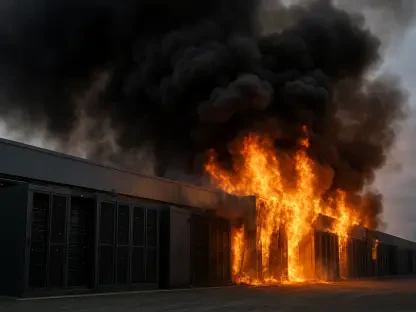
When you are spending an eight-figure sum annually, an hour of silence from your provider’s support team feels like a betrayal of the highest order. That sixty-minute gap forces an internal pivot where leadership must move from “resolving the incident” to “mitigating total business collapse.” During the Railway incident, for example, the escalation happened at 22:43 UTC, but the wait for human engagement meant that engineers had to scramble to see what could be salvaged outside the impacted zone. Manual overrides are limited when the control plane is frozen, but teams can attempt to reroute traffic to secondary regions or failover to static maintenance pages hosted on entirely different networks. The emotional toll on a “livid” engineering team cannot be understated; you are essentially fighting a fire while the fire department has locked the hydrants.
Transitioning core infrastructure to colocation services can mitigate existential risks. Given that control planes and databases often remain on the cloud, how do you manage these specific dependencies during a total account blackout, and what architectural changes are necessary to ensure enterprise deployments remain unaffected?
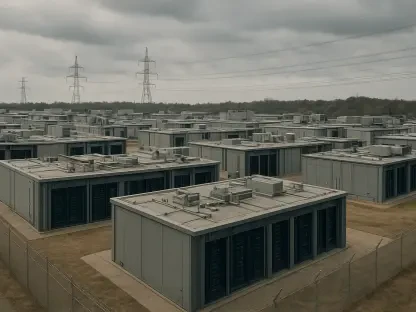
The irony of modern infrastructure is that many companies move to colocation to avoid the “existential risk” of the cloud, yet they leave the “brain” of their operation—the control plane—in the hands of a provider like Google. When the provider pulls the plug, even if your workloads are running in a private data center, the orchestration layer that tells those workloads what to do becomes a black hole. To truly protect enterprise deployments, you must architect for a “disconnected state” where the data plane can operate autonomously for a period without instructions from the cloud-based control plane. This requires a significant shift toward localizing database clusters and using decentralized state management so that even if the cloud account is wiped, the servers in the rack keep spinning. As we saw in 2025, those who didn’t fully decouple found that their enterprise deploys were the only ones spared, while non-enterprise services remained painfully paused.
Users typically hold the platform accountable for uptime regardless of third-party failures. How do you communicate with irate customers when your own resources have been made invisible by a provider, and what does it truly mean for a modern PaaS company to “own” its uptime?
Communicating during a blackout where your provider has made your resources invisible is an exercise in radical transparency and extreme humility. Irate customers don’t care about the nuances of a Google Cloud suspension; they only see that the service they pay for is down, which is why a solutions engineer must be prepared to say, “We are livid and we are fighting for you.” To “own” your uptime as a PaaS means accepting that you are the face of the failure, even if the root cause is a corporate giant wiping out your infrastructure like they did with the UniSuper pension fund in 2024. It means building enough redundancy so that an apology isn’t just a “corporate platitude” but a commitment backed by a multi-cloud or hybrid strategy that ensures the service remains reachable. Ultimately, the customer’s contract is with you, and they expect you to have a contingency plan for when the “unthinkable” provider-side block occurs.
What is your forecast for the future of multi-cloud dependency?
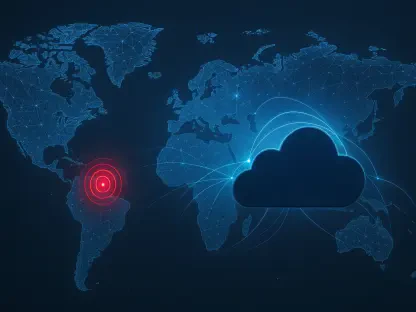
I predict a massive shift toward “cloud-repatriation lite,” where enterprises will no longer accept a single provider as a sole source of truth for their survival. The industry is waking up to the fact that no matter how much you spend—even $10 million or more—you are still subject to the whims of automated enforcement algorithms that can delete years of work in an instant. We will see a surge in demand for platform-agnostic control planes and a standard practice of keeping real-time database mirrors on independent, non-affiliated infrastructure. The goal will be “zero-trust infrastructure,” where the primary cloud provider is treated as a high-performance utility that could be cut off at any moment, forcing companies to maintain the “red button” capability to switch traffic to a completely different environment in under an hour.