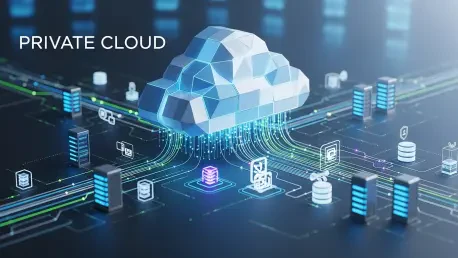

The rapid decentralization of enterprise data has forced IT departments to grapple with a level of architectural complexity that often outweighs the benefits of traditional multi-cloud strategies. While the public cloud offered an initial escape from the constraints of legacy hardware, the unforeseen costs of data egress and the challenges of maintaining regulatory compliance across various regions have led to a resurgence of interest in localized control. Dell’s private cloud solutions, particularly those under the APEX umbrella, aim to provide a middle ground by delivering the agility of the public cloud within the confines of a private data center. This architectural shift is not merely about relocating servers but rather about implementing a software-defined layer that abstracts the underlying hardware. By centralizing management, organizations can reduce the fragmentation that currently plagues modern IT, ensuring that workloads are placed where they perform most efficiently without sacrificing the governance and security required in 2026.
Integration of Hybrid Architectures: Connecting Local and Remote Resources
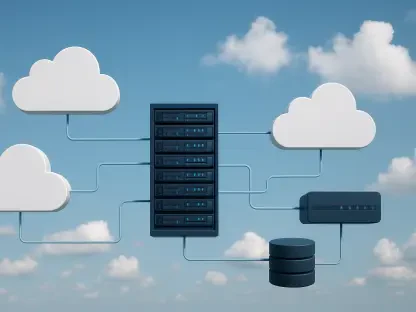
The primary hurdle in modern infrastructure lies in the friction between on-premises environments and the diverse ecosystems of major hyperscalers. Dell APEX Cloud Platforms address this by providing deep integration with partners like VMware, Microsoft, and Red Hat, ensuring that the same management tools used in the public cloud are applicable to the private infrastructure. For instance, an organization using Azure Stack HCI on Dell hardware can manage their local clusters directly through the Azure portal, creating a seamless operational experience. This level of consistency minimizes the learning curve for IT personnel and reduces the likelihood of configuration errors that often lead to security vulnerabilities. Furthermore, this approach allows for dynamic workload mobility, where applications can be migrated from a local private cloud to a public instance based on real-time demand or cost-benefit analysis. By eliminating silos, Dell’s architecture facilitates a more fluid data lifecycle, which is essential for businesses in a market where speed defines success.
Data sovereignty and security remain the most significant drivers for maintaining a robust private cloud presence, especially as global regulations regarding data residency become more stringent. Unlike purely public environments where users share underlying resources with unknown entities, a private cloud built on Dell PowerEdge and PowerStore systems offers a physically isolated environment. This isolation provides a higher degree of assurance for industries such as finance and healthcare, which must adhere to strict compliance frameworks like HIPAA or GDPR. Moreover, Dell’s hardware-level security, including Silicon Root of Trust and secured-core servers, adds a layer of protection that begins before the operating system even boots. In the current landscape from 2026 to 2028, these features are no longer optional but are fundamental requirements for any enterprise looking to mitigate the risk of sophisticated cyber threats. The ability to encrypt data at rest and in transit while maintaining high performance is a hallmark of this infrastructure.
Strategic Implementation: Practical Pathways for Infrastructure Evolution
The transition toward a simplified private cloud environment was characterized by a deliberate move away from monolithic hardware stacks toward modular, software-defined systems. It was observed that organizations achieving the highest levels of efficiency were those that successfully integrated their local storage and compute resources into a unified management plane. This shift highlighted the importance of choosing vendor-agnostic software layers that could bridge the gap between different hardware generations and diverse cloud providers. The implementation of Dell APEX demonstrated that the primary benefit was not just the physical hardware itself but the orchestration layer that provided a single source of truth for all infrastructure assets. Analysts noted that companies which prioritized this level of integration reduced their operational overhead significantly within the first two years of adoption. The focus remained on reducing complexity through standardization, which allowed for faster deployment cycles and more consistent security.
To capitalize on these advancements, it was determined that IT leaders should first conduct a comprehensive workload audit to identify which applications benefitted most from low latency. Once these workloads were identified, selecting a modular infrastructure like Dell PowerStore allowed for a phased migration that avoided the risks associated with wholesale hardware refreshes. It was recommended to implement an AI-driven operations platform, such as APEX AIOps, to gain deeper visibility into system performance and to automate remediation. Furthermore, organizations found it necessary to invest in training for technical staff to ensure proficiency in cloud-native management paradigms. Looking toward 2028, the integration of edge computing with private cloud hubs was identified as the next major frontier for architectural development. By establishing a robust, automated private cloud foundation, businesses ensured they possessed the necessary agility to integrate emerging technologies like generative AI and real-time edge analytics without a total overhaul.