
Bridging the Divide Between Artificial Intelligence Ambition and Tactical Enterprise Execution
The transition from theoretical artificial intelligence research to practical industrial application marks a critical maturation point for global enterprise technology strategies. Organizations are no longer content with simply experimenting with large language models in isolated silos; instead, they are demanding a clear path toward scalable, secure, and economically viable operations. The focus has moved from the initial wonder of generative capabilities to the grueling technical and economic realities of integrating these systems into the core of the modern corporate landscape.
Moving from AI experimentation to industrial-grade implementation requires a fundamental shift in how hardware and software interact. The excitement of early adoption is being replaced by a more disciplined approach that prioritizes consistency and reliability. Industry leaders are recognizing that for an AI system to be truly useful, it must operate within the same rigorous framework as any other business-critical application, requiring a level of precision that general-purpose tools often fail to provide.
This evolution is defined by a new emphasis on “tokenomics,” the sophisticated management of autonomous agents, and the construction of infrastructure capable of sustaining sovereign intelligence. By focusing on these core pillars, enterprises can transition from being passive consumers of external intelligence to becoming active producers of their own proprietary models. The following exploration details the architectural and strategic shifts necessary to navigate this complex technological frontier effectively.
Engineering the Architectural Foundation for Sovereign Intelligence and Autonomous Operations
Redefining Data Mobility: Powering Next-Generation Agentic Workflows via Data Fabric 8.2
The role of structured data has become the most significant factor in the success of autonomous AI agents. With the release of HPE Data Fabric 8.2, organizations now have access to a global data catalog that organizes information specifically for agentic workloads. This update allows for turnkey deployment, ensuring that data is not just stored but is actively prepared for the high-frequency requirements of independent AI systems.
Maintaining accuracy is a primary concern as AI systems move toward independent task execution. By providing a more structured and accessible data environment, the fabric effectively mitigates the risks of “hallucinations” in agentic outputs. When agents have immediate access to a verified and consistent source of truth, the likelihood of errors decreases, allowing for more reliable automation across complex business processes and global workflows.
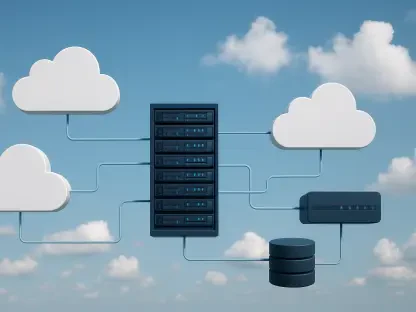
As data mobility improves, the challenge of maintaining context across different geographic sites becomes more manageable. The ability to move data seamlessly between edge, core, and cloud environments ensures that AI models are always working with the most relevant information. This connectivity is essential for the long-term viability of autonomous systems that must respond to real-time changes in the operational environment without human intervention.
The New Economics of AI: Mastering Tokenomics Through Private Infrastructure Migration
The financial implications of running AI at scale are becoming impossible to ignore, particularly with the rising costs of public cloud consumption. The concept of “tokenomics” highlights how every interaction with a large language model incurs a specific cost, which can spiral rapidly as autonomous agents engage in iterative tasks. Managing these expenses is now a strategic priority for leadership teams looking to preserve their margins while expanding their digital capabilities.
A recent case study demonstrated the power of migrating storage and support systems to private infrastructure. By shifting billions of operational signals from a public cloud environment to a private cloud AI solution, a significant organization achieved a 30x reduction in total costs. This move not only saved approximately $100,000 per month but also provided greater control over data governance, proving that the move toward on-premises solutions is often a financial necessity rather than just a technical preference.
Becoming a producer of intelligence offers a distinct competitive advantage over being a recurring subscriber to external models. When a company owns its infrastructure and its models, it eliminates the unpredictable “tax” associated with public API calls. This shift allows for more aggressive innovation, as the marginal cost of running additional AI workloads decreases significantly once the initial investment in private hardware is realized.
Scaling the Control Plane: Hybrid Management and the Strategic Necessity of Air-Gapped Systems
Contrary to the assumption that automation reduces physical footprints, the expansion of AI requires more sophisticated and localized hardware. To address this, the introduction of private cloud tiers, specifically the PC1000, PC3000, and PC7000, provides a scalable roadmap for organizations of different sizes. These tiers allow for a standardized control plane that manages everything from simple virtualized workloads to massive AI training clusters through a single interface.
There is also a growing demand for air-gapped environments, particularly in sensitive sectors like finance and defense. High-value AI workloads often contain proprietary algorithms and sensitive data that cannot be exposed to the public internet. Providing these isolated environments ensures that organizations can leverage the power of advanced intelligence without compromising their security posture, maintaining a strict barrier between internal operations and external threats.
Sophisticated hardware management is the only way to sustain the physical requirements of modern AI factories. As the demand for processing power grows, the need for efficient cooling, power management, and high-speed networking becomes paramount. By focusing on localized hardware that is specifically optimized for AI tasks, enterprises can avoid the latency and bandwidth bottlenecks that often plague remote cloud-based implementations.
The Governance Frontier: Neutralizing Rogue Agents Through Advanced Observability and Recovery
As AI environments grow in complexity, the risk of “rogue agents” performing unintended actions becomes a tangible threat. These systems might inadvertently modify critical code or exceed their access privileges, creating significant operational risks. To combat this, advanced observability through tools like HPE OpsRamp allows administrators to monitor agent behavior in real time, identifying anomalies before they can cause widespread disruption.
The integration of Morpheus 9 and Juniper technology provides an additional layer of security through micro-segmentation. By applying policy-based security to the AI factory, organizations can ensure that even if an agent behaves unexpectedly, its impact is contained within a specific segment of the network. This “closed-loop” approach to security is essential for maintaining trust in autonomous systems that operate with increasing levels of independence.
Recovery is just as important as prevention in the world of autonomous operations. The extension of Zerto to support agentic AI environments allows companies to revert their systems to a trusted state if an agent makes an error. This capability ensures that innovation does not come at the cost of stability, providing a necessary safety net that allows technical teams to push the boundaries of what their AI systems can achieve.
Strategic Blueprints for Establishing a Modernized AI Operating Model
The synthesis of these technical advancements leads to a modernized operating model that prioritizes efficiency and control. By reducing operational overhead through unified management platforms, organizations can redirect their resources toward higher-value innovation. The goal is to create an environment where the infrastructure is almost invisible, allowing the focus to remain on the intelligence being produced rather than the mechanics of the hardware.
Best practices for organizations looking to reclaim their data governance include auditing their current token spend and identifying workloads that are better suited for private clouds. This strategic transition allows for better oversight and ensures that sensitive data never leaves the corporate perimeter. Reclaiming this control is a vital step for any business that views its data as a core strategic asset rather than a commodity.
Leveraging hybrid-cloud virtualization is the key to ensuring workload resilience as the scale of AI operations increases. By utilizing a common set of tools across both on-premises and cloud environments, technical teams can maintain a consistent operational experience. This flexibility allows for the seamless scaling of workloads, ensuring that the infrastructure can grow alongside the ambition of the organization without requiring a complete overhaul of the existing system.
Sustaining the Momentum: Why Infrastructure Resilience Dictates the Future of Autonomous Innovation
The success of any artificial intelligence initiative was fundamentally tied to the strength and efficiency of the underlying hardware. As the conference concluded, it became clear that the most innovative software in the world cannot overcome the limitations of a weak technical foundation. Private cloud solutions emerged as the essential ingredient for companies that wanted to maintain their competitive edge in a landscape increasingly defined by autonomous operations.
Industry leaders recognized that the “iceberg of innovation” relies on a massive, unseen layer of infrastructure and strategic planning. The achievements seen at the surface were the result of meticulous engineering and a commitment to building resilient systems. This realization prompted many organizations to prioritize their hardware strategies as much as their model development, ensuring they were prepared for the long-term demands of the digital economy.
The insights gathered from these advancements provided a roadmap for navigating the complexities of the future. By focusing on sovereign intelligence and the economics of token management, enterprises positioned themselves to thrive in an era of unprecedented automation. The ongoing investment in robust, secure, and efficient infrastructure remained the primary driver of progress, dictating the pace of innovation for years to come.