
In the rapidly expanding landscape of decentralized digital infrastructure, managing a sprawling collection of cloud storage accounts has transformed from a minor inconvenience into a significant operational bottleneck for modern professionals and enterprises alike. As users navigate between services such as Google Drive, Amazon S3, and Microsoft Azure, the lack of a unified interface often leads to data fragmentation and inefficient workflows that can stall high-stakes projects. Rclone has emerged as a powerhouse in the world of cloud management, acting as a streamlined command-line utility that bridges the gap between over 70 different storage providers through a single, consistent interface. By treating remote cloud servers as if they were local directories, this tool provides a level of control and flexibility that was previously reserved for local file management systems. It is not merely a file transfer application but a comprehensive framework that simplifies the complex task of handling data across diverse environments, ensuring that information remains accessible and manageable regardless of where it resides in the digital ether.
Optimizing Data Movement and Performance
Operational Efficiency: The Power of CLI Logic
The core philosophy of this tool is rooted in the logic of classic Linux utilities, specifically mirroring the functionality of rsync to provide a familiar and robust environment for data manipulation. By operating through a command-line interface rather than a heavy graphical user interface, it minimizes the consumption of system resources, allowing it to run efficiently even on low-powered hardware or headless servers. This lightweight nature does not come at the cost of power, as the tool provides granular control over data transfers, including the ability to sync, copy, and move files with surgical precision. Unlike native cloud applications that often rely on opaque background processes, this utility offers transparent logging and real-time progress tracking, which are essential for technical professionals who need to verify the integrity of their data at every stage of the transfer process. The result is a highly efficient workflow that eliminates the bloat and unpredictability associated with traditional consumer-grade cloud software.
Beyond its interface, the engineering behind the tool leverages the Go programming language to achieve high performance and cross-platform compatibility. This choice of language allows for the creation of static binaries that require no external dependencies, making the installation process simple across a wide variety of operating systems. The tool’s internal architecture is designed to handle massive datasets with ease, utilizing multithreading and advanced buffer management to maximize the utilization of available network bandwidth. By focusing on the fundamental mechanics of data transfer, it avoids the feature creep that often plagues modern software, remaining a dedicated and high-speed bridge for information. For users managing terabytes of data across multiple continents, this performance-first approach ensures that latency and throughput issues are minimized, providing a reliable foundation for enterprise-level storage strategies that require consistent and predictable execution.
Technical Advancements: Direct Server-Side Transfers
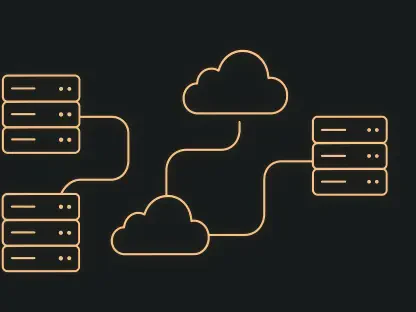
One of the most significant technical advantages offered by this utility is its ability to facilitate server-side transfers, which fundamentally changes how data is moved between different cloud providers. In a traditional setup, moving a file from one service to another requires downloading the data to a local machine before re-uploading it to the destination, a process that consumes both time and local bandwidth. This tool identifies when a transfer can be handled entirely within the provider’s infrastructure, allowing the data to move directly between remote servers without ever touching the user’s local network. This bypasses the local internet connection as a potential bottleneck, drastically reducing the time required for large-scale migrations and saving users from the high costs associated with data egress and ingress. This feature is particularly valuable in the current market, where the speed of data movement can be a competitive advantage for businesses operating in data-heavy industries.
The efficiency of these transfers is further enhanced by a robust logic system that only updates files that have actually changed since the last operation. By comparing file sizes, timestamps, and MD5 or SHA-1 hashes, the tool ensures that no redundant data is moved, which further optimizes network usage and reduces wear on storage hardware. This level of synchronization is difficult to achieve with standard web interfaces, which often struggle with maintaining consistency across large directory structures. Additionally, the tool includes sophisticated retry mechanisms and error handling, ensuring that a temporary network flicker does not derail a multi-day transfer process. By automating these complex checks and balances, the utility provides a “set-and-forget” experience for system administrators, allowing them to schedule massive data moves with the confidence that the end result will be a perfect mirror of the source material without unnecessary overhead.
Bridging Gaps and Enhancing Data Privacy
Virtual Filesystems: Merging Local and Remote Worlds
The integration of cloud storage into daily workflows is taken to the next level through the use of virtual filesystem technology, which allows users to mount remote storage as if it were a local drive. When a remote directory is mounted, it appears in standard file explorers like Windows Explorer or macOS Finder just like a physical internal hard drive or a USB stick. This seamless integration means that any software on the computer can interact with cloud-based files without needing to understand the underlying cloud APIs. A photographer can edit images directly from an S3 bucket in a professional editing suite, or a media player can stream high-definition content from a private server as if the files were stored locally. This bridge between the local environment and the cloud removes the friction of manual uploads and downloads, creating a unified workspace where the physical location of data becomes irrelevant to the end user.
To ensure that this remote mounting remains responsive, the tool employs advanced caching mechanisms that store frequently accessed data and directory structures on the local machine. This prevents the system from having to query the cloud provider for every single file operation, which significantly reduces the latency that usually plagues remote storage solutions. Users can customize these caching policies to balance performance and disk space, tailoring the experience to their specific hardware and network conditions. This adaptability makes the tool suitable for a wide range of applications, from low-latency database backups to high-throughput video production environments. By providing a local “front end” for the vast capacity of the cloud, it effectively expands the storage capabilities of any device, allowing users to carry around an entire library of data that technically exists thousands of miles away while still being accessible in milliseconds.
Security Architectures: Implementing Zero-Knowledge Encryption
In an era where data privacy is a paramount concern for both individuals and organizations, the robust encryption capabilities of this tool provide an essential layer of protection. It offers a client-side encryption layer that ensures data is scrambled using strong cryptographic standards before it ever leaves the local machine. Because the encryption keys are managed by the user and never shared with the cloud provider, the storage service only ever sees unreadable binary blobs rather than the actual content of the files. This zero-knowledge approach is a critical defense against both external security breaches and internal provider-level snooping, as even a compromised cloud server would yield no useful information to an attacker. The encryption logic is seamlessly integrated into the standard transfer and mounting commands, meaning that the security benefits do not require additional complex steps during daily usage.
Furthermore, the tool allows for the creation of encrypted “wrappers” that can be applied to any of the supported storage providers, giving users a consistent security policy across their entire multi-cloud ecosystem. This prevents the fragmentation of security standards that often occurs when relying on the native, often varying, encryption tools provided by different vendors. The encryption is not limited to file contents; it also extends to file names and directory structures, ensuring that metadata does not leak sensitive information about the user’s activities. By putting the power of privacy back into the hands of the data owner, this utility facilitates the use of public cloud services for sensitive or proprietary information that might otherwise be deemed too risky for online storage. This creates a more secure digital environment where the convenience of the cloud can be enjoyed without sacrificing the fundamental right to privacy or risking the exposure of confidential business assets.
Establishing a Unified and Secure Data Strategy
The evolution of cloud management reached a significant milestone as professionals successfully integrated this command-line utility into their daily operational frameworks. Organizations that adopted this approach found that they were able to eliminate the overhead of multiple proprietary client applications, which often conflicted with one another and slowed down system performance. By standardizing on a single, open-source bridge, these users gained unprecedented flexibility, allowing them to switch between storage providers without having to relearn complex interfaces or restructure their data pipelines. The implementation of client-side encryption and server-side transfers allowed for a more agile response to changing security requirements and fluctuating data costs. This shift represented a move away from vendor lock-in and toward a more modular, user-centric data strategy that prioritized interoperability and security above all else.
Moving forward, the primary recommendation for those looking to optimize their digital storage is to conduct a comprehensive audit of their current cloud footprint and identify areas where manual transfers can be replaced by automated scripts. The initial investment in learning the syntax of this tool yielded substantial dividends in the form of reduced migration times and enhanced data privacy. Users should prioritize the setup of encrypted remotes to protect their most sensitive assets while utilizing the mounting features to streamline their creative and professional workflows. As the volume of global data continues to grow, the ability to manage fragmented storage from a central point of control will remain a vital skill. By embracing these professional-grade tools, individuals and enterprises established a resilient foundation for their digital future, ensuring that their data remains secure, accessible, and entirely under their own control.