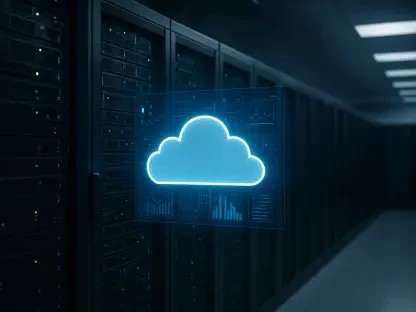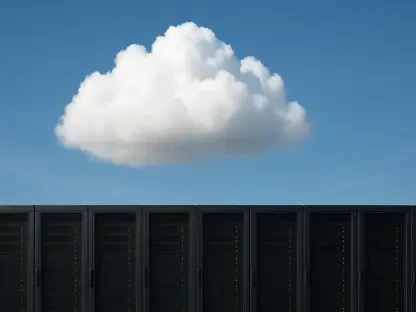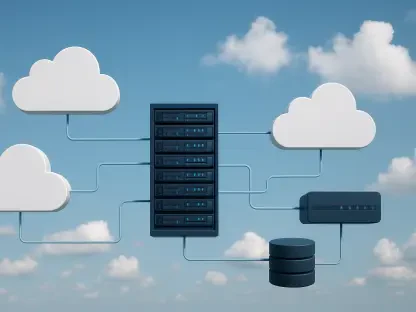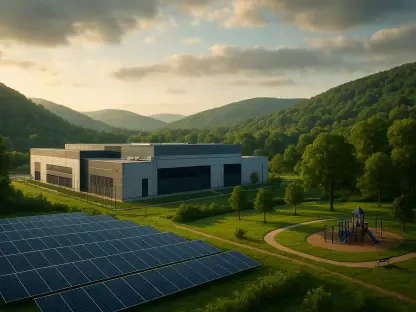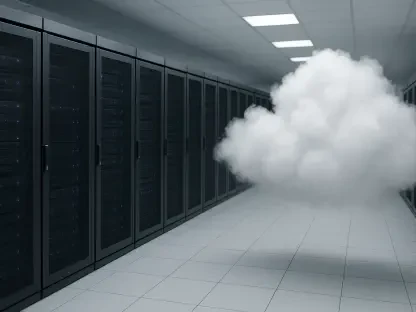

The narrative of total cloud dominance has finally collided with the harsh realities of latency, data sovereignty, and the astronomical costs associated with egress fees for large datasets. While the initial wave of digital transformation suggested that physical server rooms would become obsolete relics of a bygone era, the current landscape reveals a much more nuanced reality where private infrastructure remains a cornerstone of the enterprise stack. This shift represents a transition from a cloud-first mentality to a cloud-right strategy, where technical teams prioritize the specific requirements of each application rather than defaulting to a centralized provider. Modern data centers are no longer just storage silos; they are high-performance hubs integrated into a global network. By leveraging a hybrid architecture, companies can extract the maximum value from both worlds, maintaining strict control over sensitive information while utilizing the elasticity of the cloud for development cycles.
Security and Regulatory Requirements for Physical Control
Data sovereignty is not merely a legal checkbox but a fundamental requirement for operating in a global economy that increasingly demands localized control over sensitive user information. For industries like healthcare and defense, the ability to physically touch the hardware where proprietary algorithms or patient records reside offers a level of assurance that virtualized instances cannot replicate. Public cloud environments, while robust, operate under a shared responsibility model that can leave gaps in perimeter security if not meticulously managed by the client. An on-premises facility allows for deep-packet inspection and hardware-level security protocols that are often restricted in multi-tenant environments. Furthermore, as international data transfer regulations continue to tighten, having a localized physical footprint ensures that a company can remain operational even if political shifts disrupt cross-border cloud availability. This tactical control serves as a hedge against geopolitical volatility.
Technical performance remains a decisive factor for keeping mission-critical workloads within local server racks, particularly for applications requiring sub-millisecond response times. In high-frequency trading or edge computing for automated manufacturing lines, even the most optimized fiber connection to a distant cloud region can introduce unacceptable jitter and latency. By placing computational resources physically close to where data is generated, engineers eliminate the transit bottlenecks that often plague distributed architectures. Beyond performance, the financial predictability of owning hardware provides a stabilizing force for corporate budgets. Unlike the cloud’s consumption-based model, which can result in unexpected expenses when developers accidentally leave high-compute instances running, on-premises costs are largely fixed after the initial capital expenditure. This allows financial officers to forecast operational spending with high precision, treating the data center as a stable utility for the entire firm.
Engineering Efficiency: Optimizing the Physical Layer
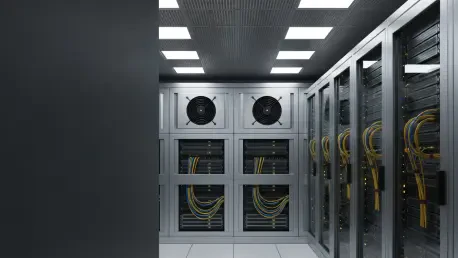
Maintaining a modern data center requires a sophisticated approach to thermal management that goes far beyond simple air conditioning units and basic ventilation fans. Implementing hot and cold aisle containment systems has become a standard practice for reducing energy waste and preventing the localized hot spots that can trigger automatic server shutdowns. By ensuring that cool air is delivered directly to the intakes and warm exhaust is efficiently routed back to the cooling plant, facilities can significantly lower their energy usage effectiveness scores. This level of physical optimization also extends the lifecycle of expensive internal components, such as solid-state drives and high-density processors, which are sensitive to temperature fluctuations. Additionally, structured cabling provides more than just a neat appearance; it facilitates better airflow and allows technicians to swap out faulty components in minutes rather than hours, reducing the risk of extended downtime during a hardware failure.
Scalability in a modern physical facility is no longer about just adding more floor space but about designing for density and modular expansion from the very beginning. Forward-thinking IT departments are now building infrastructure with significant headroom in power distribution and cooling capacity to accommodate the sudden introduction of high-heat AI hardware. This future-ready design philosophy ensures that a data center can evolve alongside technological advancements without requiring a complete structural overhaul every few years. By utilizing modular rack designs and flexible power strips, a company can increase its compute density within the same square footage, maximizing the return on investment for the existing physical envelope. This adaptability is crucial because business needs are rarely static, and the ability to pivot local resources quickly is a competitive advantage. Planning for these capacity shifts at the architectural stage prevents the facility from becoming a constraint.
Creating Resilience Through Hybrid Integration
The emergence of cloud bursting as a viable strategy has fundamentally changed how organizations plan for peak demand periods, such as seasonal sales or big data processing tasks. Instead of over-provisioning expensive local hardware that sits underutilized for most of the year, firms maintain a steady-state baseline on-premises and offload excess traffic to the public cloud during spikes. This synergy ensures that the primary user experience remains fluid regardless of the load, while keeping the total cost of ownership at a manageable level. This dual-environment approach also provides a superior framework for disaster recovery and business continuity compared to single-site deployments. By synchronizing data across physical servers and multiple geographically diverse cloud regions, an enterprise can achieve near-zero recovery time objectives. If a localized outage occurs, the system can automatically reroute traffic to the cloud, ensuring that internal services and customer-facing apps remain online.
Successfully navigating the complexities of a hybrid ecosystem often requires moving beyond manual processes and embracing advanced orchestration platforms that bridge the gap between environments. These tools allow IT administrators to view their entire estate through a single pane of glass, ensuring that security policies are consistently applied whether a workload is running in a local rack or a virtual machine. Many organizations are now turning to managed service providers to bridge the skills gap that often exists when trying to maintain expertise in both physical hardware and cloud-native architectures. These partnerships allow internal teams to focus on delivering high-value business features while external experts handle the granular details of patch management and firmware updates. This division of labor is essential for preventing the configuration drift that can lead to security vulnerabilities or inefficient resource utilization. Managed oversight provides the necessary guardrails.
Strategic Next Steps: Moving Toward Hybrid Maturity
Looking ahead to the broader adoption of artificial intelligence and machine learning, the physical data center will play an even more critical role as a specialized training ground for proprietary models. These advanced technologies require massive amounts of specialized compute power, such as Graphics Processing Units and Tensor Processing Units, which are often more cost-effective to own than to rent over long periods. By maintaining a local environment for the heavy lifting of model training, businesses can iterate faster and keep their valuable intellectual property away from the shared infrastructure of third-party providers. Once a model is trained, it can be deployed to the cloud for global inference, demonstrating the true power of a balanced hybrid strategy. This workflow allows for the rapid development of innovative services while anchoring the core data processing in a secure and high-performance local environment. Embracing this integrated mindset is the key to thriving.
The transition to a more integrated hybrid IT model demonstrated that the era of physical hardware was far from over, and indeed, it became more vital than ever for sustainable growth. Organizations that moved toward this balanced approach successfully mitigated the risks of vendor lock-in while simultaneously improving their overall system reliability and financial oversight. It was established that the path forward required a focus on workload placement, where the decision to use the cloud or a local server depended on specific performance and security outcomes rather than industry hype. To prepare for upcoming shifts, IT leaders prioritized investments in power-efficient cooling and automated management platforms that unified their diverse environments. This strategic alignment allowed businesses to remain agile, turning their physical infrastructure into a dynamic asset that supported rapid innovation. By treating the data center as a core pillar of a broader digital ecosystem, companies secured a more resilient foundation.