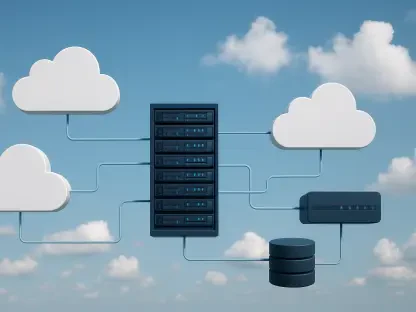

Global corporations are currently hitting a massive wall where the initial novelty of generative artificial intelligence meets the cold, hard reality of enterprise-grade reliability and fiscal responsibility. As these organizations scale their AI efforts through 2026 and into the latter half of the decade, the public cloud is undergoing a period of intense scrutiny due to its high costs and security risks. In its place, the modern private cloud is becoming the essential foundation for businesses that need a secure, sovereign environment to run their most critical workloads. Industry leaders now view AI as a double-edged sword that acts as both a revenue driver and a significant multiplier for cost and risk. To manage these pressures, many enterprises are adopting a “private cloud first” strategy. This shift ensures that as AI projects move from small pilots to core business functions, they remain financially sustainable and protected from the evolving threat landscape in a competitive market.
The Economic Shift: Navigating the Realities of AI Scalability
The financial pressure of running large-scale artificial intelligence is triggering what experts call a “cloud reset” across the technology sector. While public clouds are often ideal for short-term experiments or training new models, the daily costs of AI inferencing—the actual execution of tasks—can quickly become unsustainable for a growing business. This has led to the rise of “Tokenomics,” where the predictable cost structure of private hardware becomes a major competitive advantage. Thousands of organizations are moving away from the variable pricing models of the public cloud to regain financial control over their AI infrastructure. Research shows that modern private cloud platforms are now seen as equal to or better than public clouds for mission-critical tasks. By shifting these workloads on-premises or into hybrid environments, companies can ensure their AI initiatives remain viable as they scale across the entire enterprise without facing unexpected monthly billing spikes.
Predictability in operational expenditure has become the primary goal for Chief Financial Officers who are wary of the “AI tax” associated with third-party hosting. When an organization utilizes its own infrastructure, the marginal cost of running an additional inference cycle drops significantly compared to the per-token pricing of external APIs. This economic reality allows for more aggressive experimentation and deeper integration of AI into every business process. Furthermore, the longevity of modern hardware means that the initial capital expenditure can be amortized over several years, providing a stable foundation for growth. Companies that have successfully made this transition report that they can redirect the savings into hiring top-tier data scientists or refining their proprietary models. As the market matures, the ability to control the underlying economics of machine learning will likely distinguish the industry leaders from those who are merely struggling to keep up with their subscription fees.
Security Architecture: Fortifying the Enterprise Against AI Threats
Security remains the most pressing concern for any executive responsible for an AI rollout, especially as digital attacks become more sophisticated and frequent. Current data indicates that nearly three-quarters of enterprises have already faced attacks driven by AI-enabled software, which can probe defenses with unprecedented speed. These threats can adapt much faster than traditional manual defenses, making standard security measures insufficient for a production-grade environment. To counter these risks, the modern private cloud utilizes advanced architectural features like microsegmentation. By creating granular security policies, organizations can prevent threats from moving laterally through their internal systems. This level of control is vital for protecting the data lakes and processing units that power AI, ensuring that a single breach does not compromise the integrity of the entire operation or lead to the theft of sensitive proprietary information.
Beyond just preventing unauthorized access, a private cloud environment allows for the implementation of strict “Zero Trust” protocols that are often difficult to maintain in a multi-tenant public setting. In a private setup, every request for data or compute power is verified regardless of its origin, providing a robust shield against both external hackers and internal vulnerabilities. This architecture is particularly important for AI models that handle sensitive customer data or intellectual property, as it ensures that the data never leaves the controlled environment. By integrating security directly into the infrastructure layer, companies can automate the detection of anomalies and respond to potential incidents in real-time. This proactive approach to defense is necessary to maintain public trust and regulatory compliance in an era where data integrity is the most valuable asset a company possesses. Consequently, the private cloud is no longer just a storage solution; it is a fortress.
Sovereignty and Control: Redefining the Model Ownership Era
The concept of sovereignty has evolved beyond simple data residency to include three distinct pillars: infrastructure, data, and models. Enterprises are no longer content with just keeping their data within certain borders; they now demand “control plane sovereignty” to maintain operational continuity. This allows organizations to manage their AI systems even when disconnected from the public internet, which is a critical requirement for government and highly regulated sectors like healthcare or finance. Model sovereignty is also becoming a priority as organizations seek to run their own independent models on private infrastructure. This ensures that both the underlying intelligence and the training data remain entirely under the user’s jurisdiction. By avoiding the proprietary constraints of global public cloud providers, businesses can protect their intellectual property and maintain full compliance with local regulations that govern automated decision-making.
Operating within a sovereign private cloud also mitigates the risk of “vendor lock-in,” which has historically limited the flexibility of many IT departments. When a company owns its infrastructure and its models, it can switch hardware vendors or update its software stack without being held hostage by a single service provider’s ecosystem. This independence is crucial for long-term strategic planning, as it allows the business to pivot its AI strategy based on market demands rather than provider limitations. Moreover, sovereign environments facilitate better collaboration between regional branches by providing a unified yet controlled framework for data sharing. As global data privacy laws become more stringent, the ability to demonstrate absolute control over every stage of the AI lifecycle will be a significant competitive advantage. This shift toward autonomy reflects a broader trend of companies reclaiming their digital destiny from the tech giants that dominated the previous decade.
Infrastructure Readiness: Building the Foundation for Success
Success in the AI era is often determined by the work an organization has already done to modernize its legacy infrastructure over the past few years. Companies that have moved away from siloed systems toward unified cloud foundations are far better positioned to integrate AI into their daily operations. This modernization provides the necessary groundwork to handle complex data flows and the high-performance demands of modern machine learning workloads. An integrated private cloud serves as the connective tissue that allows AI to derive insights from every corner of a company. By bridging the gap between disconnected systems, a modernized infrastructure enables AI to process orders, manage data streams, and automate deployments seamlessly. For businesses looking to turn AI into a revenue-generating asset, a solid private cloud foundation is no longer an optional luxury—it is the only viable path forward for sustained success.
Technical debt is the greatest enemy of AI integration, and the private cloud offers a structured way to pay down that debt while simultaneously building for the future. Modern private environments are designed to support containerization and orchestration, which are essential for managing the lifecycle of complex AI models. This setup allows for rapid deployment and scaling, ensuring that the infrastructure can keep pace with the speed of business innovation. Additionally, a well-designed private cloud enables the consolidation of data from disparate sources, creating a “single source of truth” that improves the accuracy of machine learning outputs. As organizations continue to refine their digital strategies, the focus must remain on creating a flexible and resilient hardware layer. By investing in the right foundational tools today, companies are ensuring that they will not be left behind as the capabilities of artificial intelligence continue to expand and transform the global economy in the coming years.
Strategic Action: The Path to Autonomous AI Implementation
To transition from the experimental phase to a production-grade environment, organizations must first conduct a comprehensive audit of their current compute requirements and data locality needs. The first actionable step involved identifying high-value AI workloads that required the most stringent security and the lowest latency, as these were the primary candidates for private cloud migration. Businesses then evaluated their current hardware refresh cycles to align new purchases with the specific demands of large language models and inferencing engines. This proactive planning allowed many firms to avoid the bottlenecks that occurred when public cloud resources became oversubscribed or prohibitively expensive during peak demand periods. By securing the necessary hardware and establishing a dedicated internal team to manage the private infrastructure, leaders created a stable environment where AI could flourish without being hindered by external dependencies.
The long-term success of these initiatives was historically rooted in the integration of specialized AI accelerators and high-speed networking within the private data center. Decision-makers realized that general-purpose hardware was no longer sufficient for the intensive processing required by modern neural networks. Consequently, the adoption of customized silicon and liquid-cooling solutions became standard practice for those seeking the highest levels of efficiency. As the migration matured, the focus shifted toward training staff to manage these complex environments, ensuring that the human element of the tech stack was as robust as the machines. The results of these strategic choices were clear: enterprises that embraced the private cloud achieved greater operational agility, lower long-term costs, and a significantly reduced risk profile. Looking forward, the foundation established during this period of transition will serve as the launchpad for the next generation of autonomous business intelligence.