
When a cloud storage vendor abruptly shuts down, the resulting legal battle over physical server access can render decades of irreplaceable digital archives completely unreachable. In 2026, the global economy relies almost exclusively on distributed infrastructure, yet the fundamental legal protections for data ownership remain tied to outdated physical property laws. Many corporations treat their cloud environments as permanent digital vaults, ignoring the fact that their information resides on hardware owned and maintained by a third party. When these providers encounter financial distress or sudden liquidation, the distinction between the data and the drive becomes a critical point of failure. Legal proceedings prioritize the interests of secured lenders, often resulting in the physical seizure of servers before users can begin the process of extraction. This systemic risk is compounded by the increasing centralization of specialized processing services, where the loss of a single niche provider can lead to the permanent erasure of proprietary business intelligence.
Legal and Operational Vulnerabilities in Cloud Contracts
The Ownership Paradox: Tangible Assets versus Digital Rights
In the event of a provider’s insolvency, the immediate legal focus is on the liquidation of tangible assets to satisfy the claims of creditors. Because physical servers and the real estate they occupy have clear market value, they are the first items to be frozen by a court-appointed trustee. In 2026, the rights of data owners are frequently treated as subordinate to the rights of those holding liens on the physical hardware. This creates a precarious situation where the data effectively becomes a hostage to the provider’s debt obligations. Furthermore, the operational costs of maintaining a data center—specifically electricity and cooling—are significant, and once a company enters bankruptcy, there is often no budget to keep these systems running. Consequently, the window for data retrieval can be incredibly short, sometimes lasting only a few days before the power is cut and the drives are wiped for resale. This highlights the urgent need for users to have a plan that exists entirely independent of their primary provider’s financial health.
Contractual Gaps: Limitations of Liability in Cloud Agreements
Standard cloud service agreements in 2026 continue to favor the provider, often including broad limitation of liability clauses that disclaim any responsibility for data loss resulting from business termination. These contracts are typically structured as as-is service models, which provide little to no protection for the user if the underlying infrastructure is suddenly deactivated. While Service Level Agreements might offer financial credits for minor downtime, they are functionally useless when the provider no longer has the capital to honor those credits. Additionally, the proprietary nature of many cloud platforms creates a technical barrier to exit that can be just as restrictive as a legal injunction. Proprietary interfaces and unique database architectures make it difficult for users to migrate their information to a new environment without extensive preparation. Without a pre-negotiated and funded transition plan, many organizations find that their data is effectively trapped in a defunct ecosystem, making the concept of ownership a theoretical right with no practical means of enforcement.
Resilience Strategies for Maintaining Permanent Access
Technical Redundancy: Implementing Multi-Cloud Architectures
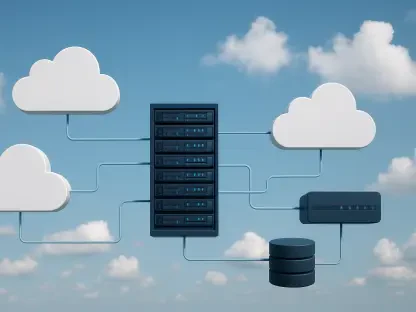
Building on the need for greater resilience, the adoption of hybrid and multi-cloud strategies has become the standard for data-reliant organizations in 2026. This approach involves distributing critical workloads across multiple, legally independent providers and maintaining an on-premises or secondary cold-storage archive for mission-critical information. By ensuring that no single corporate entity holds the only copy of an organization’s digital assets, businesses can insulate themselves from the fallout of a provider’s financial collapse. In 2026, advanced orchestration tools allow for real-time data replication across geographically dispersed regions, meaning that if one data center goes dark, another can immediately take over the workload. Furthermore, the move toward open standards and containerization has reduced the friction associated with platform migration, allowing for greater agility. This technological independence ensures that the data remains mobile and accessible, shifting the balance of power back to the user and away from the centralized infrastructure providers.
Strategic Safeguards: Exit Readiness and Data Escrow
The most successful organizations addressed these risks by establishing robust data escrow agreements and conducting regular business continuity simulations. These escrow services ensured that a verified copy of all critical data, along with the necessary decryption keys and configuration scripts, was held by a neutral third party. When a service provider faced financial instability, these protocols allowed for an orderly transition to a secondary environment without the need for court intervention. Furthermore, legal departments began insisting on exit-as-a-service clauses in their initial contracts, which mandated that providers maintain a funded and tested migration path for all customer data. By treating the cloud as a transient resource rather than a permanent storage solution, these firms effectively secured their digital sovereignty. They realized that the true measure of data ownership was not found in a contract, but in the physical and technical ability to retrieve and relocate assets at a moment’s notice, ensuring their long-term survival.