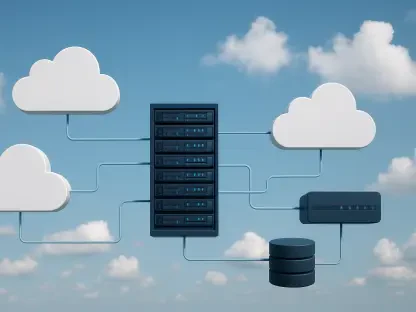

The initial rush to migrate every possible enterprise workload to the public cloud has finally hit a pragmatic wall as organizations across the Asia Pacific and Japan region enter the era of the AI tipping point. This shift is not merely a reaction to external pressures but a calculated strategic refinement intended to maximize the efficiency of generative and agentic artificial intelligence. For many enterprises, the move toward 2026 marks the end of experimental pilot programs and the beginning of massive industrial-scale deployments. As these projects grow, the limitations of standard public cloud environments—particularly regarding cost predictability and performance latency—have become increasingly apparent to IT leaders. Consequently, the modern private cloud has emerged as the preferred architectural foundation. This transition allows companies to maintain the agility associated with hyperscale services while exercising the granular control required for high-performance computing. By prioritizing infrastructure that bridges the gap between on-premises security and cloud-like flexibility, regional leaders are ensuring that their AI initiatives remain both sustainable.
Optimizing the Economic Model: Eliminating Public Cloud Waste
A significant driver behind the migration to private infrastructure is the unsustainable economic burden currently placed on organizations using public cloud for high-volume artificial intelligence workloads. Extensive industry research reveals that nearly all enterprise leaders in the Asia Pacific region admit to substantial financial leakage within their cloud budgets. Statistics indicate that approximately twenty-five percent of all public cloud spending is classified as wasted due to unoptimized resources and idle capacity. As generative AI models require massive computational power, these inefficiencies have transitioned from minor operational annoyances into major financial liabilities. The lack of cost transparency in public environments often results in bill shock, where the expenses of scaling an AI model exceed the projected return on investment. Consequently, businesses are moving away from the “cloud-first” mantra toward a “cloud-smart” approach. This strategy involves carefully analyzing which workloads provide the most value in a private environment where costs are fixed and predictable.
Because scaling artificial intelligence requires consistent and immense computational power, the inherent volatility of public cloud pricing has become a major hurdle for long-term project viability. As a result, a vast majority of organizations in the Asia Pacific and Japan region are actively pursuing or considering workload repatriation. This process involves shifting specific data sets and critical applications from public environments back to modern private clouds. The primary motivation for this change is the pursuit of fiscal stability and performance consistency, ensuring that the development of AI does not lead to runaway expenses. By operating on private infrastructure, enterprises can allocate resources with high precision, eliminating the premium paid for the convenience of on-demand scaling that they no longer require once a model is in full production. This shift signifies a maturing market where technical leaders prioritize the bottom line and operational efficiency over the perceived prestige of being entirely in the public cloud, leading to a more balanced and realistic hybrid ecosystem.
Navigating Data Sovereignty: Managing Fragmented Local Regulations
Beyond the financial implications, the transition to modern private clouds is heavily influenced by the urgent necessity for data sovereignty across diverse geographical markets. The Asia Pacific and Middle East regions are currently navigating a highly fragmented regulatory environment where generic compliance measures are no longer sufficient to meet local legal requirements. Governments are increasingly asserting control over national data assets, mandating that sensitive information regarding citizens must remain within domestic borders. This regulatory pressure has forced IT leaders to prioritize localized data management as a core component of their overall technology strategy. National laws often dictate that critical information must be stored and processed on-premises or within a verified private cloud to prevent it from falling under the jurisdiction of foreign entities. Consequently, the choice of infrastructure is no longer just a technical decision but a legal necessity that determines whether a company can legally operate within a specific country or region.
Legislative frameworks in Australia, India, and Japan have established clear boundaries regarding the handling of sensitive data, making private clouds the most viable option for many large-scale enterprises. These regulations ensure that essential information stays under domestic oversight, effectively shielding organizations from the legal risks and security vulnerabilities associated with storing data in international data centers. By utilizing a modern private cloud, enterprises can establish the necessary physical and logical boundaries required to satisfy these strict residency rules. This approach allows businesses to leverage the full capabilities of advanced AI tools while maintaining a secure and compliant posture that respects local sovereignty. Furthermore, the ability to demonstrate strict control over data placement has become a competitive advantage, as it builds trust with local consumers and government agencies. This focus on compliance ensures that as AI technologies become more integrated into society, the underlying data remains protected by the specific laws of the land in which the company operates.
Scaling Through Modernization: Adopting Platform Engineering
The move toward private infrastructure manifests uniquely within different markets, reflecting the specific regional challenges faced by organizations. In Japan, for example, a noticeable increase in the sophistication of ransomware attacks has transformed data protection into a primary corporate objective. This heightened security consciousness makes the isolated and controlled environment of a private cloud highly attractive to Japanese executives. Meanwhile, India is grappling with a significant talent gap in the management of complex multi-cloud systems, leading many companies to seek out automated private platforms that simplify day-to-one operations. In contrast, Australian organizations are focusing on dismantling internal team silos to better align their IT strategies with national security frameworks for critical infrastructure. These localized nuances highlight that the shift to private cloud is not a one-size-fits-all solution but a tailored response to the specific economic, security, and personnel challenges present in each unique territory within the broader APJ region.
To effectively navigate these regional complexities, many organizations are turning to platform engineering to consolidate their technological stacks into unified and automated private platforms. This modern approach provides internal developers with the same high-speed, self-service experience they have grown to expect from public cloud providers, but it does so while maintaining the rigorous security and cost controls of private hardware. By modernizing their underlying infrastructure and adopting a strategy that prioritizes specific requirements over general trends, enterprises are constructing a resilient foundation. This foundation is ideally suited for the high-demand and high-security requirements of industrial-scale artificial intelligence. As businesses move away from fragmented legacy systems, the adoption of automated private clouds allows them to scale their operations without exponentially increasing their management overhead. This evolution in infrastructure management ensures that the agility needed for modern software development is preserved, even as the data and processing power are brought back under more direct enterprise control.
Strategic Implementation: Future-Proofing the Enterprise Infrastructure
The transition to modern private clouds successfully demonstrated that regional leaders prioritized long-term resilience over the initial convenience of hyperscale outsourcing. Organizations that implemented these private environments achieved a level of fiscal predictability that remained elusive in fully public settings. Decision-makers specifically integrated automated governance frameworks which allowed for rapid scaling without compromising the integrity of sensitive data sets. This strategic pivot shifted the focus from broad migration to intentional workload placement, ensuring that every AI model operated on the most efficient platform available. Technical teams successfully reduced operational complexity by adopting platform engineering principles that bridged the gap between developer speed and infrastructure security. This evolution allowed for the seamless integration of localized data processing, which significantly improved performance for real-time applications. The adoption of these modern architectures provided a clear path forward for managing the increasing demands of generative and agentic artificial intelligence.
Moving forward, the focus shifted toward refining these private environments to support even more specialized hardware requirements for next-generation computing. Leaders established clear protocols for periodic workload assessment, ensuring that the balance between private and public resources remained optimized as market conditions changed. The implementation of robust ransomware protection within the private cloud layer significantly decreased the risk profile for organizations in high-threat environments. These initiatives ultimately proved that a modern private cloud was not a step backward but a fundamental requirement for achieving industrial-grade AI excellence. Organizations that finalized this transition early secured a significant competitive advantage by reducing their technical debt and increasing their regulatory agility. This comprehensive infrastructure strategy provided the stability necessary to explore more advanced AI agents without the fear of uncontrolled costs or compliance failures. The successful integration of these technologies set a new standard for enterprise IT architecture across the entire region.