
The digital era has entered a phase where the sheer scale of distributed denial-of-service attacks has transitioned from a manageable nuisance to a genuine threat against the foundations of modern society. As major security providers react to this shifting landscape, the focus has shifted toward massive defensive expansions, such as the plan to double Arbor Cloud mitigation capacity to 33 terabits per second by August 2026. This monumental surge in defensive capability is not merely a numbers game; it represents a fundamental shift in how critical infrastructure, ranging from power grids to transit hubs, is shielded from malicious volumetric floods. These attacks have grown increasingly sophisticated, leveraging the interconnected nature of global networks to overwhelm traditional defenses. By reinforcing 16 global traffic-scrubbing centers, the objective is to provide a robust safety net for essential services that can no longer rely on localized bandwidth to survive a coordinated digital onslaught.
Strengthening Infrastructure: Strategic Control Over Networks
A pivotal element in this defensive overhaul is the deliberate transition toward total control over the underlying network infrastructure used for traffic mitigation. By integrating technology and hardware from strategic acquisitions, security providers are effectively moving away from their historical reliance on third-party bandwidth and transit providers. This shift allows for a level of direct management that was previously impossible, streamlining the entire mitigation process during high-stress scenarios. When an attack reaches the terabit scale, the ability to manipulate traffic routes and hardware settings without waiting for an external partner is the difference between operational continuity and a total blackout. For critical infrastructure providers, this direct ownership of the path ensures that the journey to the scrubbing center is as efficient as possible, reducing the risk of packet loss or latency spikes during an active crisis.
Moreover, the consolidation of network resources allows for a more fluid scaling of defenses as new threats emerge in the digital environment. Owning the hardware means that security teams can implement custom optimizations that are specifically tailored to the unique traffic profiles of industrial and essential service organizations. This level of granular control is essential when dealing with services that cannot afford even a few seconds of downtime, such as emergency response systems or municipal water management platforms. By eliminating the middleman in the data delivery process, organizations gain a transparent view of their traffic flow, which enhances the reliability of the cloud-based defense layer. This infrastructure is purpose-built to absorb and filter the massive influxes of data that characterize modern cyber warfare, ensuring that the return path for legitimate traffic remains clear and unobstructed by the malicious noise generated by vast botnets.
The Power: Hybrid Defense Models in Action
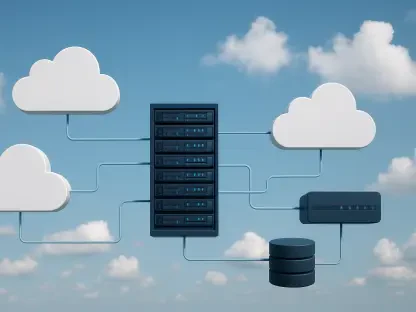
Modern DDoS protection strategies have evolved into a sophisticated hybrid architecture that effectively balances local responsiveness with the raw power of the global cloud. This dual-layered approach places specialized on-premises hardware directly within the customer’s data center to manage smaller, more precise threats that target the application layer. These local systems excel at identifying subtle anomalies that mimic legitimate user behavior, such as slow-rate attacks or complex queries designed to exhaust server resources. By neutralizing these threats at the source, organizations maintain low-latency performance for their most critical applications without needing to reroute traffic across the globe. This is particularly vital for real-time monitoring tools used in the energy sector, where even minor delays in telemetry data can lead to operational inefficiencies or safety concerns in physical systems.
However, when a threat escalates into a massive volumetric flood that threatens to saturate the local internet connection, the system utilizes automated signaling to transition the burden to cloud scrubbing centers. These facilities are designed with the immense capacity required to ingest tens of terabits of data simultaneously, effectively acting as a massive shock absorber for the internet. Once the traffic is redirected, sophisticated filtering algorithms strip away the malicious packets, allowing only clean, authorized data to return to the client’s infrastructure. This seamless transition is the cornerstone of resilience for critical infrastructure, as it prevents the local network from being overwhelmed by brute force. By combining the precision of on-site mitigation with the sheer scale of a 33 terabits per second cloud capacity, the hybrid model provides a comprehensive defense that can withstand both the surgical strike and the blunt-force digital assault.
Addressing the Risks: IT and OT Convergence Challenges
The ongoing convergence of traditional information technology and operational technology has created a new frontier of vulnerability for industrial environments that were once isolated. Modern factories, utility providers, and logistics hubs now rely on internet-facing platforms for a wide array of essential functions, including remote maintenance, real-time data analysis, and supply chain management. While a DDoS attack may not directly alter the internal logic of a programmable logic controller, it can effectively paralyze the management layer that operators use to oversee these machines. If an attacker can disrupt the identity services or the scheduling tools that connect human workers to their equipment, the physical systems can be rendered unreachable. This digital blindness forces a functional shutdown of operations, proving that the impact of a virtual attack can have devastating physical consequences in the real world.
This risk is further amplified by the increasing complexity of the software stacks used to manage these converged environments. Many industrial systems now incorporate third-party cloud services for telemetry and predictive maintenance, creating multiple points of entry that are susceptible to disruption. A coordinated attack targeting these external dependencies can ripple through the entire operational framework, causing a cascade of failures across the network. Security providers are responding by ensuring that the defensive perimeter extends far beyond the traditional data center, protecting the specialized protocols and communication channels used by operational technology devices. As these systems become more integrated, the necessity for a high-capacity defense becomes paramount to ensure that the vital flow of information between the digital control center and the physical machinery remains uninterrupted by those seeking to cause chaos.
The Evolution: Botnets and Sophisticated Attack Vectors
The emergence of massive botnets like Aisuru and Kimwolf has fundamentally altered the threat landscape by weaponizing the sheer number of internet-connected consumer devices. These networks are no longer comprised solely of compromised personal computers; they now consist of millions of Internet of Things devices, including smart televisions and home appliances, which are often poorly secured. Because these devices are distributed across residential and business networks globally, they can generate traffic loads that easily exceed the 30 terabits per second threshold, making them nearly impossible to block through traditional IP-based filtering. The geographic diversity of these botnets means that malicious traffic can originate from almost any point on the globe, requiring a defense system that has a truly global presence and the processing power to distinguish between a legitimate consumer and a hijacked device.
In addition to the growth in volume, the tactics employed by attackers have become significantly more complex, moving toward multi-vector campaigns and carpet-bombing techniques. Carpet-bombing is particularly insidious as it spreads the malicious traffic across a wide range of IP addresses within a target organization, rather than focusing on a single point. This strategy is designed to fly under the radar of traditional alarms that only trigger when a specific host is overwhelmed, making it difficult to detect until the entire network is congested. At the same time, multi-vector attacks hit different layers of the network simultaneously, combining a volumetric flood with an application-layer assault. Combating these sophisticated maneuvers requires an intelligently managed defense system that uses machine learning and real-time analytics to identify patterns in the chaos. Only with this level of advanced detection can critical infrastructure remain operational against such diverse threats.
Future-Proofing: Practical Steps for Resilient Infrastructure
Organizations involved in the management of critical infrastructure recognized that the threshold for effective digital defense had shifted toward a more proactive and integrated posture. They prioritized the implementation of automated response systems that could detect the earliest signs of a volumetric surge before the local pipe reached its capacity limits. This involved a deep audit of all external dependencies, ensuring that every cloud service and third-party API used in daily operations was covered by the same level of protection as the primary data center. By focusing on the resilience of the entire ecosystem rather than just the perimeter, these entities successfully minimized the potential for cascading failures. This strategic shift was supported by the availability of massive 33 terabits per second scrubbing capacities, which provided the necessary breathing room to analyze and neutralize complex multi-vector threats.
The successful defense of essential services eventually relied on a combination of high-capacity hardware and the continuous refinement of security protocols to match the evolving tactics of global botnets. Forward-thinking leaders moved away from viewing cybersecurity as a static insurance policy and instead treated it as a dynamic component of operational reliability. They invested in specialized training for their personnel, ensuring that the human element of the security operations center could effectively collaborate with automated mitigation tools during an active incident. This holistic approach helped bridge the gap between IT and OT security, creating a unified front against digital aggression. As the scale of potential attacks continued to grow, the adoption of direct network control and hybrid defense architectures became the standard for any organization whose failure would impact public safety. This foundation ensured that digital infrastructure remained a resilient backbone.