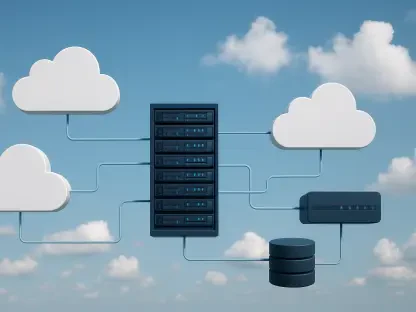

The traditional castle-and-moat security philosophy that once defined corporate data protection has crumbled under the weight of hyper-connected cloud ecosystems and sophisticated supply chain attacks. As organizations increasingly migrate their core functions to specialized cloud environments, the attack surface has expanded far beyond the reach of conventional firewalls or intrusion detection systems. Security professionals now operate in an environment where the average enterprise manages over 130 unique software-as-a-service applications, each representing a potential entry point for malicious actors. This sprawl creates a complex web of permissions and data flows that are difficult to monitor in real-time, especially as attackers shift their focus toward exploiting the inherent trust between vendors and their customers. The fundamental challenge for businesses today is not just defending a static perimeter but managing the dynamic risks associated with a global, interconnected software supply chain that moves at speeds previously thought impossible for any human team to counteract effectively.
The Weaponization of Third-Party Trust
Hackers have recognized that breaching a single high-value software provider is significantly more efficient than attempting to penetrate the hardened perimeters of hundreds of individual corporations. This “one-to-many” exploit strategy targets the soft underbelly of the modern business world: the third-party integrations and API management services that keep global commerce running. By identifying a vulnerability in a common analytics platform or a shared collaboration tool, threat actors can gain lateral access to the sensitive data of every downstream client using that service. This shift in tactics weaponizes the legitimate trust relationships that organizations have carefully built with their technology partners. Once an attacker gains a foothold through a trusted third-party application, they inherit the permissions granted to that tool, allowing them to move through the target network without triggering standard security alarms. This methodology effectively bypasses traditional defense-in-depth strategies, making every integration a potential bridge for adversaries.
The danger is compounded by the fact that many of these third-party connections operate with excessive privileges, often far beyond what is necessary for their specific function. When a marketing tool or a customer relationship management system is granted read-and-write access to a company’s central database, any compromise of that tool translates directly into a high-severity breach. Security teams frequently find themselves in a position where they lack visibility into exactly how data is being exchanged between their internal cloud infrastructure and external SaaS providers. This visibility gap is where sophisticated threat actors thrive, using legitimate API calls to exfiltrate data or establish persistence within the environment. As businesses rush to adopt new productivity tools and AI-driven services, they are inadvertently creating a tangled infrastructure that is nearly impossible to secure through manual oversight alone. The result is a landscape where a minor oversight in a vendor’s security protocol can lead to a catastrophic event for thousands of unrelated enterprises simultaneously.
The Disappearance of the Remediation Window
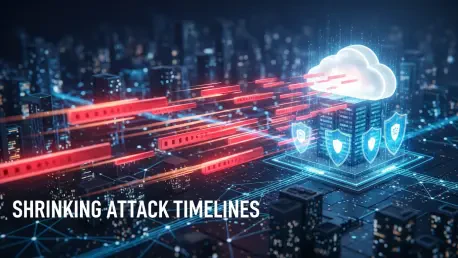
One of the most alarming trends identified in recent threat intelligence reports is the dramatic reduction in the time between a vulnerability being disclosed and its active exploitation by hackers. In previous years, security departments could rely on a remediation window of several weeks to test, validate, and deploy patches for new security flaws. However, that luxury has vanished as sophisticated adversaries now monitor public vulnerability databases and social media channels in real-time to weaponize exploits within hours. For the modern enterprise, this means that the speed of the attacker now routinely outpaces the bureaucratic speed of internal security and IT operations. Manual patching cycles and multi-level approval processes have become liabilities rather than safeguards, as they leave systems exposed during the most critical hours of a vulnerability’s lifecycle. This compression of time demands a fundamental shift in how organizations prioritize their defense strategies, moving toward a state of constant readiness and rapid, automated intervention to mitigate risks.
The integration of artificial intelligence into the attacker’s toolkit has further accelerated these timelines by enabling automated reconnaissance at an unprecedented scale and precision. Threat actors are now utilizing specialized machine learning models to map complex cloud architectures, identify specific misconfigurations, and predict where vulnerabilities are most likely to exist. These AI-driven tools can scan the entire internet for specific weaknesses in seconds, allowing hackers to identify high-value targets with surgical accuracy while avoiding detection by traditional security filters. By automating the discovery phase of an attack, adversaries can focus their human ingenuity on the more complex aspects of exploitation and data exfiltration. This asymmetric advantage means that security teams are no longer just fighting human hackers but are instead locked in a digital arms race against automated systems capable of operating without fatigue. To counter this, enterprises must look beyond static security rules and adopt dynamic defensive measures that can anticipate threats.
Strategic Imperatives for Modern Defense
As the traditional network perimeter becomes increasingly obsolete, the adoption of a zero-trust architecture has emerged as a non-negotiable requirement for cloud-native organizations. This model operates on the principle that no connection, whether it originates from inside or outside the network, should be inherently trusted without continuous verification. Every request for access to sensitive data or critical applications must be authenticated based on strict identity-based policies and contextual factors, such as the user’s location, device health, and typical behavior patterns. By implementing granular micro-segmentation, businesses can limit the lateral movement of an attacker even if they manage to compromise a third-party integration or a single user account. Furthermore, achieving total visibility across the entire software ecosystem is essential for identifying unauthorized data flows or suspicious API activities. This requires a comprehensive inventory of every SaaS application, API endpoint, and external integration used by the company.
To thrive in an environment where attack timelines are measured in days, organizations must transition toward fully automated vulnerability management and real-time threat detection systems. Implementing security orchestration and response platforms allowed teams to mitigate risks at the same speed as the threats they faced, effectively closing the gap between discovery and remediation. Leaders prioritized the consolidation of their security stacks, favoring integrated platforms from providers like CrowdStrike or Palo Alto Networks that offered a unified view of the entire cloud estate. This shift toward proactive, resilient defense ensured that the organization remained agile enough to adapt to the ever-evolving tactics of global adversaries. By moving away from legacy mindsets and embracing automation, businesses secured their data against the relentless pressure of shrinking exploit windows. Ultimately, the survival of enterprise cloud security depended on the ability to treat security as a continuous, automated process. These strategic investments provided the foundation for long-term digital resilience.