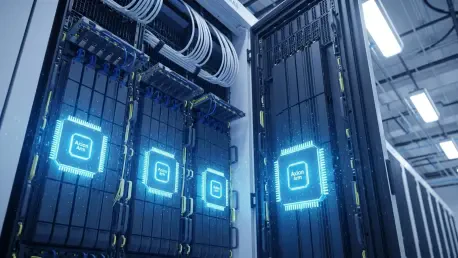

As modern enterprise software demands increasingly outpace the physical capabilities of traditional commodity silicon, cloud providers are forced to reimplement their infrastructure from the ground up to maintain performance. Google has addressed this challenge by pivoting away from standard, off-the-shelf hardware components in favor of creating a proprietary family of custom silicon known as Axion. These processors represent the culmination of a multi-year effort to lower operational costs while simultaneously boosting execution speeds through a specialized architectural model that aligns perfectly with contemporary software needs. By moving toward this internal design philosophy, the company effectively overcomes the rigid physical limitations inherent in older hardware designs that were never intended for the massive scale of modern cloud computing. This transition signifies a fundamental shift in how computing power is delivered, ensuring that resource-heavy applications have the specialized headroom required for future growth without compromising stability.
Architectural Foundations: The Demeter Core and Arm Ecosystem
At the core of this technological breakthrough is the Demeter V2 architecture, which has been specifically engineered to handle the rigorous demands of high-density cloud environments. This core design utilizes a sophisticated smart cache system that drastically reduces data retrieval times, alongside integrated vector units that streamline the execution of complex mathematical calculations. By focusing on single-threaded performance and avoiding certain traditional multi-threading methods, these processors offer more predictable results for users who share resources in a multi-tenant cloud setting. This architectural choice enhances security by providing better isolation between different virtual machines, which is a critical consideration for modern enterprises dealing with sensitive data. The design effectively optimizes the flow of information through the processor, ensuring that every cycle is used as efficiently as possible. Consequently, the Demeter core serves as a robust foundation for the next generation of compute-optimized workloads.
The rapid adoption of this custom hardware is largely attributed to the maturity of the Arm ecosystem, which has seen explosive growth and standardization throughout the global technology industry. Major operating systems and essential developer tools now offer comprehensive support for the Arm architecture, removing the compatibility barriers that previously hindered industry-wide migration. This established environment allows businesses to transition their existing applications to Axion-based instances without the need for extensive code modifications or specialized workarounds. By leveraging this widespread support, Google provides a streamlined computing environment that is free from the historical baggage associated with legacy x86 systems. Developers can utilize familiar programming languages and libraries while benefiting from the inherent efficiency of the Arm instruction set. This synergy between hardware innovation and software readiness ensures that the shift to custom silicon is both practical and beneficial for a wide range of industries.
Performance Optimization: Titanium DPUs and Custom Infrastructure
A fundamental component of the efficiency strategy involves the seamless integration of Axion processors with Titanium Data Processing Units to redefine how background operations are managed. In traditional server architectures, a significant portion of a central processor’s power is often consumed by non-user tasks such as managing storage, handling network traffic, and enforcing security protocols. The Titanium DPU is designed to take over these specific responsibilities, acting as a specialized engine that offloads heavy administrative overhead from the main computing cores. This division of labor ensures that the primary processor is never bogged down by the complexities of the underlying infrastructure, allowing it to dedicate its full potential to the user’s actual application code. By isolating these infrastructure tasks within the Titanium hardware, the system achieves a higher level of responsiveness and reliability. This approach transforms the data center into a more modular and efficient entity where specialized chips handle the work.
The practical benefits of this offloading technique are most visible when examining the overall throughput and latency of complex cloud applications. Because the Titanium hardware handles the intricate details of data movement and encryption, the main Axion cores can process instructions with much higher consistency. This reduction in “jitter” or performance variability is essential for real-time applications that require steady processing speeds to function correctly. Furthermore, the specialized nature of the DPU allows for faster communication between different servers within the data center, which is a key advantage for distributed databases and microservices architectures. Companies utilizing this system find that their software runs more smoothly because the background “noise” of the operating system is effectively silenced by the dedicated hardware. This architectural efficiency not only boosts performance but also simplifies the process of scaling applications horizontally across multiple virtual machines with ease and precision.
Strategic Implementation: Versatile Instances and Customer Value
To cater to a diverse array of business requirements, the new hardware is delivered through specialized virtual machine families, primarily the C4A and N4A series. The C4A instances are purpose-built for compute-heavy applications such as large-scale high-performance computing, high-traffic web servers, and massive relational databases. These machines offer a higher density of processing power to ensure that even the most demanding tasks are completed without bottlenecks. In contrast, the N4A series provides a more balanced and flexible approach, making it suitable for general-purpose applications that require a mix of reliability and cost-effectiveness. A key feature of these instances is the ability for companies to select custom machine shapes, which allows them to fine-tune the amount of memory and processing power they actually need. This prevents over-provisioning and ensures that every workload is matched with the most appropriate and cost-efficient configuration for maximum output.
Customer value is further enhanced by the significant price-performance gains that these new instances offer compared to traditional computing options. Internal testing and early customer benchmarks indicate that Axion-based virtual machines can provide up to 50% better performance for every dollar spent. In specific scenarios involving web serving or data analytics, some users have reported nearly doubling their efficiency, allowing them to process twice the amount of data for the same operational cost. This economic advantage is a powerful incentive for companies looking to optimize their cloud budgets without sacrificing the quality of their digital services. Beyond direct cost savings, the increased efficiency means that applications can handle higher traffic spikes with fewer resources, providing a safety net during periods of peak demand. The transparent value proposition of the Axion family makes it an attractive choice for both startups and established global corporations seeking better fiscal management.
Long-Term Outlook: Sustainability and Enterprise Validation
Environmental sustainability remains a core pillar of the design philosophy, as the Axion family delivers a dramatic reduction in the energy required to power global digital operations. These processors offer a 60% improvement in performance for every watt of electricity consumed, which is a major leap forward in the quest for greener data centers. As energy costs and environmental regulations continue to tighten, the ability to do more with less power has become a critical competitive advantage for cloud providers and their customers. By lowering the total energy consumption of individual server racks, the platform can scale up massive computing resources while keeping its overall carbon footprint under control. This efficiency is not just about reducing heat; it also extends the lifespan of the hardware and reduces the need for complex cooling systems. For enterprises with strict corporate social responsibility goals, switching to these energy-efficient processors provides a clear and measurable path to success.
The transition to Axion-based computing represented a significant milestone in the evolution of cloud-native hardware. Google successfully migrated its most resource-intensive internal services, including YouTube and Gmail, onto these Arm-based processors to validate their reliability and performance. This move demonstrated that even the most complex software architectures could thrive on custom silicon without requiring extensive rewrites. Developers noted that the maturity of the Arm ecosystem allowed for a seamless shift, while operational data confirmed a substantial drop in energy consumption across data centers. The organization utilized these findings to provide actionable roadmaps for enterprise customers looking to reduce costs. Ultimately, the deployment of custom chips proved that moving away from generic hardware was the most effective path for achieving long-term efficiency. By setting this new standard, the company provided a clear solution for businesses struggling with rising power demands.