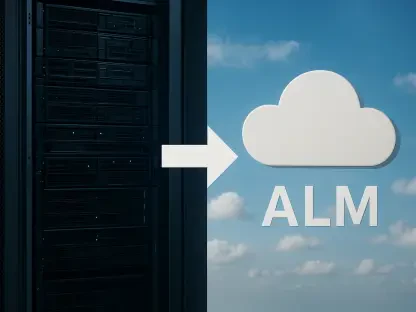

As travelers move through the high-traffic corridors of international airports, the Department of Homeland Security is quietly revolutionizing the foundational elements of transportation safety via its Screening System Data Sharing Consortium. This strategic initiative, overseen by the Transportation Security Laboratory, serves as a catalyst for integrating advanced artificial intelligence and machine learning into the very fabric of checkpoint operations. By centralizing disparate data streams into a single cloud environment, the agency is actively closing the gap between the emergence of new threats and the deployment of effective countermeasures. This modernization effort is not merely a response to current challenges but a proactive architectural shift designed to foster innovation among various stakeholders. The platform provides a secure space where data-driven insights can be transformed into actionable security protocols, ensuring that the nation’s defensive capabilities are always ahead of those who seek to bypass them through sophisticated means.
The Open Architecture Transition: Decoupling Hardware and Software
Historically, the world of security screening has been dominated by proprietary, closed systems that effectively tethered governmental agencies to specific vendors for extended periods. This vendor lock-in often created significant bottlenecks, as integrating new software updates or novel detection algorithms required navigating the complex and often restrictive intellectual property barriers of individual manufacturers. To break this cycle, the Department of Homeland Security is transitioning toward an open architecture framework that emphasizes interoperability and standardized data formats. This strategic shift allows the government to separate the physical scanning hardware from the software responsible for interpreting the results. By decoupling these two components, the agency can leverage the strengths of specialized software developers who might not have the capacity to build heavy industrial machinery but possess the expertise to design superior threat detection logic.
The move toward a standards-based model introduces a much-needed competitive spirit into the security technology market, encouraging a wider array of third-party developers to participate. Under this new paradigm, the cloud-based platform serves as the indispensable technical backbone, offering a neutral ground where software can be tested and validated across multiple hardware configurations. This environment ensures that a single algorithm can function effectively whether it is running on an X-ray scanner from one vendor or a computed tomography system from another. Such flexibility is crucial for maintaining a diverse and resilient security infrastructure that does not rely on a single point of failure. Furthermore, this open approach allows for the rapid iteration of security tools, as developers can push updates to the cloud without needing to physically access machines located in hundreds of different airports, thereby accelerating the deployment cycle.
Data Synthesis and Management: Powering Modern Machine Learning
Effective artificial intelligence is only as strong as the data used to train it, and the new screening platform addresses this by hosting a massive repository of high-quality imaging data. This database includes complex scans from X-ray Computed Tomography and millimeter-wave systems, providing developers with the raw materials needed to teach algorithms how to distinguish between benign items and hazardous materials. However, because real-world examples of rare explosives or prohibited items are often difficult to obtain in large quantities, the initiative also incorporates synthetic and augmented datasets. These simulated scenarios are generated using sophisticated modeling techniques that replicate the physical properties of threats in various packing configurations. By training on a mix of real and synthetic data, AI models gain a more comprehensive understanding of potential threats, allowing them to maintain high detection rates while significantly reducing the occurrence of false alarms.
Beyond serving as a simple storage facility, the cloud-based initiative provides a high-performance computing environment that is essential for modern software development. Developers can utilize containerized code and leverage scalable resources such as cloud-based CPUs and GPUs to run intensive simulations and refine their detection algorithms in real time. This robust infrastructure eliminates the need for individual companies to invest in expensive server arrays, lowering the barrier to entry for innovative startups. The platform also incorporates advanced data management features, including version control and rigorous verification processes, to ensure that every iteration of an algorithm is properly documented and tested against standardized benchmarks. This systematic approach ensures that only the most reliable and accurate tools are moved into the operational phase, where they can be deployed to enhance the safety of the traveling public across the global aviation network.
Operational Security and Finance: Maintaining a Sustainable Ecosystem
Managing the intersection of national security and private-sector collaboration requires a sophisticated approach to data protection, particularly when dealing with Sensitive Security Information. The cloud platform is built with a foundation of rigorous security controls, including granular permission management and comprehensive audit trails that record every interaction with the hosted datasets. This transparency is vital for maintaining the integrity of the system and ensuring that sensitive information is only accessed by authorized personnel for legitimate development purposes. Secure Application Programming Interfaces allow partners to interact with the data without ever moving it outside of the government-controlled security perimeter. By maintaining this strict level of oversight, the Department of Homeland Security can foster a collaborative environment that leverages external expertise while simultaneously upholding the highest standards of confidentiality and operational security.
To ensure that this ambitious technological infrastructure remains viable over the long term, the agency is exploring innovative economic models that distribute the operational costs among all participants. One such approach is the implementation of chargeback mechanisms, where private-sector members who utilize the platform’s high-bandwidth computing and storage resources contribute to its maintenance and expansion. This collaborative funding model creates a sustainable ecosystem where both the government and its industry partners share the financial responsibilities of maintaining a state-of-the-art security environment. By balancing the high costs of cloud infrastructure with the benefits of accelerated innovation, the DHS is building a framework that can adapt to technological shifts without being hindered by budgetary constraints. This fiscal strategy ensures that the platform remains a permanent fixture in the defense strategy, providing an agile foundation for continuous improvement.
The Legacy of Innovation: Actionable Strategies for Long-Term Safety
The transition toward a cloud-integrated security model established a new standard for how international transportation hubs approached the detection of emerging threats. Stakeholders recognized that the traditional reliance on closed systems hindered the rapid adoption of life-saving technologies, leading them to prioritize open architecture as a primary requirement for all future hardware acquisitions. Decision-makers successfully implemented tiered access levels that protected national secrets while still allowing the necessary flow of data for machine learning optimization. Moving forward, authorities should focus on expanding these collaborative networks to include international partners, creating a global defense grid that shares threat signatures in real time. These strategic steps ensured that the security infrastructure remained resilient, cost-effective, and capable of adapting to any challenge, moving away from reactive measures toward a truly proactive and intelligence-led defense.
The evolution of these digital environments proved that cloud scalability was the most effective way to manage the massive datasets required for millimeter-wave and X-ray analysis. By implementing standardized APIs, the agency enabled a level of technical agility that had been previously impossible under the old proprietary models. Security experts recommended that future infrastructure projects continue to prioritize vendor-agnostic hardware to avoid the stagnation of the past. It became clear that the integration of synthetic data not only improved detection rates but also provided a cost-effective method for training systems against hypothetical threats that had not yet appeared in the field. These advancements laid the groundwork for a more predictive screening process, ensuring that the lessons learned from this modernization provided a blueprint for other governmental sectors seeking to harness the power of artificial intelligence and cloud computing for the public good.