
Modern computing has officially migrated from the pristine, climate-controlled sanctuaries of urban data centers into the chaotic reality of industrial manufacturing, high-altitude aviation, and remote military outposts. As organizations seek to process massive amounts of data at the point of origin, the traditional server rack has become a liability, necessitating a radical shift toward hardware that can withstand physical trauma while maintaining peak performance. Hewlett Packard Enterprise has addressed this challenge by expanding its ProLiant edge computing portfolio with the introduction of ruggedized Gen12 servers designed to operate in extreme stressors that would typically destroy standard hardware. The cornerstone of this release is the ProLiant Compute EL2000 chassis, which serves as a protective shell for the EL220 or EL240 Gen12 servers, effectively bridging the gap between sophisticated data center capabilities and the brutal conditions found on oil rigs, factory floors, and tactical battlefields.
Engineering for the Physical Edge: Hardware and Durability
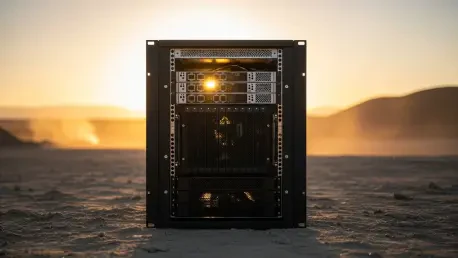
The structural integrity of the EL2000 chassis represents a departure from standard server design, prioritizing physical resilience without sacrificing the density required for modern workloads. By utilizing a modular approach, the chassis allows for the installation of either two EL220 Gen12 servers for balanced performance or a single EL240 Gen12 server for more intensive graphical and computational tasks. This versatility is enhanced by a specialized environmental ruggedization kit that enables these systems to function in temperatures ranging from a freezing -40 degrees to a blistering 55 degrees Celsius. Such a thermal range is critical for equipment deployed in arctic regions or desert environments where traditional cooling systems would fail. Furthermore, the hardware is engineered to maintain operational stability in environments with up to 95% humidity, preventing the internal corrosion and short-circuiting that often plague electronics in tropical or coastal installations where the air is thick with moisture and salt.
Beyond temperature and humidity, the mechanical design of these servers accounts for the violent vibrations and electromagnetic interference common in heavy industry and defense. The Gen12 lineup is built to survive the constant shaking found on transport aircraft or ground vehicles moving across rugged terrain, ensuring that internal components remain seated and functional despite persistent mechanical stress. Protection against electromagnetic interference (EMI) is also integrated, which is essential for maintaining signal integrity near heavy machinery or high-powered radio equipment. By adhering to rigorous national security and telecommunications standards for survivability at varying altitudes and in radio access network environments, these servers provide a reliable foundation for mission-critical applications. This level of durability ensures that organizations can deploy high-performance compute resources in locations previously deemed impossible, extending the reach of real-time data analysis to the furthest boundaries of human infrastructure.
High Performance at the Network Perimeter: Processing and AI
While the physical casing provides the necessary protection, the internal components of the ProLiant Gen12 ruggedized servers deliver the massive computational power required for modern AI and data-heavy applications. These systems utilize the latest Intel Xeon 6 processors, offering a scalable architecture that ranges from eight to 144 cores within a compact form factor. This scalability allows businesses to tailor their compute power to specific needs, whether they are running lightweight microservices at a retail branch or performing complex data aggregation at a remote telecommunications hub. The transition to Xeon 6 architecture ensures that these edge servers do not lag behind their data center counterparts in terms of instruction sets or processing efficiency. This parity is vital for developers who need to deploy consistent codebases from the cloud to the extreme edge without worrying about hardware limitations or performance bottlenecks that once characterized ruggedized equipment.
The demand for artificial intelligence at the edge has also necessitated the integration of high-end graphical processing units within these hardened shells. The EL240 Gen12 model can be equipped with Nvidia RTX Pro 4500 or Nvidia RTX Pro 6000 Blackwell server edition GPUs, bringing unprecedented levels of machine learning and graphical rendering to the field. These GPUs enable local inferencing for computer vision, autonomous navigation, and predictive maintenance, reducing the need to transmit vast quantities of raw data back to a central cloud for processing. By keeping the compute power local, organizations can achieve near-instantaneous response times, which is a life-saving requirement in defense scenarios or a productivity-saving feature in automated manufacturing. The combination of high-core-count CPUs and Blackwell-generation GPUs ensures that even the most demanding algorithms can run efficiently in the middle of a desert or on a moving naval vessel.
Operational Continuity: Security and Future-Proofing
Deploying sophisticated hardware in remote or hostile environments presents a unique challenge regarding management and security, as these locations are often understaffed or physically inaccessible for long periods. To solve this, the new ProLiant systems integrated advanced remote management capabilities that allowed technicians to monitor, update, and secure servers from halfway around the world. These features were designed to ensure that the hardware remained operational without the need for on-site intervention, which was a critical factor for telecommunications providers managing thousands of 6G-ready cell sites. Security was also prioritized through silicon-based protection, ensuring that the firmware remained untampered even in locations where physical access could not be strictly monitored. This holistic approach to management ensured that the servers were not just durable in a physical sense, but also resilient against cyber threats and operational failures that could lead to costly downtime.
Decision-makers who moved to implement these ruggedized solutions focused on long-term scalability and the ability to adapt to shifting technological standards over the next few years. The strategic integration of high-performance compute in harsh environments allowed for the deployment of sophisticated radio access networks and battlefield intelligence systems that operated with high availability. Organizations that adopted this hardware were advised to conduct thorough site surveys and prioritize systems that met specific environmental certifications relevant to their industry. By moving away from fragile, repurposed hardware and embracing purpose-built ruggedized servers, companies successfully mitigated the risks associated with edge computing. The transition to Gen12 hardware represented a significant step forward in making data-center-level performance a standard feature of the most remote and hostile locations on the planet, ultimately proving that compute power no longer had to be tethered to a traditional office.