
Maryanne Baines joins us to discuss the gritty reality of shifting frontier AI models from theoretical weights to high-performance production environments. As an expert in cloud-native infrastructure, she provides a deep dive into how specialized cloud architectures are being built from the ground up to accommodate the explosive growth of AI agents. We explore the necessity of moving beyond simple model downloads to a regime of custom kernels, the critical role of the Cloud Native Computing Foundation in shaping enterprise infrastructure, and the collaborative engineering required to meet high-stakes production deadlines.
When transitioning a model from a repository like Hugging Face to a high-scale production environment, what are the primary engineering hurdles that often catch teams off guard?
The most common misconception is that simply downloading model weights from a repository like Hugging Face is the final step in the journey. In reality, that is just the starting line for a very long and demanding race toward production stability. When you are dealing with high-scale inference, you quickly realize that the “out-of-the-box” code often fails to meet the rigorous performance requirements of a live enterprise environment. My teams frequently encounter situations where we have to dive deep into the stack to patch engines and runtimes specifically for newly released models to ensure they don’t crash under load. This process involves a high-stakes “Day Zero” mentality where infrastructure specialists and machine learning engineers work side-by-side to provide custom kernels and optimize the runtime before the first user even hits the API. It is a grueling, hands-on process that requires a fundamental understanding of how the software interacts with the underlying silicon.
With the recent shift to the Platinum membership tier in the Cloud Native Computing Foundation, how does deep involvement in open-source governance change the way a cloud provider manages massive AI workloads?
Moving to the Platinum tier is a loud and clear signal that the era of simply consuming open source is over; we are now in the era of actively shaping it to survive the pressure of AI. Kubernetes has been the bedrock of our explosive growth, but the standard versions of these platforms weren’t originally designed to handle the unique orchestration needs of thousands of interconnected GPUs. By taking a leadership role in the CNCF, we can take the production problems we see in the trenches—like complex scheduling and resource contention—and bake those solutions directly into the upstream code. This helps the entire community of over 11,400 tech leaders avoid the same pitfalls we’ve already navigated. It allows us to transition from being a reactive service provider to a proactive architect of the very systems that the global AI economy now relies on.
Can you elaborate on the collaboration between infrastructure specialists and machine learning engineers when it comes to patching runtimes for newly released models?
The synergy between these two groups is what determines whether a model launch is a success or a total system failure. Infrastructure specialists understand the limits of the hardware, while ML engineers understand the mathematical nuances of the model; when a new frontier model drops, they must immediately collaborate to patch open-source inference engines like vLLM and SGLang. This isn’t just about minor tweaks; it’s about writing specific kernels that allow the model to communicate more efficiently with the hardware. I’ve seen cases where these combined teams work through the night to ensure that the inference stack can handle the specific cluster topology required for a massive job. This collaborative effort ensures that we aren’t just running a model, but we are running it at the absolute peak of its theoretical efficiency, which is essential when millions of dollars in compute time are on the line.
What role does cluster topology and device-specific scheduling play in ensuring that inference jobs do not bottleneck at scale?
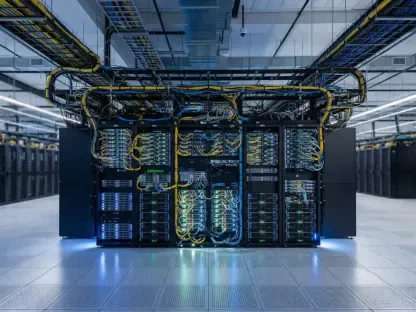
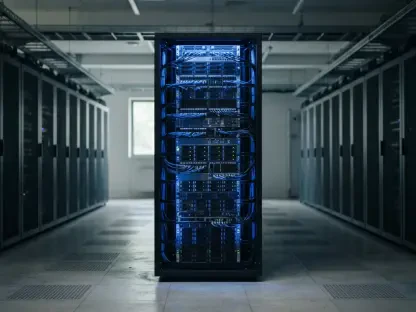
Cluster topology is often the hidden “ghost in the machine” that can either make or break your performance at scale. It is not enough to simply find a node with an available device; you have to account for how those nodes are physically and logically connected to minimize latency. We work closely with Kubernetes special interest groups to bring these real-world production problems to the forefront, such as finding nodes with the exact right devices and accounting for the specific paths data must take through the network. If your scheduling is “topology-blind,” you end up with massive bottlenecks where the GPUs are sitting idle, waiting for data to crawl through a sub-optimal route. We’ve found that by optimizing how we schedule large training and inference jobs based on the physical layout of the data center, we can significantly reduce the overhead that usually plagues large-scale AI deployments.
What is your forecast for Kubernetes inference?
I expect Kubernetes inference to evolve from a general-purpose orchestration tool into a highly specialized, AI-aware operating system for the entire data center. We are currently in a unique position where the feedback loop between frontier model builders and infrastructure providers is tighter than it has ever been. Over the next two years, we will see the community integrate much more granular controls for GPU memory management and networking directly into the Kubernetes core. This will empower more organizations to reach the 15 million-plus viewer milestones we see for major AI-driven broadcasts without fear of their infrastructure crumbling. Ultimately, the future belongs to those who can bridge the gap between open-source flexibility and the raw, uncompromising power required by the next generation of AI agents.