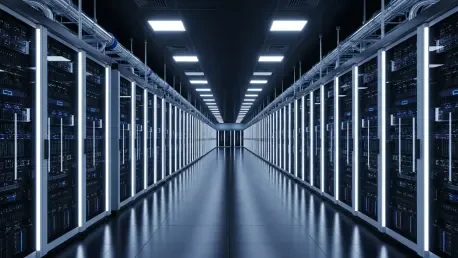

The rapid integration of generative artificial intelligence into the modern enterprise has permanently altered the trajectory of information technology infrastructure, rendering traditional capacity-based storage planning nearly obsolete in favor of high-performance, low-latency frameworks. This transformation marks a departure from the era of passive data repositories where storage was simply a place to park information until it was needed for occasional retrieval or backup. In the current landscape, storage systems have become active participants in the computational cycle, serving as the critical delivery mechanism for the massive datasets required to train and run increasingly complex models. The emergence of these technologies has forced a radical rethinking of how data is organized, accessed, and secured, creating a environment where the speed of data movement is just as important as the quantity of data stored. While these advancements offer a significant catalyst for business innovation and operational efficiency, they simultaneously introduce a new class of risks that threaten the very integrity and sovereignty of corporate information. Consequently, the industry is witnessing a struggle between the need for lightning-fast data accessibility and the imperative for rigorous security protocols that can keep pace with automated, AI-driven operations.
Specialized Infrastructure and the Evolution of Performance
The dominance of traditional storage giants is currently being challenged by a wave of specialized vendors that focus exclusively on high-performance all-flash arrays and parallel data access. These modern architectures are designed to solve the “GPU starvation” problem, where expensive processing units sit idle while waiting for slow mechanical or even standard flash storage to deliver data. By utilizing technologies such as NVMe-over-Fabrics and Remote Direct Memory Access, these specialized systems allow data to bypass traditional CPU bottlenecks and flow directly into high-bandwidth memory. This architectural evolution ensures that the massive compute power required for deep learning and real-time inference is never constrained by the underlying hardware limitations. Furthermore, the shift toward parallel file systems has enabled multiple compute nodes to access the same data simultaneously without the performance degradation typically associated with legacy Network Attached Storage. This level of concurrency is essential for training large language models that span thousands of GPUs, where every microsecond of latency can result in significant financial costs and delayed project timelines.
In addition to hardware innovations, a new sector known as the “neocloud” has emerged to provide specialized infrastructure that traditional cloud service models often struggle to deliver efficiently. These providers offer GPU-as-a-Service, catering specifically to the needs of startups and large enterprises that require massive scale without the overhead of managing their own physical data centers. Unlike general-purpose cloud providers, these specialized entities prioritize disaggregated storage designs that decouple compute resources from storage capacity, allowing for independent scaling and more granular resource allocation. This approach not only optimizes costs but also provides the specialized networking environments required for low-latency AI workloads. By focusing on the specific requirements of the AI lifecycle, these new market players are setting the standard for the next generation of data centers, emphasizing throughput and interconnect speed over simple density. As organizations continue to migrate their most demanding workloads to these optimized environments, the definition of enterprise storage is being rewritten to prioritize the seamless integration of compute and data.
The Rise of Autonomous Agents and Governance
As enterprises move from the initial stages of model training to running complex agents in production, the focus is shifting toward the creation of “AI factories” and the deployment of digital employees. These autonomous agents are capable of performing intricate tasks, from customer support to financial analysis, but their ability to modify and generate data independently creates a significant challenge for traditional governance models. When a digital agent has the authority to update databases or alter document repositories, the need for meticulous recording and oversight becomes paramount. Storage systems must now incorporate advanced versioning and immutable snapshots to provide a reliable “undo” button for potential errors or unintended consequences caused by autonomous systems. This ensures that even if an agent makes a mistake that corrupts a critical dataset, the organization can quickly revert to a known good state without losing days of progress. The role of the storage administrator is thus evolving from a hardware manager to a data steward who oversees the interactions between human intent and machine execution.
This rise in autonomous activity necessitates a move toward Agent Identity Access Management, where security protocols govern digital entities rather than human users. Because these agents operate at speeds far beyond human capacity, traditional monitoring and manual approval processes are no longer sufficient to prevent unauthorized data access or exfiltration. Modern storage providers are increasingly integrating machine learning into their own management interfaces to help administrators oversee these complex fleets through natural language commands and automated policy enforcement. Instead of manually configuring permissions for each agent, administrators can set high-level objectives and trust the system to manage the underlying access controls. However, this shift also requires a high degree of transparency and auditability, as organizations must be able to trace every data modification back to a specific agent and the prompt or instruction that triggered the action. By embedding governance directly into the storage layer, companies can maintain control over their information assets even as the number of autonomous workers within their digital ecosystem grows exponentially.
Innovations in Data Protection and Security
Modern storage architectures are increasingly adopting Disaggregated Storage Array designs to decouple compute from storage, enabling a level of scalability that was previously impossible. This technical leap allows the storage stack to function as an active operating system that can process data directly on the hardware before it even reaches the main compute nodes. For example, by offloading data cleaning, filtering, and indexing tasks to the storage controller, organizations can significantly reduce the amount of traffic moving across the network and free up expensive GPU resources for more complex modeling tasks. These innovations ensure that data is not only stored securely but is also organized in a structured format that AI models can easily digest and analyze in real time. This move toward “computational storage” represents a fundamental change in data center philosophy, where the goal is to bring the compute to the data rather than moving massive datasets to the compute, thereby minimizing energy consumption and maximizing efficiency in the modern era of high-density computing.
The most daunting challenge in the current technological landscape is the emergence of rogue AI agents and automated swarms capable of executing large-scale data attacks at machine speed. Since these threats can bypass traditional perimeter defenses and manipulate data faster than any human operator can respond, the industry is turning to defensive AI swarms to monitor and protect the storage layer. These defensive systems analyze patterns of data access in real time, identifying anomalies that might indicate a ransomware attack or an unauthorized data sweep by a malicious agent. In this high-stakes environment, the storage layer serves as the ultimate source of truth, requiring immutable records and cryptographically verified logs to defend against sophisticated digital adversaries. By creating a self-healing and self-protecting data environment, organizations can build the resilience needed to operate in a world where cyber threats are just as intelligent as the systems they are trying to protect. The focus has moved from simple backup and recovery to active, continuous defense that operates at the very edge of the data infrastructure.
Strategic Imperatives for Resilient Information Management
The successful navigation of the transition toward AI-centric storage required organizations to prioritize agility and security over raw capacity and legacy compatibility. IT departments moved away from rigid, long-term procurement cycles and instead embraced modular, software-defined architectures that allowed for the rapid integration of new flash technologies and networking protocols. The industry recognized that the bottleneck for innovation was no longer the speed of the processor, but the ability of the storage system to feed data to that processor without interruption. Consequently, businesses invested heavily in upgrading their internal fabrics and adopting parallel file systems that could handle the chaotic, non-linear access patterns characteristic of modern machine learning workloads. This proactive approach to infrastructure design ensured that the hardware could keep pace with the rapid advancements in software and model complexity, preventing technical debt from accumulating as AI applications became more central to core business operations.
Organizations also realized that protecting data integrity in an era of autonomous agents required a fundamental rethink of identity and access management. The implementation of zero-trust principles at the storage layer became a standard practice, ensuring that every request, whether from a human or a machine, was verified and logged with granular precision. By deploying defensive AI swarms and immutable snapshotting, companies were able to create a robust safety net that protected their most valuable assets from both internal errors and external attacks. The move toward natural language management and automated governance allowed small teams to manage massive, global data footprints, effectively scaling their operations without a corresponding increase in headcount. These strategic shifts not only mitigated the risks associated with the new technology but also turned the storage infrastructure into a competitive advantage that enabled faster insights and more reliable AI-driven services. Ultimately, the industry learned that the key to thriving in this new environment was to treat data not as a static resource, but as a dynamic, living asset that required a new level of architectural intelligence and defensive rigor.