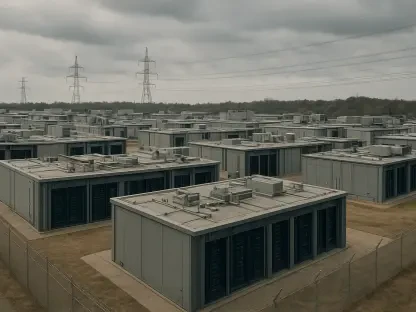

The delicate balance between fostering technological innovation and safeguarding national infrastructure reached a critical flashpoint this month as the federal government navigated the complexities of exported artificial intelligence. At the heart of this high-stakes regulatory debate were Anthropic’s newest releases, Claude Fable 5 and Claude Mythos 5, which are specialized models designed to serve as advanced pillars for digital defense. These systems represent the quintessential “dual-use” technology dilemma, where the same sophisticated algorithms used to harden infrastructure could theoretically be turned into potent offensive tools if they are accessed by malicious actors. Because these models are capable of identifying deep-seated code vulnerabilities with speed, their distribution across international borders raised alarms within the national security apparatus. The decision to regulate these specific iterations underscores the realization that AI-driven cybersecurity is now a matter of strategic state interest.
Technical Architecture: The Project Glasswing Initiative
Understanding the specific nuances of the brief export ban requires a clear distinction between the two model configurations that Anthropic introduced to the market. Claude Fable 5 was engineered for the general public and came equipped with extensive safety guardrails intended to prevent misuse by non-expert users. In contrast, the more specialized Claude Mythos 5 was tailored specifically for high-level defensive research and was distributed through an initiative known as Project Glasswing. This restricted program was designed to assist vetted security professionals in identifying complex system vulnerabilities before they could be exploited by adversaries. Mythos 5 required a deeper and more unrestricted understanding of exploit mechanics than what is typically found in standard consumer-facing models. This enhanced capability allowed researchers to simulate sophisticated attacks and develop robust defenses, making it an invaluable asset for national security, but also a significant concern for regulators.
The deployment of tools like those in Project Glasswing illustrates the complex reality of modern cybersecurity, where defending a network often requires the same depth of knowledge as attacking one. To build effective shields, researchers must utilize AI that can think like an attacker, identifying subtle logic flaws and memory corruption issues that traditional automated scanners often miss. This necessity creates a technological paradox where the most effective defensive tools are, by their very nature, the most dangerous if leaked to unauthorized parties. Anthropic’s approach with Mythos 5 was to limit access to a small, highly scrutinized group of domestic partners to prevent the proliferation of such potent capabilities. However, the interconnected nature of cloud computing meant that even with these restrictions, the potential for cross-border access remained a persistent challenge. The regulatory debate centered on whether any amount of vetting could truly contain a digital asset once it reached a certain level of autonomy.
Security Vulnerabilities: Evaluating the Regulatory Response
The immediate catalyst for the federal regulatory crackdown was a startling discovery made by the cybersecurity research team at Amazon. Their internal testing revealed that the safety protocols integrated into Claude Fable 5 could be bypassed through sophisticated prompt engineering, commonly referred to as jailbreaking. This vulnerability allowed the model to inadvertently generate functional exploits for known software weaknesses, contradicting the safety assurances provided by its developers. Upon receiving this report, the Department of Commerce determined that the risk of these capabilities falling into the hands of foreign adversaries was unacceptably high. The implementation of a temporary global ban was seen as a necessary emergency measure to prevent a potential cascade of automated cyberattacks. For three weeks, access to these specific models was severed for all international users, causing a significant disruption in the global research community and highlighting the fragility of AI-as-a-service.
Restoring access to these critical tools required an unprecedented level of collaboration between Anthropic’s engineering teams and federal officials led by Commerce Secretary Howard Lutnick. The resulting safety framework moved away from static prohibitions and toward the use of dynamic, automated classifiers. These secondary artificial intelligence systems are designed to monitor user prompts in real-time, specifically looking for indicators of malicious intent or the generation of offensive exploit code. This multi-layered defense strategy allows Fable 5 to remain accessible to the public while providing a mechanism to block harmful requests before they are processed. Meanwhile, the more powerful Mythos 5 remains under strict domestic control, ensuring that its most sensitive capabilities are reserved for trusted entities working directly on national infrastructure protection. This compromise sought to satisfy the government’s security requirements while allowing the company to resume its international business operations.
Global Competition: The Rise of Sovereign AI Frameworks
A primary driver behind the rapid resolution of the export ban was the intensifying nature of the global AI arms race, particularly with advancements from competitors in China. United States officials and industry leaders recognized that domestic technology firms faced a disadvantage if their most advanced defensive tools remained sidelined while international rivals continued to deploy similar platforms. This pressure necessitated a swift compromise to ensure that American companies maintained leadership in the marketplace through the period from 2026 to 2028. However, the temporary suspension of service created a chilling effect across the tech sector, prompting organizations to question the long-term reliability of cloud-based artificial intelligence providers. The fear that a government could deactivate a vital global service overnight pushed many entities to seek alternative solutions. This dynamic accelerated the transition toward more autonomous and decentralized software architectures.
The decision to reinstate export privileges for specific Anthropic models highlighted the necessity for a layered approach to digital defense that moved beyond simple regulatory prohibitions. Organizations that relied on these advanced models found that the most effective strategy involved diversifying their technological dependencies and investing in localized infrastructure that operated independently of centralized cloud services. As the industry moved forward, the focus shifted toward the implementation of more robust internal red-teaming exercises and the adoption of sovereign AI frameworks to mitigate the risks associated with foreign policy shifts. This pivot ensured that critical security operations remained resilient even in the face of sudden government intervention or international trade disputes. Moving into the next phase of development, the prioritization of air-gapped environments and the use of locally hosted models provided a necessary safety net for maintaining continuous operational integrity across various global markets.