
Banks have traditionally struggled with the costly requirement of maintaining oversized on-premise infrastructure just to manage rare seasonal traffic spikes. This ongoing friction between the necessity of high-capacity reliability and the desire for operational efficiency has long dictated the

Traditional monitoring frameworks fail to capture why an autonomous agent provides incorrect data while its infrastructure metrics report perfect health. This fundamental disconnect represents a critical bottleneck for enterprises operating in the 2026 technological ecosystem, where the success of

The integration of API Gateway with Agent Registry allows developers to automatically publish tool metadata where agents can find and consume services efficiently. In 2026, the technological ecosystem has reached a point where agents are the primary drivers of digital workflows, yet much of the

Maryanne Baines is a seasoned authority in cloud technology and enterprise tech stacks, renowned for her ability to dissect how platform architectures translate into tangible business value. Today, she joins us to discuss Koa, a specialized CRM reasoning model developed by Salesforce in

The architectural complexity of modern cloud-native environments has reached a tipping point where manual intervention is no longer a viable strategy for maintaining system health or optimizing operational costs. Industry data reveals that a staggering percentage of Kubernetes clusters suffer from
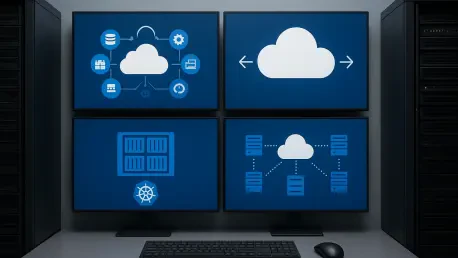
The transition toward complex container orchestration has reached a tipping point where operational debt finally demands full repayment. For years, the rapid adoption of cloud-native technologies was viewed as a catalyst for business agility, allowing companies to scale services with speed.