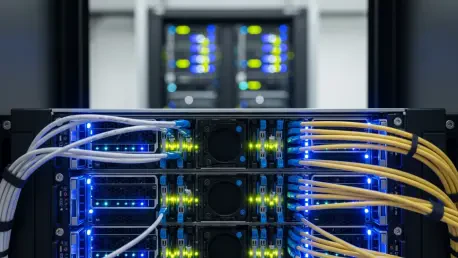

The transition from experimental artificial intelligence pilots to full-scale production environments has fundamentally altered the structural requirements of the modern data center, forcing a reevaluation of how compute and storage resources are allocated. Broadcom has responded to this shift by introducing VMware Cloud Foundation (VCF) 9.1, a platform specifically engineered to bridge the gap between legacy virtualization and the intensive demands of “Private AI.” By integrating advanced software-defined capabilities directly into the core hypervisor stack, this release provides a cohesive environment where organizations can deploy, manage, and scale AI workloads with the same level of operational maturity they apply to traditional enterprise applications. The platform effectively consolidates compute, storage, networking, and security into a unified framework, offering a resilient alternative to the often fragmented and unpredictable nature of public cloud AI services. This move signals a significant departure from the trend of offloading complex models to third-party providers, as enterprises increasingly seek to reclaim control over their proprietary data and processing pipelines. The architecture of VCF 9.1 is designed not just for the chatbots of the past, but for the sophisticated autonomous agents and inferencing tasks that define the current technological landscape of 2026.
The Strategic Migration Toward Private Cloud Systems
A decisive shift is occurring within the global enterprise landscape as organizations move away from a “public-cloud-first” mentality toward a more nuanced, data-centric private infrastructure strategy. Recent industry research indicates that approximately 56% of large-scale organizations are now prioritizing private clouds for their production-grade AI inferencing tasks, while public cloud usage for these specific workflows has seen a notable decline to 41% since the start of 2026. This trend is largely fueled by the realization that while public clouds offer rapid prototyping capabilities, they often fail to provide the financial predictability and data sovereignty required for long-term operations. IT leaders are increasingly wary of the “AI tax” associated with public infrastructure, where hidden costs for data movement and unpredictable compute surges can erode the return on investment for generative AI projects. By moving these workloads to a dedicated private foundation like VCF 9.1, businesses can ensure that their most sensitive intellectual property remains within their own digital borders, mitigating the risks of data leakage or unauthorized access that are inherent in multi-tenant environments.
Building on this desire for autonomy, the migration toward private AI infrastructure is also driven by the need for deeper architectural control. In a public cloud setting, hardware configurations are often standardized and opaque, limiting the ability of developers to fine-tune systems for specific model requirements. VMware Cloud Foundation 9.1 reverses this dynamic by allowing organizations to curate their own hardware ecosystems while maintaining a consistent software-defined operational layer. This level of control is essential for managing the high-velocity data pipelines required for real-time AI applications, where latency and throughput can significantly impact the performance of agentic systems. Furthermore, the ability to maintain a local, high-performance environment allows for more rigorous compliance and audit trails, which are becoming non-negotiable in highly regulated sectors like finance and healthcare. As the complexity of AI models grows, the stability of a private cloud foundation provides the necessary “gravitational pull” to keep data and compute closely coupled, ensuring that the performance gains of the latest silicon are fully realized within a secure and managed perimeter.
Economic Efficiency and Intelligent Resource Management
One of the primary barriers to scaling AI within the enterprise has been the exorbitant cost of specialized hardware, but VCF 9.1 introduces innovative software techniques to alleviate these capital expenditures. A standout feature of this release is intelligent memory tiering, which enables a single cluster to efficiently manage a hybrid mix of AI-intensive and traditional business workloads without sacrificing performance. This capability allows organizations to maximize the utilization of their existing server fleets, potentially reducing overall server costs by up to 40% by eliminating the need for separate, dedicated silos for different application types. By dynamically shifting resources between virtual machines and containers based on real-time demand, the platform ensures that expensive GPU and CPU cycles are never wasted. This approach is particularly beneficial in the current market environment where hardware supply chains remain tight, as it allows enterprises to delay costly infrastructure refreshes by squeezing significantly more productivity out of their current assets through smarter software orchestration.
Beyond compute efficiency, the platform addresses the massive data growth associated with AI by implementing sophisticated deduplication and compression technologies specifically optimized for AI training and inferencing pipelines. These storage-saving features are projected to lower the total cost of ownership for storage infrastructure by nearly 39%, a critical factor as datasets for large language models continue to expand at an exponential rate. By reducing the physical footprint of data without compromising access speeds, VCF 9.1 enables organizations to maintain vast archives of training data locally, which is essential for the continuous refinement of proprietary models. This focus on storage optimization ensures that the move to a private cloud does not lead to a massive sprawl of hardware, but rather a more compact and efficient data center footprint. The integration of these features into the core VCF stack means that storage management is no longer a separate, manual task but an automated function of the cloud foundation, allowing IT teams to focus on delivering value rather than managing disks.
Operational Automation and High-Velocity Application Delivery
As AI deployments grow from isolated proof-of-concepts to fleet-wide enterprise services, the operational complexity of managing thousands of hosts can become overwhelming for even the most seasoned IT departments. VMware Cloud Foundation 9.1 directly addresses this scaling challenge by doubling its host management capacity to support up to 5,000 hosts within a single management domain. This massive increase in scale is accompanied by significant improvements in lifecycle management, with platform updates and patches now executing four times faster than previous iterations. For organizations operating in air-gapped or highly secure environments, this automation is a game-changer, as it allows for the rapid deployment of critical security patches and performance enhancements with minimal downtime. The platform’s ability to maintain a “desired state” across such a large infrastructure footprint ensures that the foundation remains stable and compliant, even as the underlying AI workloads evolve and grow in complexity.
This operational maturity extends into the realm of application development through the enhanced VMware vSphere Kubernetes Service, which bridges the traditional gap between virtual machines and modern containerized environments. By providing a unified stack for both types of workloads, VCF 9.1 allows developers to deploy Kubernetes clusters 70% faster, significantly shortening the time-to-market for new AI-driven features. The platform utilizes “Live Application Stack Blueprints,” which enable DevOps teams to capture complex, multi-component applications as templates that can be replicated across development, testing, and production environments with total consistency. This capability eliminates the “it worked on my machine” syndrome that often plagues AI development, ensuring that the performance characteristics of an inferencing model remain identical regardless of where it is deployed. By unifying the operational silos that typically separate IT operations from application developers, Broadcom has created a streamlined pipeline that accelerates the delivery of intelligent services while maintaining the rigorous governance required by the enterprise.
Hardware Synergy and the Zero-Trust Security Paradigm
The success of a private AI strategy depends heavily on the seamless integration between the software-defined layer and the underlying high-performance silicon, a challenge that VCF 9.1 tackles through deep ecosystem partnerships. Broadcom has collaborated closely with industry leaders such as NVIDIA, AMD, and Intel to ensure that the platform can fully exploit the capabilities of the latest hardware accelerators, including NVIDIA’s Blackwell architecture and Intel’s Xeon 6 processors. This open hardware approach ensures that enterprises are not locked into a single vendor’s roadmap, providing the flexibility to choose the best silicon for specific tasks—whether it be high-speed networking with BlueField-3 DPUs or encrypted data acceleration using Intel QuickAssist Technology. By acting as the “glue” between diverse hardware components, VCF 9.1 creates a high-performance fabric that can handle the massive data throughput required for model training while maintaining the low latency needed for real-time agentic AI interactions.
In parallel with performance, the platform embeds security into the very fabric of the hypervisor, moving away from perimeter-based defenses toward a comprehensive Zero-Trust architecture. As AI models and their associated datasets represent an organization’s most valuable digital assets, VCF 9.1 introduces lateral security measures through VMware vDefend, which provides up to 9 Tbps of threat inspection performance to prevent malicious actors from moving across the network. This granular visibility is crucial in an AI context, where a single compromised node could otherwise provide a pathway to sensitive training data or proprietary weights. Furthermore, the platform integrates advanced ransomware recovery tools that allow organizations to create isolated recovery environments to validate data integrity before restoration. This proactive security stance ensures that even in the event of an attack, the organization can maintain data sovereignty and resume AI operations with confidence, knowing that the foundation of their digital infrastructure has not been fundamentally compromised.
Implementing the Future of Agentic AI Infrastructure
The arrival of VMware Cloud Foundation 9.1 marks a critical juncture for organizations that view artificial intelligence as a core competitive advantage rather than a peripheral experiment. As the industry moves toward “agentic AI”—where systems do not just answer questions but actively perform multi-step tasks—the demand for a balanced infrastructure that can handle both intense GPU calculations and complex CPU-driven orchestration will only increase. For IT decision-makers, the actionable next step involves conducting a thorough audit of current AI workloads to identify which processes are suffering from the high costs and latency of public cloud hosting. Transitioning these specific inferencing tasks to a private foundation can provide immediate relief to operating budgets while simultaneously improving the performance and security of the AI applications themselves. This strategic repatriation is not a step backward into the data centers of the past, but a move toward a more sustainable and controlled digital future.
Looking forward, the successful implementation of a private AI strategy will require a cultural shift toward unified operations where infrastructure and data science teams work in close alignment. Organizations should leverage the automation and blueprinting capabilities of VCF 9.1 to create standardized environments that can be spun up or down based on the lifecycle of specific AI projects. This approach allows for the agility of the cloud with the fiscal and security benefits of on-premises management. As the technological landscape continues to evolve through 2026 and beyond, the ability to maintain a flexible, hardware-agnostic platform will be the deciding factor in how quickly a company can adopt the next breakthrough in silicon or model architecture. By investing in a robust private cloud foundation today, enterprises are not just solving current operational headaches; they are building the resilient infrastructure necessary to host the increasingly autonomous and data-intensive systems of tomorrow. VCF 9.1 served as the catalyst for this change, providing the tools needed to turn the promise of production AI into a scalable, secure reality.