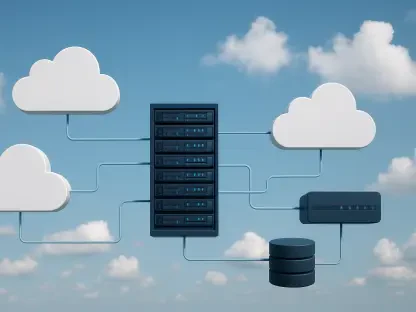

Revenue-sharing models and licensing fees are set to become primary drivers of capital efficiency for Nebius as it scales its global footprint through international partnerships. Currently, the landscape of artificial intelligence has moved beyond simple experimentation into a phase of massive industrialization, where the demand for specialized GPU clusters has outstripped the capacity of legacy hyperscalers. To meet this surge, Nebius has abandoned the traditional capital-heavy approach of owning every physical brick and mortar facility. Instead, the Amsterdam-based firm is championing a decentralized framework that separates the complex software stack from the underlying physical infrastructure. This pivot allows the company to rapidly deploy its AI-optimized cloud operating system across diverse geographies without the multi-year delays typically associated with land acquisition and power grid negotiations. By positioning itself as the high-tech layer on top of third-party hardware, the organization has effectively neutralized many of the logistical bottlenecks that previously hindered the speed of global compute expansion.
Driving Growth Through Strategic Partnership Frameworks
For infrastructure owners and regional operators, the value proposition of this collaboration lies in the immediate transformation of raw real estate into high-value technological hubs. Building a software-defined AI cloud from the ground up requires specialized expertise that many traditional data center developers lack, often forcing them into low-margin “bare-metal” leasing arrangements. Under the Nebius partnership model, these entities gain access to a production-ready environment that includes proprietary system architectures and developer tools. This arrangement effectively de-risks the massive financial outlays required for modern hardware, as partners are integrated into a proven supply chain and connected to a global pool of ready-to-pay enterprise customers. Consequently, the physical facilities begin generating premium revenue from the moment they are powered on, bypassing the long ramp-up periods usually seen in independent operations.
From the perspective of the platform coordinator, the asset-light strategy serves as a masterclass in financial agility and rapid scaling during a period of intense market competition. By leveraging the existing financial resources and local expertise of infrastructure investors, the company can expand its total compute capacity at a pace that would be impossible through self-funded projects alone. This allows the business to maintain a remarkably lean balance sheet while still exercising significant influence over the global supply of AI-optimized compute. The focus shifts entirely toward software innovation and the refinement of customer acquisition strategies, ensuring that the technology remains at the cutting edge. This orchestrator role enables the generation of high-margin income through a combination of licensing fees and commissions, effectively transforming the traditional cloud service provider model into a more scalable, platform-centric ecosystem.
Navigating the Complexities of Sovereign AI Demand
The emergence of this decentralized model aligns perfectly with the rising global trend of “sovereign AI,” where national governments seek to establish domestic computing capabilities to protect data privacy and foster local innovation. Many regions are no longer content with relying solely on centralized providers based in distant jurisdictions; instead, they are investing in local infrastructure that remains under their regulatory control. By licensing a full-stack, proven platform like that offered by Nebius, these nations can fast-track their technological self-sufficiency without the need to spend decades developing their own foundational software layers. This collaborative approach allows for the rapid deployment of AI clusters that are tailored to local laws and operational requirements. It provides a viable pathway for emerging markets to participate in the AI economy by combining their own capital with world-class technical expertise.
Industry experts increasingly recognize that the current compute shortage is not merely a lack of hardware, but a lack of specialized environments capable of supporting the unique demands of large-scale model training. Standard cloud storage and general-purpose computing architectures are often ill-equipped to handle the massive data throughput and thermal requirements of modern GPU clusters. By acting as a bridge between massive institutional capital and the specific technical needs of developers, Nebius is addressing a critical gap in the market. This model recognizes that the solution to infrastructure bottlenecks is not centralization, but a distributed network of high-performance nodes that can be deployed wherever power and connectivity are available. This shift in thinking marks a departure from the “one-size-fits-all” cloud and signals a move toward a more modular and responsive global computing fabric. This allows for a much more targeted and efficient use of resources.
Maintaining Service Quality Through Operational Integration
One of the most significant challenges inherent in a decentralized infrastructure model is the potential for inconsistent user experiences across different physical locations. To mitigate this risk, Nebius maintains strict control over the cloud software and remains the primary party responsible for upholding service level agreements across its entire network. While local partners handle the day-to-day physical maintenance and the management of power systems, the customer-facing interface and overall system performance are governed by a centralized set of standards. This ensures that an AI developer utilizing resources in a partner-owned facility receives the same low-latency performance and robust security protocols they would expect from a flagship data center. By retaining ownership of the intelligence layer, the company ensures that its brand reputation for reliability remains intact, regardless of where the hardware is physically housed. This creates a trust layer between the provider and the user.
To facilitate this seamless integration between software and hardware, the organization provides extensive technical training and ongoing support to the operational teams of its partners. This strategy ensures that every site is managed according to the “Nebius Standard,” which dictates everything from hardware configuration to cooling efficiency and security protocols. By synthesizing its deep technological expertise with the local operational strengths of its partners, the company is creating an interconnected fabric of AI-ready compute that is both scalable and reliable. This approach does more than just address the immediate shortage of processing power; it establishes a sustainable framework that can adapt to future technological shifts. The result is a unified global network that leverages the best of both worlds—the agility of a software company and the physical presence of local infrastructure experts. This synergy is essential for maintaining growth in a highly complex and demanding industry.
Strategic Implications for the Evolution of AI Infrastructure
Stakeholders who embraced this collaborative model effectively navigated the volatility of the mid-decade compute shortage by prioritizing flexibility over physical ownership. They recognized that the most successful players in the market were those who could mobilize capital quickly and deploy sophisticated environments without getting bogged down in traditional construction cycles. By focusing on the “intelligence layer,” organizations successfully created a buffer against hardware scarcity and regional regulatory shifts. This shift in strategy necessitated a more nuanced approach to partnership management, where technical excellence and operational reliability became the primary currencies of the industry. Those who invested in these interconnected networks found that they were better positioned to support the next generation of generative models, providing the high-speed processing power required for the most advanced applications. This proactive stance allowed them to capture market share that was previously out of reach.
In the end, the transition toward an asset-light framework proved to be the most viable solution for meeting the unprecedented demand for AI compute. Investors and developers alike benefited from a system that distributed financial risk while centralizing technical standards, leading to a more resilient and geographically diverse infrastructure. This evolution demonstrated that the future of global technology would be defined not by who owned the most land, but by who could most efficiently orchestrate the complex relationship between software, hardware, and capital. Moving forward, the industry learned to value modularity and cooperation, ensuring that computing resources could be deployed exactly where they were needed most. These strategic adjustments ensured that the momentum of AI development continued unabated, setting a new standard for how high-tech infrastructure should be planned, funded, and managed across the globe. This era marked the definitive rise of decentralized computing power.