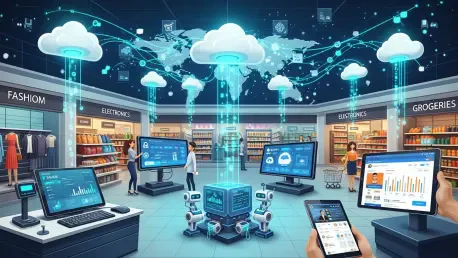

The rapid convergence of digital and physical shopping experiences has reached a point where the underlying technology no longer merely supports the business but fundamentally defines the competitive boundaries of the global retail market in 2026. Retailers are currently operating in an environment where consumer expectations for speed, personalization, and availability are at an all-time high, necessitating a departure from traditional, rigid infrastructure. Cloud computing has emerged as the primary vehicle for this transformation, offering a scalable and on-demand model for processing power, storage, and software applications. By moving away from the burden of maintaining in-house servers, brands can focus their internal resources on developing unique customer experiences rather than troubleshooting hardware failures. This shift is visible across the industry, from small digital-native brands to massive multi-national enterprises that are migrating their core operations to managed cloud environments. As public cloud spending continues to climb toward historic heights this year, the focus has shifted from simple adoption to the strategic optimization of these resources to drive real-world value and operational resilience.
Modern retail operations depend on a complex web of interconnected systems including inventory management, point-of-sale terminals, customer loyalty programs, and checkout flows that must remain synchronized in real-time. Cloud computing provides the essential connective tissue for these systems, ensuring that a sale made on a mobile app is instantly reflected in the inventory levels of a physical storefront thousands of miles away. This level of synchronization was previously the exclusive domain of the largest retail giants with massive IT budgets, but the democratization of cloud technology has leveled the playing field. In 2026, the ability to deploy new features in a matter of days rather than months has become a standard requirement for staying relevant. The cloud offers a model of elasticity where computing resources can expand during a high-profile influencer launch and contract immediately afterward, ensuring that the retailer only pays for what is actually used. This operational flexibility is the cornerstone of modern unified commerce, allowing brands to maintain a consistent presence across every touchpoint without the risk of system crashes during critical peak periods.
1. Mapping the Digital Transformation of Modern Commerce
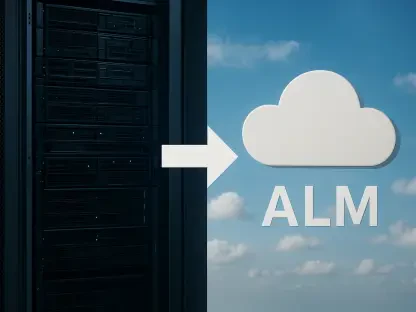
The current state of the retail sector is defined by a shift toward decentralized computing where the physical location of data centers is secondary to the accessibility and speed of the services they provide. Cloud computing in this context refers to the delivery of computing services over the internet, providing retailers with access to a vast array of tools that include servers, databases, networking, and analytics software. This model is particularly beneficial for retailers who must manage unpredictable traffic spikes and complex logistical networks that span multiple regions. By leveraging the infrastructure of specialized providers, a business can effectively outsource the heavy lifting of server maintenance, security patching, and hardware upgrades. This transition allows the technical staff within a retail organization to pivot from being reactive maintainers of legacy systems to proactive innovators who focus on improving the user interface or optimizing the supply chain. The result is a more agile business structure that can respond to market trends with unprecedented speed and precision.
Strategic integration of cloud resources facilitates a unified view of the business that was nearly impossible to achieve with fragmented on-premises hardware. When a retailer moves their operations to the cloud, they are not just changing where their data is stored; they are fundamentally altering how that data is accessed and utilized across different departments. For instance, marketing teams can access real-time purchase data to trigger personalized email campaigns, while warehouse managers can monitor live stock levels to prevent overstocking or stockouts. This interconnectedness is what separates successful modern brands from those struggling with outdated, siloed information. Furthermore, the cloud environment provides a foundation for experimental projects, such as testing a new augmented reality shopping feature or a sophisticated AI-driven recommendation engine, without requiring a massive upfront investment in new hardware. As we navigate through 2026, the reliance on these shared data layers has become the primary driver for efficiency in both digital and physical retail spaces.
2. Analyzing the Hierarchy of Cloud Service Architectures
Understanding the distinction between different cloud service models is essential for any retailer looking to optimize their technological footprint and manage internal resources effectively. Software as a Service, or SaaS, represents the most hands-off approach for a retailer, as the service provider manages everything from the underlying infrastructure to the application itself. In 2026, many leading brands utilize SaaS for their primary ecommerce platforms and point-of-sale systems because it requires minimal internal DevOps support and provides automatic updates. This model is particularly attractive for businesses that want to launch quickly and maintain a low operational burden, as the provider handles all the complexities of security, scaling, and maintenance. By choosing a SaaS model, a retailer can ensure that their digital storefront is always running on the latest version of the software with the most current security patches, all without having to schedule downtime or manage manual upgrades.
Platform as a Service, known as PaaS, offers a middle ground by providing a managed environment where developers can build, deploy, and manage custom applications without worrying about the underlying servers. Retailers often turn to PaaS when they need to create bespoke solutions that go beyond the capabilities of off-the-shelf software, such as a specialized promotions engine or a unique integration layer between disparate systems. This model requires a moderate level of internal technical expertise, as the retailer is responsible for the application code and the data, while the provider manages the operating system and middleware. In contrast, Infrastructure as a Service, or IaaS, provides the most control but also the highest operational burden. It involves renting raw computing power, storage, and networking, requiring a dedicated team to manage everything from the operating system up to the application layer. This is typically reserved for retailers with large, specialized engineering teams who need to host legacy systems or run highly specific custom workloads that require granular control over the environment.
3. Capitalizing on Market Volatility Through Elastic Infrastructure
Retail demand has always been characterized by extreme volatility, but the digital era has amplified these fluctuations through viral social media trends and global sales events. In 2026, fixed on-premises infrastructure is increasingly seen as a liability because it forces retailers into a binary choice between overprovisioning or underprovisioning. Overprovisioning leads to significant financial waste, as companies pay for expensive server capacity that sits idle for the majority of the year. Conversely, underprovisioning can lead to catastrophic site crashes during a Black Friday event or a flash sale, resulting in lost revenue and damaged brand reputation. Cloud elasticity solves this dilemma by allowing resources to scale in real-time based on actual traffic patterns. When a footwear brand like Filling Pieces experiences a massive influx of visitors during a limited release, the cloud infrastructure automatically allocates more bandwidth and processing power to handle the load, ensuring a smooth experience for every customer.
The ability to scale down is just as critical as the ability to scale up, as it allows retailers to maintain lean operations during quieter periods of the year. This dynamic adjustment of resources ensures that the cost of technology remains closely aligned with the revenue it generates, creating a more sustainable financial model for the business. Beyond mere survival during peak traffic, elastic infrastructure enables a culture of experimentation where brands can launch limited-time pop-up shops or digital experiences without fearing for the stability of their core systems. This resilience is a key competitive advantage in 2026, as customers have zero tolerance for slow loading times or broken checkout processes. Every second of delay in a digital environment correlates directly with a drop in conversion rates, making the reliability of the cloud a fundamental requirement for revenue protection. By offloading the management of this elasticity to a proven provider, retailers can focus on the creative aspects of their sales strategies rather than the technical limitations of their servers.
4. Evaluating the Fundamental Advantages of Cloud Adoption
One of the most immediate benefits of migrating to a cloud-based retail environment is the dramatic increase in the speed of iteration and the frequency of product launches. In the traditional model, deploying a new feature or expanding into a new geographic market often required months of planning, hardware procurement, and manual configuration. Today, retailers can launch localized storefronts or test new payment methods in a fraction of that time, often within a few days. This agility is exemplified by brands that have transitioned to unified cloud platforms and seen their implementation times drop significantly compared to their previous legacy setups. When a technical team is no longer bogged down by routine maintenance and server patching, they can dedicate nearly all of their time to building features that add genuine value to the customer experience. This shift from maintenance to innovation is perhaps the most significant long-term benefit of cloud adoption in the current market.
Security and resilience have also seen massive improvements through the centralization of controls within sophisticated cloud environments. Major cloud providers invest billions of dollars into physical security, high-level encryption, and rigorous compliance certifications that would be impossible for an individual retailer to replicate on their own. While security remains a shared responsibility, the cloud provider secures the foundational infrastructure, allowing the retailer to focus on securing their specific configurations and user access points. This model has led to a marked reduction in downtime for many brands, as they can leverage the geographic distribution and automated recovery protocols inherent in modern cloud architecture. Furthermore, the ability to unify data across all channels provides a more comprehensive view of the customer, enabling advanced personalization and more accurate demand forecasting. By having a single source of truth for inventory and customer behavior, retailers can make informed decisions that drive higher conversion rates and increase the average order value across both online and physical stores.
5. Implementing High-Impact Use Cases Across the Retail Value Chain
The modernization of the checkout process is a primary use case where cloud computing directly impacts a retailer’s bottom line by reducing friction at the most critical point of the customer journey. In 2026, a high-performing checkout must be mobile-optimized, secure, and capable of supporting a wide variety of global payment methods without slowing down. Cloud-based platforms allow retailers to implement streamlined, one-page checkouts that have been shown to significantly increase conversion rates, particularly on mobile devices. For international retailers, these platforms handle the complexities of currency conversion and local tax compliance automatically, removing the need for separate infrastructure in every region. This level of technical sophistication ensures that the customer experience remains consistent and professional, regardless of where the shopper is located or what device they are using. By leveraging the power of the cloud, even mid-sized retailers can offer a checkout experience that rivals the largest global marketplaces.
Another transformative use case involves the implementation of smart fulfillment strategies, such as shipping directly from retail stores to reduce delivery times and shipping costs. When inventory data is housed in a unified cloud environment, every physical store can function as a mini-distribution center, allowing orders to be fulfilled from the location closest to the customer. This approach not only speeds up delivery but also helps retailers clear out slower-moving inventory that might otherwise be marked down. Brands like Allbirds have successfully utilized this model to improve inventory efficiency and meet the growing demand for rapid delivery. Additionally, cloud-based point-of-sale systems are revolutionizing in-store operations by providing staff with real-time access to customer profiles and global inventory levels. This “endless aisle” capability allows associates to sell products that may be out of stock in their specific location by ordering them from another store or warehouse directly at the register. The result is a more seamless shopping experience that bridges the gap between digital and physical commerce.
6. Mitigating Structural Risks and Executing Strategic Migrations
While the benefits of cloud computing are extensive, retailers must also navigate certain risks, such as vendor lock-in and the complexity of integrating with legacy backend systems. Vendor lock-in occurs when a business becomes so dependent on a specific provider’s proprietary tools that switching to a different platform becomes prohibitively expensive or technically difficult. To mitigate this, many retailers are adopting a strategy of managed lock-in, where they deliberately choose to use a specific ecosystem for its speed and efficiency while maintaining clear documentation and standardized data formats that would facilitate a future transition if necessary. The focus is on understanding the trade-offs: the speed gained by using a fully managed SaaS platform often outweighs the theoretical risk of being tied to that vendor. Strategic planning involves identifying which systems are core to the business and ensuring that data remains portable and accessible through well-documented APIs.
A successful cloud migration is rarely a single event but rather a phased journey that allows the organization to build competency and minimize disruption to daily operations. The recommended sequence often begins with low-risk systems, such as analytics and reporting tools, which provide valuable insights without impacting the customer-facing storefront. Once the team is comfortable with cloud operations, the focus shifts to the ecommerce platform and point-of-sale systems, where the impact on revenue and customer experience is most significant. The final and often most complex phase involves integrating core backend systems like Enterprise Resource Planning and specialized Order Management Systems. Throughout this process, establishing a robust cost governance framework, often referred to as FinOps, is essential to prevent the common pitfall of cloud spend overruns. By tagging resources, setting strict budgets, and using anomaly detection tools, retailers can ensure that their cloud investment remains profitable and that they are not paying for unused or inefficiently allocated resources.
7. Quantifying Performance Through Advanced Analytics and Governance
The final step in a mature cloud strategy is the implementation of rigorous key performance indicators to measure the success of the migration and guide future investments. From a customer perspective, retailers should closely monitor conversion rates, average order values, and page load speeds to ensure that the technical improvements are translating into better business outcomes. For example, a successful migration should ideally result in a measurable lift in mobile conversion rates and a reduction in checkout abandonment. On the technical side, metrics such as system uptime, mean time to recovery, and the frequency of successful code deployments provide a clear picture of the platform’s reliability and the engineering team’s efficiency. By tracking these indicators in real-time, leadership can make data-driven decisions about where to allocate resources and which parts of the technology stack require further optimization.
Financial metrics are equally important, as the transition to the cloud represents a shift from capital expenditure to operational expenditure. Retailers must track the cost per order and the overall cloud-spend variance to ensure that the infrastructure remains cost-effective as the business scales. Implementing a culture of accountability where individual teams are responsible for the costs associated with their projects can lead to a significant reduction in waste. Ultimately, the goal of cloud computing in 2026 is to create a resilient, high-performing foundation that allows a retail business to grow without being hindered by its technology. The transition from legacy hardware to a modern cloud environment was a complex undertaking that required careful planning and a clear focus on business objectives. By prioritizing the unification of data and the elasticity of resources, retailers successfully positioned themselves to thrive in a market that demands constant innovation and flawless execution across all channels. Moving forward, the focus remained on refining these systems to provide even deeper levels of personalization and operational efficiency.