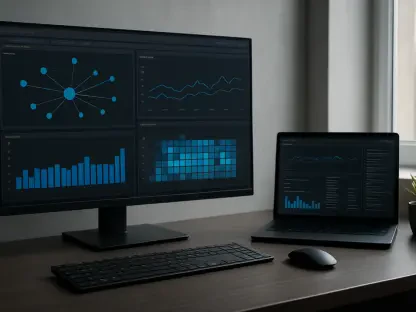

Japan’s insurance sector has long grappled with the dual challenges of aging legacy infrastructure and the increasing demand for localized, data-heavy services in rural communities. Staff members at national and local branches can now use sophisticated visualization tools to track contract performance across different regions and product lines with unprecedented ease. This advancement stems from a significant collaboration between JA Kyosai and Fujitsu, aimed at modernizing the National Mutual Insurance Federation of Agricultural Cooperatives through a cloud-native framework. By integrating the Fujitsu Uvance platform, the organization has finally bridged the gap between traditional cooperative values and high-tech operational requirements. The strategic shift was driven by the necessity to move away from siloed data storage toward a unified environment that supports rapid decision-making. This migration represents a fundamental change in how insurance products are developed and managed for millions of farmers.
Modernizing Cooperative Insurance: The Implementation of Sovereign AI Cloud
The core of this technological renovation lies in the deployment of a Sovereign AI Cloud, which addresses the unique regulatory and cultural requirements of the Japanese market. Unlike traditional public cloud services that often transmit data across international borders, this localized system provides a secure perimeter that satisfies strict domestic compliance laws. The infrastructure utilizes Fujitsu’s advanced high-performance computing capabilities to run complex Large Language Models that have been specifically trained on Japanese insurance regulations and agricultural nuances. Consequently, the AI can assist branch employees in interpreting complex policy documents and providing more accurate advice to policyholders. This localized approach to artificial intelligence ensures that the insights generated are highly relevant to the specific environmental and economic conditions of different prefectures. Furthermore, the sovereign nature of the platform mitigates the risks of external data breaches.
Operational efficiency has seen a dramatic improvement since the implementation of these AI-driven visualization and analysis tools across the organization’s network. Previously, manual data entry and regional reconciliation processes consumed thousands of man-hours, often leading to delays in reporting and strategic planning. The new system automates these repetitive tasks, allowing personnel to focus on higher-value activities such as personalized member engagement and complex risk assessment for new agricultural ventures. Moreover, the integration of real-time data feeds from local cooperatives allows the national federation to identify emerging trends in claims almost instantaneously. This capability is particularly vital given the increasing frequency of extreme weather events that impact crop yields and livestock health. By leveraging predictive analytics, the federation can now preemptively adjust coverage options and allocate resources more effectively to regions facing imminent threats.
The final phase of this digital overhaul confirmed that the synergy between human expertise and sovereign AI was the most effective path toward long-term institutional stability. The organization successfully transitioned its primary workloads to the new environment, which resulted in a substantial reduction in operational overhead and an increase in member satisfaction scores. It was determined that the most critical next step involved the expansion of this platform to include edge computing devices for field agents. These devices were designed to provide real-time insurance quotes and damage assessments directly from the farm, further reducing the turnaround time for claims processing. Leaders within the federation also recognized the importance of establishing a dedicated internal task force to oversee the continuous training of AI models as new agricultural technologies emerged. This proactive stance ensured that the system remained current with the latest farming practices and regulatory changes.