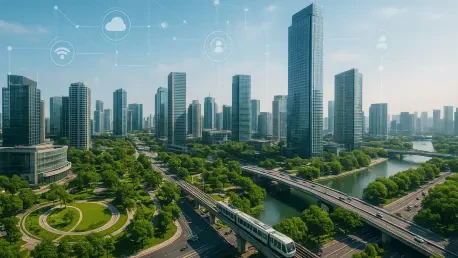

The shift toward proactive governance requires moving beyond the mere creation of mobile applications and toward the strategic integration of technology that hides bureaucratic complexity. In the landscape of 2026, the concept of a smart city has matured from a futuristic dream of interconnected gadgets into a practical framework for improving human life. Cities that once prioritized the sheer volume of data harvested from sensors and surveillance are now pivoting toward the qualitative value of that information. The objective is no longer to simply possess the most advanced dashboard but to utilize digital signals to address the fundamental needs of residents. This evolution marks a departure from technical vanity, where success was measured by the number of active sensors, toward a human-centric model that values empathy and responsiveness. By focusing on the lived experience of the individual, municipal leaders are discovering that the most powerful application of big data lies in its ability to reveal the unseen challenges of urban living, allowing for interventions that are both timely and relevant. This transition ensures that technology acts as a supportive infrastructure rather than an intrusive presence.
Enhancing Governance Through Active Listening
Historically, the internal architecture of city governments has mirrored the fragmented nature of physical infrastructure, with data trapped in departmental silos that rarely communicated. A transportation office might monitor traffic congestion while the waste management team tracks collection routes, yet neither department shares the insights necessary to understand how one affects the other. To move toward a human-centric model, cities must transition from being passive collectors of disconnected information to becoming active listeners who synthesize these diverse streams. This requires the implementation of centralized relationship management systems that can ingest data from dozens of official channels, including text messages, social media, and geolocation reports. By consolidating these disparate inputs, administrators can begin to see patterns rather than just individual incidents. A single report of a broken streetlight is an isolated maintenance task, but a cluster of reports combined with crime statistics and pedestrian traffic data becomes a diagnostic signal that informs broader safety strategies.
The integration of these signals allows city leadership to move away from reactive crisis management and toward a more holistic diagnostic approach. In modern urban environments, every digital interaction—from a citizen paying a bus fare to a sensor detecting air quality—serves as a heartbeat for the city. When these heartbeats are monitored in aggregate through integrated platforms, they provide a real-time health assessment of various neighborhoods. This diagnostic capability ensures that government interventions are based on actual urban rhythms rather than departmental assumptions. However, the true value of active listening is not found in the algorithm itself but in the human interpretation of the data. While the numbers can indicate what is occurring in a specific district, it requires human context and community engagement to understand the why. This synergy between data-driven insights and human judgment ensures that the city remains responsive to the specific cultural and social nuances of its diverse population, making governance feel personal rather than mechanical.
Simplifying the Citizen Experience
A major obstacle in the digital transformation of public services has been the tendency for governments to replicate their own bureaucratic complexities within their digital interfaces. In the past, a resident might have needed ten different mobile applications to interact with ten different city agencies, creating a fragmented and frustrating user experience. Today, the leading trend is the consolidation of these services into super apps that act as a single point of entry for all government interactions. This design philosophy emphasizes that the technology should serve as a transparent layer that shields the citizen from the inner workings of the administration. Whether someone needs to report a flood, pay a tax bill, or check the schedule for public transit, the interface remains consistent and intuitive. By centering the digital experience on the user’s needs rather than the agency’s structure, cities can significantly lower the barrier to entry for public services, ensuring that even those with limited technical proficiency can access essential resources without unnecessary friction.
The success of these integrated platforms is ultimately measured by their ability to solve localized, real-world problems that affect daily life. A smart city platform is of little value if its features are too sophisticated for the average person to navigate or if it fails to address the immediate concerns of the community. Therefore, the development process for these tools must involve deep collaboration with the residents themselves to ensure that the final product reflects their actual habits and requirements. When digital infrastructure is built with accessibility as a core tenet, it fosters a greater sense of inclusion across all demographics. This shift in perspective ensures that the city’s digital transformation serves as a bridge rather than a barrier, making the government more reachable and the services more effective. By prioritizing the utility of the application over its technical novelty, municipal leaders can guarantee that their investment in big data results in tangible benefits for every resident, thereby reinforcing the democratic nature of public service.
Ensuring Ethical AI and Strategic Impact
As cities increasingly adopt predictive models that utilize Artificial Intelligence to anticipate urban challenges, the ethical implications of data collection have moved to the forefront of the conversation. Moving from a reactive posture to a proactive one allows governments to predict traffic bottlenecks or energy surges before they occur, but it also raises significant concerns regarding surveillance and the right to privacy. To maintain public trust, municipal governments must treat security and transparency as fundamental pillars of their digital strategy. This means that data governance policies should be clearly communicated and strictly enforced, ensuring that information is used solely for the purpose of improving public welfare rather than for intrusive monitoring. In the current landscape, the most successful smart cities are those that have built a trust-by-design framework, where ethical considerations are integrated into the software development lifecycle from the very beginning. This proactive approach to ethics helps to mitigate the risks of algorithm bias.
Looking ahead, the most resilient urban centers established a standard where technology functioned as a catalyst for a meaningful two-way dialogue between the state and the people. The true measure of digital maturity was found in how effectively a government translated its digital resources into more equitable and responsive environments. Success was defined by the removal of bureaucratic hurdles and the creation of systems that anticipated needs without compromising individual privacy. As cities continued to evolve, the focus shifted toward fostering long-term sustainability and social cohesion through informed participation. Municipal leaders prioritized the development of open-data frameworks that empowered citizens to contribute to their own governance, turning every resident into a stakeholder in the city’s future. By placing human dignity at the center of the technological narrative, these administrations ensured that the complexity of big data served the simplicity of human connection. The integration of technology into the fabric of daily life was not seen as an end but as a means to build a more just society.