
A silent failure within an unmonitored data flow can lead to massive revenue loss through overselling products that are no longer in stock or leaving customer orders stuck in processing. In the high-stakes environment of 2026, enterprise commerce is defined not by the individual strength of software packages, but by the fluidity with which these disparate systems communicate. Currently, the average large-scale organization operates with nearly a thousand distinct applications, ranging from front-end digital storefronts to back-office accounting modules. However, a significant portion of these platforms remain disconnected, creating what industry experts describe as a “connectivity gap.” This fragmentation is more than an IT inconvenience; it is a structural barrier to growth that prevents businesses from achieving the agility required to compete in a global marketplace. When data is trapped in isolated silos, organizations face chronic issues such as manual entry errors, inaccurate inventory counts, and delayed financial reporting. Bridging this gap through robust cloud integration is the essential strategy for transforming a chaotic collection of tools into a unified, high-performing commerce engine that supports every aspect of the modern retail operation from the initial click to the final delivery.
Shifting from Simple Syncing to Advanced Orchestration
The evolution of enterprise connectivity has moved beyond basic data synchronization toward a more sophisticated model of business process orchestration. In earlier iterations of cloud technology, synchronization typically involved scheduled batch jobs that copied data from one point to another at set intervals, often resulting in a lag between the actual event and the system update. In contrast, modern orchestration involves a real-time chain of automated events triggered across the entire business ecosystem. This means that an action taken in a customer-facing portal immediately initiates a series of corresponding reactions in the warehouse management system, the financial ledger, and the customer relationship management tool. By treating the entire software stack as a living, interconnected organism, enterprises can eliminate the friction that historically plagued high-volume sales periods. Orchestration ensures that every department is working from a singular, real-time source of truth, effectively removing the human intervention traditionally required to reconcile different datasets at the end of the business day.
This transition to orchestration allows businesses to embed complex logic directly into their data flows, ensuring that information is reshaped and validated as it moves between environments. For example, a single purchase order on a global storefront does not just update a stock count; it can simultaneously trigger tax calculations based on the buyer’s specific jurisdiction, notify a localized third-party logistics provider for fulfillment, and update the marketing engine to pause advertisements for that specific SKU. This level of coordination is critical for maintaining operational integrity during flash sales or seasonal surges where manual processes would inevitably break down under pressure. By automating these cross-platform workflows, organizations can reallocate their human talent toward strategic initiatives rather than routine data maintenance. The result is a cohesive machine that responds dynamically to market demands, providing a level of reliability that simple point-to-point syncing could never achieve in a complex, multi-channel commerce landscape.
Maximizing Efficiency Through Unified Inventory Systems
Inventory integrity stands as the most vital benefit of a fully integrated cloud environment, serving as the foundation for both customer trust and financial health. In an era where consumers expect immediate availability and lightning-fast shipping, showing an item as “in stock” when it has already been sold through a different channel is a catastrophic failure. Integrated systems resolve this by centralizing inventory data across all physical and digital touchpoints, including brick-and-mortar stores, third-party marketplaces, and primary e-commerce sites. When a sale occurs anywhere, the update is broadcast instantly to every other channel, preventing the risk of overselling and the subsequent brand damage of order cancellations. This real-time visibility also allows for more strategic stock management, enabling enterprises to fulfill orders from the most efficient location, whether that is a regional distribution center or a local retail shelf. By optimizing these stock movements, companies can significantly reduce shipping costs and delivery times, further strengthening their competitive position.
Leading brands in the fashion and apparel sectors have demonstrated that this unified approach to operations leads to substantial and measurable revenue growth. By connecting their digital storefronts directly with back-office logistics and manufacturing schedules, these companies have reported double-digit increases in sales through improved product availability and better demand forecasting. When the supply chain is integrated with the sales engine, the business can respond to trends with surgical precision, moving inventory where it is most likely to sell at full price. Furthermore, this connectivity supports the implementation of advanced fulfillment models like buy-online-pick-up-in-store or ship-from-store, which have become standard consumer expectations. These models rely entirely on the accuracy of the underlying data integration to ensure that store associates are picking the correct items and that the digital storefront is reflecting the actual shelf reality of every physical location in the network.
Selecting the Ideal Integration Methodology for Business Scale
Choosing the correct path for connecting systems is a strategic decision that hinges on the specific needs for speed, flexibility, and long-term maintenance. Most organizations evaluate three primary methodologies: native connectors, Integration Platform as a Service (iPaaS), or custom-built API solutions. Native connectors are often the most attractive starting point because they are prebuilt by software vendors to handle standard data transfers between popular applications, such as a specific ERP and an e-commerce platform. These are typically the fastest to deploy and require the least amount of technical expertise, making them ideal for standardizing core business functions quickly. However, native connectors can be limited in their ability to handle highly specific business logic or unique workflows, which often forces growing enterprises to look toward more versatile middleware solutions that can provide a higher degree of customization without the overhead of bespoke code.
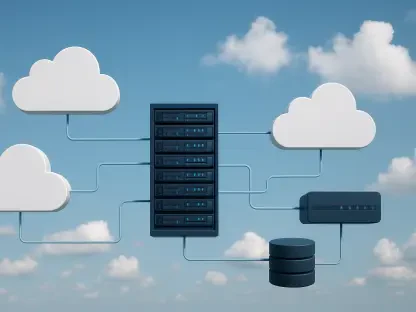
For enterprises with more complex requirements, such as those managing multiple warehouses or intricate product catalogs with thousands of variations, iPaaS provides a powerful middle-ground solution. These platforms act as a central hub for all integrations, offering low-code tools for data transformation, routing, and error handling. The flexibility of iPaaS allows technology teams to build sophisticated workflows that can adapt as the business grows, without being locked into the rigid structures of native tools. While custom API integrations offer the ultimate level of control for truly unique business processes that provide a competitive advantage, they come with a much higher total cost of ownership. Strategic leaders generally reserve custom development for proprietary features that cannot be solved through standard platforms, while prioritizing native or iPaaS solutions for the majority of their operational needs. This balanced approach ensures that the IT budget is focused on innovation rather than simply maintaining basic connectivity.
Enhancing Customer Experience Through Integrated Data Feeds
The modern shopping journey is rarely linear, often spanning multiple devices and physical locations before a purchase is finalized. To provide a seamless experience, enterprises must ensure that customer data is not trapped in isolated silos where the support team cannot see what the marketing team is offering. Integrated data feeds allow for a unified customer profile that tracks interactions across every touchpoint, enabling brands to offer personalized recommendations and consistent service regardless of how the customer chooses to engage. For instance, when a customer contacts support regarding a recent online order, the representative should have immediate access to the shipping status, previous purchase history, and even loyalty program rewards. This level of service is only possible when the CRM, helpdesk, and commerce platforms are perfectly aligned. Without this integration, the customer experience becomes fragmented, leading to frustration and a loss of brand loyalty over time.
Furthermore, integrated systems enable the execution of hyper-personalized marketing strategies that drive higher conversion rates and increased lifetime value. When an enterprise can analyze real-time data from both digital interactions and in-store purchases, it can deliver tailored promotions that are actually relevant to the individual consumer’s needs. This might include a discount on an item that was left in a digital cart or a notification that a preferred brand is now available at the customer’s local store. These interactions feel proactive and helpful rather than intrusive, because they are based on accurate, up-to-date information. By breaking down the barriers between sales and marketing data, organizations can create a cohesive narrative that follows the customer through every stage of the funnel. This consistency builds deep trust and ensures that the brand remains the top choice in a crowded market where consumers have more options than ever before.
Integrating Artificial Intelligence within the Commerce Ecosystem
As artificial intelligence moves from an experimental novelty to a core component of the commerce stack, its effectiveness is entirely dependent on the quality of the data integration underlying it. AI agents and machine learning models require a constant stream of high-quality, real-time information to provide accurate insights or automate complex customer interactions. For example, an AI-driven inventory forecasting tool is only as good as the historical and current sales data it can access from the ERP and storefront. If these systems are disconnected, the AI will produce flawed predictions, leading to stockouts or expensive overstock situations. Integrating AI into the existing cloud architecture ensures that these advanced tools have the necessary context to make intelligent decisions that actually improve business outcomes. This connectivity allows AI to move beyond simple chatbots and into the realm of autonomous logistics and dynamic pricing strategies.
However, the integration of AI and other advanced cloud services necessitates a renewed focus on data governance and security to protect sensitive information and maintain compliance. Technology leaders must implement rigorous mapping of data flows to identify potential vulnerabilities, especially when handling personal customer details or financial records. This involves ensuring that AI tools only have access to the specific data points required for their function and that all data transfers are encrypted and audited. Robust governance frameworks prevent unauthorized access and ensure that the organization can meet the strict regulatory requirements of different global markets. By building security directly into the integration layer, enterprises can adopt new technologies with confidence, knowing that their data assets are protected. In this context, integration is not just about moving data; it is about managing the lifecycle and security of that data as it travels across an increasingly complex and intelligent digital landscape.
Establishing Resilience Through Proactive Systems Management
Operational leaders took a decisive stance on integration by treating it as a foundational infrastructure project rather than a series of one-off technical fixes. They prioritized the creation of comprehensive documentation and clear ownership for every data flow, which allowed teams to respond rapidly to any disruptions without the need for extensive forensic investigations. By implementing proactive monitoring tools, these organizations identified potential bottlenecks and “silent failures” before they could impact the end-user experience. This strategy moved the focus from reactive maintenance to long-term resilience, ensuring that the commerce stack remained stable even as new applications were added or existing ones were updated. The most successful firms also established cross-functional committees involving both IT and business stakeholders to ensure that all integration efforts remained aligned with the overarching commercial goals of the company.
The adoption of a modular and scalable integration architecture allowed these enterprises to remain agile in a volatile global market. They avoided the pitfalls of vendor lock-in by using standardized APIs and middleware that provided the flexibility to swap out individual components of the software stack as needed. When a better fulfillment provider or a more advanced marketing platform emerged, these organizations were able to integrate the new tool seamlessly without rebuilding their entire infrastructure. By shifting toward a low-code environment for standard tasks, they also empowered non-technical teams to manage basic workflows, freeing up specialized developers for high-impact innovation. Ultimately, the focus on a robust and well-governed integration layer became the primary driver of operational efficiency and customer satisfaction. The lessons learned during this period of digital transformation served as a roadmap for maintaining a competitive edge in an increasingly interconnected and automated world.