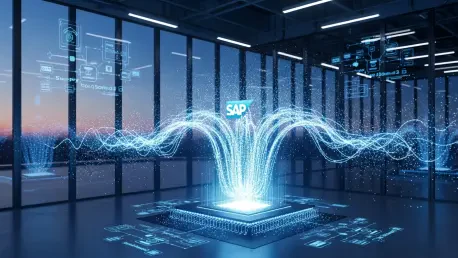

The velocity at which enterprise data propagates through modern global networks has rendered traditional extract-transform-load processes virtually obsolete for organizations seeking real-time competitive advantages. This paradigm shift is particularly evident for global corporations relying on SAP systems, where the sheer volume and complexity of transactional records often create siloed environments that are difficult to modernize without significant technical overhead. Google Cloud has addressed this friction by releasing the seventh iteration of its Cortex Framework, a solution designed to act as a sophisticated bridge between legacy enterprise resource planning data and the cutting-edge capabilities of Vertex AI. By streamlining the ingestion of raw SAP tables into BigQuery, the framework empowers businesses to transcend simple reporting and enter a stage where predictive modeling and autonomous decision-making become standard operational procedures across the entire enterprise stack.
Streamlining Data Pipelines: The Power of Predefined Templates
The architecture of Cortex Framework 7 focuses primarily on reducing the friction associated with moving complex SAP data structures into a cloud-native environment like BigQuery. Instead of requiring engineers to build custom scripts for every table, the framework provides an extensive library of predefined data models that map directly to standard SAP modules such as Sales and Distribution or Materials Management. These templates are not merely static maps; they are dynamic blueprints that allow for the automatic generation of SQL views and transformation logic, ensuring that data is cleaned and contextualized before it reaches the analysis stage. This automation significantly reduces the time to value, allowing data teams to shift their focus from the drudgery of plumbing to the development of sophisticated analytical models. Furthermore, the updated framework supports high-frequency change data capture, ensuring that the cloud-based data warehouse reflects the state of the on-premises system with minimal latency.
Beyond simple connectivity, the integration layer facilitates a deeper level of semantic understanding between disparate data sources that often conflict within a large corporate ecosystem. When SAP data is merged with external signals, such as market trends or weather patterns, the framework ensures that the fundamental definitions of key performance indicators remain consistent across the board. This consistency is achieved through a centralized metadata layer that translates technical SAP jargon into business terms that non-technical stakeholders can easily interpret during strategic planning sessions. Consequently, the reliance on specialized developers to decipher cryptic table names like MARA or EKKO is replaced by a more democratized data culture where business analysts can perform their own queries. This structural shift not only accelerates the decision-making process but also minimizes the risk of human error that typically arises from manual data manipulation during complex reporting cycles involving stakeholders.
Enhancing Intelligence: Predictive Analytics and Strategic Growth
The true power of the seventh iteration lies in its seamless handoff to the Vertex AI suite, which enables businesses to apply advanced machine learning algorithms to their historical SAP records. By leveraging these native integrations, a manufacturing company can develop predictive maintenance schedules that anticipate equipment failures before they disrupt the production line, saving millions in potential downtime. The framework automates the feature engineering process, identifying the most relevant data points within the SAP dataset to feed into specialized models that predict customer churn or demand spikes. This capability transforms the data warehouse from a passive repository of past events into an active engine for future forecasting, providing a level of foresight that was previously unattainable for many legacy enterprises. These AI-driven insights are delivered directly back into the business workflows, ensuring that the results are actionable for the front-line managers who need them most efficiently.
Implementation of the latest Cortex updates provided a clear roadmap for companies looking to modernize their legacy systems without discarding the significant investments already made in SAP. Developers utilized the automated deployment features to establish a unified data platform that supported both traditional reporting and the next generation of AI-driven applications. This strategy allowed executives to focus on long-term growth and innovation, rather than being bogged down by the complexities of data integration and architectural maintenance. Future considerations for these enterprises involved the further refinement of automated governance policies to ensure that AI models remained compliant with evolving international standards for data privacy and ethics. By adopting a proactive stance toward data architecture, leaders secured a significant advantage in an increasingly volatile global market. The transition toward a more intelligent enterprise ecosystem was successfully navigated through the strategic use of these advanced bridging technologies.