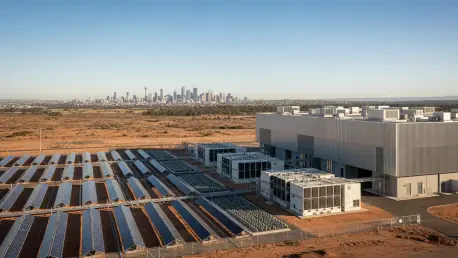

The rapid proliferation of hyperscale data centers across the Australian landscape has triggered a significant shift in national priority, moving from mere commercial interest to a fundamental question of sovereign survival and technological independence. Australia stands at a pivotal crossroads, with the New South Wales parliamentary inquiry into data centers serving as a crucial focal point for the nation’s burgeoning digital ambitions and its need for long-term stability. This rigorous investigation highlights the urgent necessity to balance rapid technological expansion with the preservation of local resources, such as water and energy, which are increasingly under pressure from global demand. As the physical backbone of the modern internet and the growing field of artificial intelligence, these facilities represent both a daunting challenge to existing infrastructure and a cornerstone of future economic growth. Policymakers are now forced to consider how these massive installations can be integrated into the domestic economy without compromising the security or affordability of basic utilities for the general public. The outcome of these discussions will likely define the country’s economic trajectory for decades, determining whether it remains a consumer of offshore technology or a self-reliant hub for regional digital innovation and storage.
Defining the Future: Data Centers as Sovereign Assets
The current debate centers on whether data centers should be classified as standard industrial consumers or as vital sovereign infrastructure that requires a unique set of protections and strategic incentives. Viewing these facilities as critical sovereign assets suggests that they are the bedrock of Australia’s future competitiveness in the global digital economy, rather than just large warehouses for servers. This distinction is vital because today’s policy decisions regarding land use and utility allocation will determine who actually controls the computing power of the next decade, making this a high-stakes moment for national self-reliance and data security. If the nation fails to recognize these centers as essential to its sovereignty, it risks losing control over the very platforms that manage public services, private commerce, and national defense. Consequently, a move toward a sovereign-first framework would ensure that the digital heart of the country is built on local terms, prioritizing domestic stability and data residency over the short-term interests of multinational developers who may not prioritize the local community’s long-term utility needs or regional economic goals.
Strategic decisions made today must account for the explosive growth of the sector, which has seen investment in New South Wales increase by double digits annually as the demand for cloud services skyrockets. Policymakers are now tasked with weighing the immediate, ravenous demands of generative artificial intelligence against the long-term goal of building a sustainable digital landscape that does not deplete the nation’s finite resources. This requires a sophisticated and nuanced understanding of how hardware, energy grids, and community needs intersect in an increasingly connected world where data is as valuable as physical commodities. As investment cycles accelerate from 2026 to 2030, the government must ensure that land allocated for these projects is used efficiently and that the resulting infrastructure supports broader national goals. By aligning private investment with public policy, Australia can secure a leading position in the global supply chain for digital services. This alignment prevents the haphazard development of facilities that might otherwise create bottlenecks in the power grid or lead to localized water shortages, ensuring that the digital boom remains a net positive for all sectors of the Australian economy.
Technological Evolution: From Brute Force to Sustainable Innovation
The data center industry is currently navigating what experts call a brute-force phase, characterized by an immense and often unsustainable appetite for power and water to cool high-performance chips. However, technology experts suggest this is a temporary state of affairs, as the industry begins to move toward new processing architectures and advanced thermal management systems like liquid-to-chip cooling. These technical breakthroughs could eventually allow large-scale facilities to operate in arid environments using renewable energy and zero cooling water, effectively decoupling digital growth from environmental strain and resource scarcity. As these innovations become more standardized between 2026 and 2028, the physical footprint of computing will shift from resource-heavy giants to lean, efficient modules that can be placed in diverse geographical locations. This transition is essential for Australia, a continent where water scarcity is a constant reality and where the energy grid is undergoing its own massive transformation. Embracing these advanced cooling technologies now will allow the country to host massive computing power without placing an undue burden on the natural environment or the sustainability of local municipal water supplies.
Australia has a unique opportunity to reclaim its status as a global leader in hardware development and high-tech manufacturing, a position it has not held with such clarity since the mid-20th century. By investing in quantum-ready infrastructure and next-generation computing today, the nation can secure its place at the forefront of the upcoming technological paradigm shift that will redefine global industry. Securing heavy investment now is not just about supporting the current wave of AI demands; it is about preparing the ground for the next generation of computing technology that will rely on low-latency, high-security domestic hubs. Building this specialized infrastructure requires more than just capital; it demands a workforce skilled in advanced hardware engineering and a regulatory environment that rewards innovation in energy efficiency. If the nation can successfully foster a local ecosystem of hardware pioneers and sustainable operators, it will transition from being a passive host of foreign tech to a primary architect of the global digital future. This proactive stance ensures that the intellectual property and technical expertise associated with high-performance computing remain within domestic borders, providing a secondary layer of economic security and professional opportunity for the local workforce.
Regulatory Governance: Balancing Corporate Growth and Public Good
Rapid growth in the tech sector brings significant risks if left unmanaged, particularly regarding the strain on community services and the shared resources that everyday citizens rely upon. Advocates for social equity argue that data centers must provide a clear and measurable net benefit to the public to justify their massive physical footprint and their heavy consumption of electricity and water. This perspective emphasizes that a truly valuable opportunity is one that integrates seamlessly into the community without imposing unmanaged risks on energy prices or jeopardizing the long-term water security of residential areas. Without clear social contracts in place, the expansion of these facilities could lead to a public backlash, where the digital economy is seen as a competitor to the domestic quality of life rather than a supporter of it. To prevent this, developers must be encouraged to engage in community-centric planning, ensuring that their projects contribute to local infrastructure improvements and provide tangible benefits like heat-recycling for local industries or the funding of green spaces. This ensures that the presence of a hyperscale facility is viewed as a community asset rather than a resource-draining neighbor.
To ensure these facilities integrate effectively, robust and modern regulatory frameworks are necessary to mandate high efficiency standards and the mandatory use of renewable energy sources for all new builds. These policies should be designed to prevent the current digital boom from driving up electricity costs for households or reducing the overall reliability of the grid for everyday citizens. By focusing on environmental performance and community integration, the government can foster a domestic industry that is both highly profitable and socially responsible. For instance, requiring all new data centers to achieve a specific Power Usage Effectiveness rating or to utilize recycled water for cooling would set a global benchmark for sustainable digital growth. These regulations would also provide a level playing field for operators, ensuring that those who invest in sustainable practices are not undercut by those seeking short-term profits at the expense of the environment. Over the period from 2026 to 2029, these standards must be strictly enforced to ensure that the infrastructure being built today does not become an environmental liability in the coming decade, but rather a model for international best practices in green technology.
Resource Management: The Dispute Over Water and Infrastructure Costs
One of the most heated aspects of the current inquiry involves the impact on water security, with major utilities and industry bodies clashing over the accuracy of future demand forecasts. While some pessimistic projections suggest a potential drain on municipal drinking supplies in high-density areas, industry representatives argue that actual usage is a tiny fraction of the national total and is often offset by internal recycling. Resolving this dispute is absolutely essential for planning the large-scale infrastructure necessary to support the growth of the digital corridor in Western Sydney and beyond. Accurate data and transparent reporting are required to move past anecdotal fears and toward a fact-based resource management strategy that protects both the industry and the public. If the industry can prove its commitment to water-neutral operations, it will go a long way in securing the social license needed for further expansion. This resolution will likely involve the implementation of advanced monitoring systems that track water use in real-time, providing the public with the transparency needed to trust that digital growth is not coming at the expense of their most basic needs.
A growing consensus among policy experts suggests that the financial burden of expanding the utility network should shift from the taxpayer to the data center developers who benefit most from the infrastructure. By encouraging the widespread use of recycled water and requiring developers to fund their own specific power and water infrastructure needs, the government can facilitate rapid growth without compromising the quality of public services. This approach ensures that the cost of digital expansion is borne by those who profit from it rather than the general public, creating a more equitable economic model for the digital age. This funding model would involve developers paying for the substations, pipelines, and grid upgrades necessary to support their high-load facilities, which in turn could provide excess capacity for nearby residential developments. By internalizing these costs, the industry proves its long-term commitment to the Australian market and reduces the political friction associated with large-scale industrial expansion. Over time, this developer-led infrastructure model could even lead to the rejuvenation of regional areas, as facilities move further from urban centers to find cheaper land while bringing high-capacity utility connections to previously underserved communities.
Strategic Resilience: Hardening the National Digital Heart
Beyond their obvious role in supporting artificial intelligence and cloud computing, data centers act as the invisible backbone for essential services like air traffic control, emergency healthcare systems, and national banking. These facilities underpin almost every facet of modern life, making their reliability and physical security a matter of profound national security that transcends simple economic policy. Framing them as critical infrastructure helps justify the strategic support and rigorous oversight required to keep the nation’s digital heart beating even during times of global instability or technical failure. If these centers were to fail or be compromised, the ripple effects would be felt across every sector of society, from the grounded flights of major airlines to the inability of citizens to access their own savings. Therefore, the resilience of these sites must be a top priority, involving not just physical security but also robust cybersecurity measures and redundant power supplies. This level of hardening ensures that Australia remains a safe and reliable place to do business in an increasingly volatile digital world, where the ability to maintain continuous uptime is a major competitive advantage for the nation.
The centralization of computing power into large facilities also offered a significantly more energy-efficient model for the digital economy when compared to the older, decentralized on-premises servers that once dominated the landscape. By consolidating massive computing power into highly optimized and professionally managed environments, the nation actually reduced its total potential electricity consumption per unit of data processed. This inherent efficiency made data centers an indispensable part of the transition toward a more sustainable and sovereign digital future, as they provided the scale necessary to implement high-end green technologies. The path forward required that the government established clear guidelines for the reuse of waste heat and the integration of large-scale battery storage to help stabilize the broader energy grid. These actionable steps were taken to ensure that the industry contributed to the national goal of net-zero emissions while providing the high-speed processing power needed for modern life. It became clear that the most effective solution for a sovereign future involved a partnership between the public sector and private operators, where the goals of national security and environmental stewardship were prioritized alongside commercial success. Through this collaborative approach, the foundation for a resilient, self-sufficient, and technologically advanced Australia was firmly established.