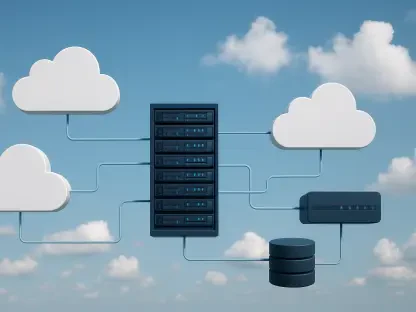

The surging demand for AI resource flexibility has forced a rethink of how enterprise software value is measured and communicated to global investors and analysts. While traditional seat-based licensing once served as the bedrock of software-as-a-service, the current landscape of 2026 sees Microsoft pivoting aggressively toward consumption-based metrics. This shift allows corporations to scale their computational power in alignment with real-time project requirements rather than paying for idle licenses. As large language models become more specialized and hardware-intensive, the focus has moved from how many users have access to how many tokens are being processed daily. This evolution reflects a broader industrial trend where generative AI acts as a utility, similar to electricity or water. For Microsoft, this means that Azure is no longer just a hosting environment but a dynamic processing engine where revenue scales alongside the complexity of every query executed by a global workforce.
Infrastructure Evolution: The Shift to Utility Billing
The technical backbone supporting this revenue shift is the deep integration of specialized hardware like #00 and B200 clusters within the Azure cloud environment. Companies are increasingly moving away from monolithic AI deployments in favor of modular architectures that utilize Azure AI Foundry for fine-tuning small language models. This approach allows developers to pay specifically for the inference costs of highly targeted tasks, such as automated medical coding or legal document synthesis, rather than sustaining general-purpose model overhead. By optimizing how these resources are allocated, Microsoft has created a flywheel effect where the efficiency of the infrastructure directly encourages higher usage rates. The granularity of billing now extends to specific neural processing units, providing a level of transparency that was previously impossible. This transparency enables Chief Financial Officers to see a direct correlation between cloud expenditure and departmental output.
Competition among hyperscalers has intensified, yet the emphasis on consumption-based revenue gives Microsoft a distinct advantage in maintaining long-term enterprise partnerships. By offering a platform where third-party models from OpenAI and Mistral coexist with proprietary silicon, the company captures revenue regardless of which specific architecture a client selects. This agnostic consumption strategy ensures that as the market for AI applications fragments into thousands of niche solutions, the underlying infrastructure remains the primary beneficiary of the traffic. Market data indicates that from 2026 to 2028, the percentage of revenue derived from metered AI services is expected to eclipse traditional software maintenance fees for the first time. This transition represents a fundamental change in the corporate DNA, shifting the sales focus from one-time contract signings to continuous optimization of customer workloads. The result is a more resilient revenue stream that fluctuates with economic activity but maintains stability.
Workflow Integration: Measuring the Value of Intelligence
Beyond the raw infrastructure of the cloud, the integration of Copilot into the Microsoft 365 ecosystem has created a secondary layer of consumption-driven growth. Enterprises are moving beyond simple chat interfaces and are now embedding AI agents directly into complex business processes like supply chain management and automated customer support. These agents operate on a cycle of continuous inference, generating revenue every time they analyze a spreadsheet or draft a technical response. The ability to customize these agents using private organizational data has led to a surge in data storage and retrieval costs, which are bundled into the broader AI consumption model. As these tools become more deeply woven into the fabric of daily tasks, the friction of using AI decreases, leading to a natural increase in usage volume. This seamlessness is critical because it moves the technology from an experimental curiosity to a functional requirement for global businesses.
Decision-makers recognized that the transition toward consumption-based models required a total overhaul of internal governance and budget forecasting. It became evident that organizations needed to implement sophisticated FinOps strategies to manage the variable costs associated with high-frequency AI querying. Successful leaders focused on establishing clear guardrails to prevent runaway costs while still encouraging experimental development within their teams. They also prioritized the training of staff to write more efficient prompts, effectively reducing the token count per transaction and optimizing the return on investment. Looking ahead, the focus shifted toward agentic systems that could operate autonomously, further decoupling revenue from human user counts. By adopting a mindset of continuous optimization, businesses ensured that their AI strategies remained sustainable and scalable. These lessons provided a roadmap for future integrations, emphasizing that the value of AI was in the efficiency of its use.