The Escalating Financial Burden: AI in the Corporate Landscape
The honeymoon phase of experimental artificial intelligence has officially concluded as organizations face the sobering reality of ballooning cloud bills and complex hardware requirements. While the initial pivot to public cloud environments provided a frictionless entry point for early testing, the 2026 landscape demands a more fiscally responsible approach to scaling production. Broadcom’s introduction of the VMware Private AI Cloud signaled a pivotal transition in the sector, suggesting that the most efficient way to manage workloads is to return to the controlled environment of the private data center. This analysis evaluates how private systems reconcile the tension between rapid technological expansion and strict budgetary discipline.
Evolution of Infrastructure: From Cloud-First to AI-Ready
Over the last decade, enterprise IT pursued a “cloud-first” strategy, but the intensive demands of modern machine learning have forced a re-evaluation of this paradigm. The current shift toward private infrastructure is not a retreat from innovation but rather an advancement toward software-defined disciplines tailored for high-density compute. In the past, organizations focused on outsourcing management to achieve agility; today, the priorities have shifted toward data sovereignty and the predictability of operational costs. Recognizing this evolution is critical for understanding how high-performance workloads, such as agentic AI, are being restructured for long-term sustainability.
Strategic Analysis: Mitigating the Triple Threat of AI Costs
Optimizing Hardware: CapEx and Operational Efficiency
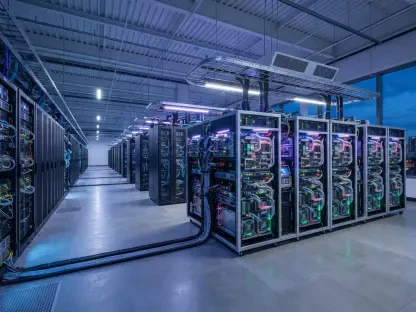
High-end Graphics Processing Units and specialized networking equipment represent a massive capital investment that often escapes traditional budgetary oversight. To address this, modern private cloud solutions utilize architectural advancements like NVMe memory tiering and storage deduplication, which allow companies to maximize the utility of their physical assets. These efficiencies lower the total cost of ownership by reducing the volume of hardware required for complex modeling. Furthermore, unified management tools help eliminate the “hidden” labor costs associated with maintaining fragmented systems.
Controlling Volatility: The Economics of Token Consumption
Public cloud expenditures are frequently driven by token usage, a variable metric that becomes increasingly difficult to forecast as Large Language Models grow in complexity. As enterprises expand their reliance on these models, the cost of processing data can lead to unexpected financial strain. Private cloud environments solve this through granular governance tools like AI Gateways, which allow for intelligent prompt routing and usage rate-limiting. This ensures that the most expensive models are reserved for critical tasks, while smaller, locally hosted alternatives manage everyday queries, turning AI into a manageable utility.
Protecting the Core: Data Sovereignty and Regional Compliance
Data sovereignty remains a primary motivator for shifting AI inferencing into private environments, as over half of modern enterprises now prefer localized control over sensitive information. By keeping data within a private perimeter, organizations bypass substantial egress fees and security risks associated with public providers. This localized approach also guarantees compliance with strict regional residency laws that govern proprietary intellectual property. By hosting vetted models on-premises, businesses can offer “models as a service” without sacrificing the security protocols that protect their most valuable assets.
Emerging Horizons: The Shift Toward the AI Factory Model
The trajectory of the industry indicates a move toward a highly automated “AI Factory” model where virtualization and specific hardware become inseparable. Future trends suggest that multi-tenant model sharing will become standard practice, allowing different departments to utilize shared compute resources without performance interference. Additionally, the rise of edge AI will likely extend these private cloud principles to remote locations, facilitating real-time processing that is both secure and cost-effective. As global regulations tighten, the capacity to provide a transparent and auditable infrastructure will serve as a significant competitive advantage.
Actionable Frameworks: Transitioning to Private Infrastructure
Successfully transitioning to a private AI infrastructure requires a thorough audit of current spending to identify where public cloud economics have become unsustainable. Organizations should prioritize migrating production inference workloads, which are typically the most predictable and benefit significantly from localized oversight. It is also beneficial to utilize integrated software layers that provide unified governance across hybrid environments to maintain flexibility. Finally, investing in internal training for IT staff ensures that the workforce can navigate the shift from traditional virtualization to AI-ready systems without disruption.
Sustaining Innovation: A Final Assessment of Infrastructure Viability
The strategic shift toward private AI infrastructure addressed the fundamental gaps in cost predictability and security that hindered early enterprise adoption. Organizations that moved toward localized control discovered that integrating hardware optimization with robust model governance provided a more sustainable path for scaling. This transition proved that private clouds were not merely a reactive measure against rising costs but a proactive foundation for long-term innovation. Ultimately, the decision to prioritize sovereign data environments ensured that the digital revolution remained a strategic asset rather than an unmanageable financial liability.