
The transition of quantum computing from a theoretical laboratory curiosity to a cornerstone of enterprise infrastructure has reached a pivotal milestone as Oracle Cloud Infrastructure integrates the Helios system. This development marks a significant departure from previous cloud-based quantum offerings that relied on remote access to external hardware, as Oracle has chosen to physically co-locate these advanced systems within its own data centers to ensure tighter synergy with existing computational tools. By establishing this multi-year partnership, the company effectively narrows the competitive gap with other cloud giants while providing its existing user base with a direct path toward quantum experimentation. This arrangement ensures that the immense power of quantum processing units is no longer an isolated resource but rather a fundamental component of a modern, high-performance computing environment designed for solving the world’s most complex logistical and scientific challenges. This strategic alignment serves as a bridge for companies wanting to transition their workflows into a new era of computational capability without leaving the security of their current cloud environment.
Technical Specifications: Defining the Helios Architecture
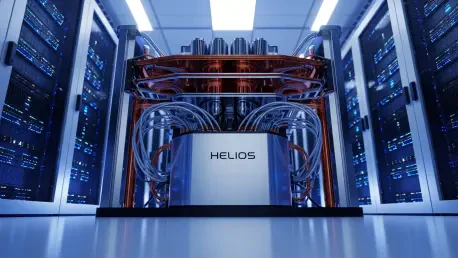
At the heart of this technological expansion lies the Helios quantum system, a sophisticated hardware platform that utilizes trapped-ion technology to achieve a substantial count of ninety-eight physical qubits. This architectural choice is particularly significant because trapped-ion systems are known for their long coherence times and high-quality connectivity between qubits, which are essential for maintaining the stability of complex calculations. Beyond mere physical qubit counts, the Helios system distinguishes itself by supporting forty-eight logical qubits, which are the result of advanced error-correction protocols designed to mitigate the inherent noise of quantum environments. This focus on logical qubit capacity represents a shift in industry priorities, moving away from noisy intermediate-scale systems toward machines capable of executing deep, fault-tolerant circuits. Such hardware enables the simulation of chemical bonds and physical interactions that were previously impossible to model with accuracy while maintaining high stability for longer operations.
Precision remains the primary metric for quantum success, and the Helios hardware delivers an impressive average two-qubit gate fidelity of 99.921 percent, a benchmark that places it at the top of current commercial offerings. This level of accuracy is critical for enterprise-grade applications, where even minor errors can cascade through a computation and render the final results unreliable for decision-making purposes. By providing a platform where error rates are significantly minimized, the partnership allows researchers to move their focus from managing hardware limitations to developing sophisticated algorithms that can tackle real-world problems. The reliability of these gates ensures that complex quantum circuits can be run with higher depth, allowing for more intricate logic paths and more nuanced data processing. This reliability is the foundation upon which future software development will be built, ensuring that as the hardware continues to scale, the underlying accuracy remains consistent enough to support massive enterprise workloads across global sectors.
Architectural Synergy: The Inside the Fence Strategy
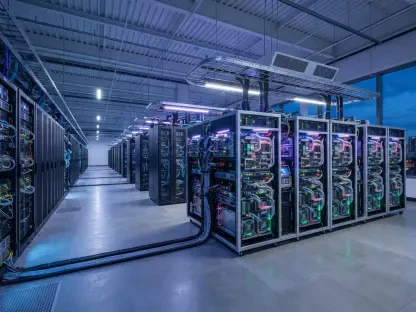
A defining characteristic of the collaboration between these two entities is the decision to install the Helios hardware inside the fence of an Oracle AI data center located in the United States. This physical proximity eliminates many of the latency and security hurdles that typically accompany hybrid cloud environments, where data must travel over public networks to reach a quantum processor. By treating the quantum processing unit as a native part of the cloud stack, the infrastructure allows for unified governance, meaning that existing security protocols, identity management, and data sovereignty controls are applied automatically to quantum tasks. This setup is particularly attractive to highly regulated industries like banking and government, where the movement of sensitive data is restricted by strict compliance mandates. Furthermore, the shared networking and storage layers enable high-speed data transfer between classical databases and quantum processors, facilitating a level of responsiveness that is necessary for iterative computational tasks for all global users.
The operational philosophy of this integration centers on a hybrid computing paradigm, where quantum and classical resources are used in a complementary fashion rather than as competing technologies. Within this framework, developers are encouraged to decompose their most demanding workloads so that traditional graphics processing units handle general-purpose data management while the Helios system addresses specific, mathematically intensive sub-problems. To support this workflow, the platform merges Quantinuum’s specialized software with popular open-source frameworks, providing a familiar entry point for developers who are already proficient in modern programming languages. Users can utilize high-fidelity emulators to build and verify their applications in a cost-effective manner before committing to execution on the physical hardware. This streamlined development cycle reduces the barrier to entry for businesses, allowing them to experiment with quantum logic without requiring a massive overhaul of their current software development life cycles or internal teams.
Market Evolution: Industry Impact and Operational Sustainability
Oracle’s entry into the quantum market specifically targets a demographic of enterprise clients who are already deeply integrated into the company’s database and artificial intelligence service portfolios. While other major cloud providers offer access to a variety of third-party quantum machines, the deep, on-site integration of Helios provides a more seamless experience for organizations that require a high degree of operational consistency. This approach minimizes the friction associated with learning new management consoles or reconfiguring network permissions, as the quantum capabilities are presented through the same interface used for standard cloud resources. By leveraging its existing dominance in enterprise software, the company is positioning quantum computing as a natural extension of its high-performance computing offerings. This strategy creates a robust ecosystem where large-scale data analytics can be enhanced by quantum-driven insights, offering a competitive edge to companies looking to optimize their supply chains or accelerate their research and development timelines.
The practical utility of the Helios system is most evident in sectors such as pharmaceutical research and material science, where the ability to simulate molecular structures at the atomic level is transformative. Traditionally, these simulations required immense classical supercomputing power and often yielded only approximations of complex chemical behaviors; however, the quantum approach allows for much more precise modeling of electron interactions. Beyond the life sciences, financial institutions are exploring the use of these systems for high-frequency risk assessment and the optimization of large-scale investment portfolios, tasks that involve processing an astronomical number of variables. The cloud-based delivery model further democratizes access to these capabilities, allowing academic institutions and smaller research firms to perform advanced experiments without the need for significant capital investment in hardware. This accessibility is crucial for fostering a diverse range of innovations that can address global challenges in energy storage and cryptography.
Strategic Perspectives: Future Trajectories and Governance
The decision to bridge the gap between classical cloud infrastructure and quantum processing units through the Helios deployment redefined how major enterprises approached complex problem-solving. By providing a stable, high-fidelity platform within the existing Oracle ecosystem, the partnership successfully removed the technical and logistical barriers that had previously relegated quantum computing to the periphery of the IT strategy. Organizations that moved early to adopt these hybrid workflows discovered new efficiencies in molecular modeling and financial risk analysis, fundamentally changing their approach to research and development. As the hardware scaled and error correction techniques matured, the focus shifted toward establishing a standardized framework for quantum-classical orchestration across global data centers. This strategic integration proved that the future of high-performance computing would not be defined by a single processor type, but by the seamless interaction of diverse hardware resources. These developments established a new standard for operational excellence in the computational industry.