
The radical transformation of Oracle Corporation from a traditional provider of enterprise database software into a high-octane powerhouse of artificial intelligence infrastructure represents a pivotal moment in the history of the global technology sector. By committing to a staggering $50 billion capital expenditure target for fiscal year 2026, the organization is effectively re-engineering its entire business model to serve as the foundational bedrock for the next generation of generative intelligence. This shift is not merely a gradual evolution but a high-stakes gamble that dwarfs the company’s historical financial patterns, marking a sevenfold increase in investment compared to the levels seen just two years ago. The objective is to position Oracle Cloud Infrastructure as the primary destination for the most intensive computational workloads on the planet. As the demand for training large language models continues to accelerate, Oracle is racing to build the physical and digital environments required to sustain these massive systems, fundamentally altering its corporate identity in the process.
Scalable Powerhouses: The New Architecture of Oracle Cloud
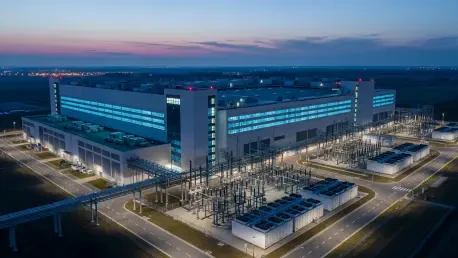
The construction of massive, specialized data centers serves as the cornerstone of Oracle’s strategy to dominate the high-performance computing market for artificial intelligence applications. Unlike the general-purpose cloud environments that defined the previous decade, these new facilities are being engineered from the ground up to support the specific thermal and power requirements of tens of thousands of advanced graphics processing units. A primary example of this aggressive expansion is the recently announced $16 billion data center complex in Michigan, which is designed to provide the sheer density of compute power necessary for industry leaders like NVIDIA and Meta. These projects represent a shift toward bespoke infrastructure that can handle the massive datasets required for training the latest iterations of foundational models. By focusing on high-capacity clusters and low-latency networking, the company aims to offer a level of performance that differentiates its cloud offerings from more established competitors in the space.
This transition toward becoming a hardware-heavy infrastructure provider involves significant logistical and technical challenges that go beyond traditional software development. The deployment of specialized liquid-cooling systems and dedicated power substations has become a prerequisite for hosting the current generation of silicon. Furthermore, the company is prioritizing the rapid procurement of hardware to ensure that it remains ahead of the curve as the demand for inference and training cycles fluctuates across different industry segments. By centralizing its resources into these massive, high-efficiency nodes, the organization is attempting to achieve economies of scale that would be impossible with a more decentralized approach. This strategy reflects a broader industry trend where the physical capacity to host AI models has become as valuable as the code that powers them. Consequently, the success of this infrastructure pivot depends heavily on the company’s ability to maintain a relentless pace of physical construction and technical integration.
Capital Deployment Strategy: Balancing Backlogs and Restructuring
Financing such an unprecedented level of capital expenditure requires a complex strategy that leverages both existing contract backlogs and aggressive external fundraising efforts. Oracle is currently sitting on a record-breaking $553 billion in remaining performance obligations, a figure that represents contracted revenue yet to be recognized. This massive backlog provides the financial confidence necessary to tap into the capital markets for the billions of dollars required to build out its data centers. To support this liquidity, the company has successfully executed a $15 billion senior unsecured note offering while also utilizing at-the-market equity sales to bolster its cash reserves. This multi-pronged financial approach allows the organization to sustain its massive spending even as it reports negative free cash flow on a trailing basis. The goal is to bridge the gap between today’s heavy investment and tomorrow’s revenue realization, creating a long-term pipeline of high-margin cloud services.
Simultaneously, the organization is undergoing a profound internal restructuring to align its workforce with its new strategic priorities. This has resulted in a sweeping reduction of the employee base, with estimates suggesting that between 20,000 and 30,000 positions have been eliminated from legacy departments. These cuts primarily target administrative roles and traditional software support teams that are no longer central to the company’s cloud-first future. By redirecting the capital saved from these layoffs toward hiring specialized cloud architects and AI engineers, the company is effectively cannibalizing its old self to fund a more technologically relevant version of itself. This reallocation of human and financial capital is essential for maintaining operational agility in a market where the cost of talent is rising as fast as the cost of hardware. The transition highlights the harsh reality of the current technological shift, where staying competitive often requires abandoning long-standing business units in favor of unproven growth opportunities.
Operational Vulnerabilities: Concentration and Technological Evolution
The most significant risk to this $50 billion infrastructure bet lies in the heavy concentration of revenue tied to a few major counterparties, most notably OpenAI. Through a massive multi-year partnership, Oracle has become a primary infrastructure provider for some of the world’s most advanced models, but this dependence creates a unique set of vulnerabilities. Market sensitivity to this partnership was clearly demonstrated earlier this year when reports of performance misses from the anchor customer caused a sharp decline in Oracle’s share price. If a single customer accounts for a disproportionate share of the cloud utilization, any change in their growth trajectory or competitive strategy could lead to a massive surplus of unallocated hardware. Moreover, the fact that major AI labs are diversifying their infrastructure across multiple cloud providers means that Oracle must work twice as hard to maintain its position as a preferred partner in an increasingly crowded field.
Beyond the risks associated with customer concentration, the rapid pace of technological innovation in AI model efficiency presents a distinct threat to long-term returns. The release of highly optimized models, such as GPT-5.5, has shown that it is becoming possible to perform complex inference tasks using significantly less computational power than was previously required. If this trend toward model efficiency continues to accelerate, the massive data centers Oracle is spending tens of billions to build might face lower-than-expected utilization rates. This phenomenon, often referred to as inference risk, suggests that the market’s total demand for raw compute might not scale linearly with the complexity of the models themselves. If the industry shifts toward smaller, more efficient edge-based systems or highly optimized specialized chips, the value of large-scale, general-purpose GPU clusters could diminish. This creates a scenario where the company must balance the need for scale with the potential for its hardware assets to become prematurely obsolete.
Strategic Outlook: Navigating the Transition to AI Maturity
Investors have maintained a skeptical stance toward this massive capital deployment, frequently demanding more clarity on how the record-breaking backlog will translate into consistent free cash flow. While the $553 billion in contracted revenue suggests a secure future, the reality of negative cash flow and increasing debt levels creates a narrow margin for error. The market is currently evaluating the organization based on its ability to execute the physical rollout of its data centers without experiencing significant delays or cost overruns. This “show me” period is characterized by a focus on the conversion rate of performance obligations into recognized quarterly revenue, which serves as the primary metric for assessing the health of the pivot. If the company can demonstrate that it is successfully capturing the demand from a diverse range of customers beyond its anchor partnerships, it may eventually regain the confidence of those who fear over-provisioning.
The focus shifted toward long-term operational sustainability as the company moved beyond the initial phase of its infrastructure buildout. Stakeholders determined that the most effective path forward involved a rigorous optimization of supply chain logistics to mitigate the rising costs of advanced semiconductors and power management components. It was observed that organizations capable of demonstrating clear revenue pathways from AI services were the most resilient against market volatility. Future considerations for the industry now include the development of modular data center designs that can be quickly repurposed for evolving hardware standards, ensuring that large-scale investments do not become stranded assets. Leaders prioritized the expansion of high-margin software-as-a-service layers on top of the raw infrastructure to provide a more balanced revenue mix. This approach allowed the enterprise to hedge against the fluctuations of the hardware market while still benefiting from the unprecedented growth of the broader intelligence ecosystem.