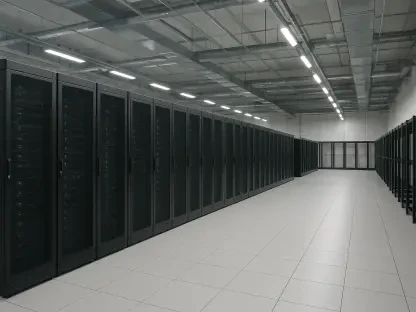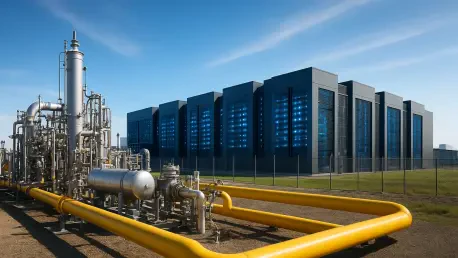

The transition to on-site power generation reflects a broader industry trend where tech companies must secure their own energy destiny to support advanced computing. As the global race for artificial intelligence dominance has transitioned from a software battle to a massive physical infrastructure challenge, the primary obstacle for tech giants is no longer just refining algorithms, but securing the immense electrical power required to run server farms. Oracle Corporation has become a focal point of this struggle, resorting to unconventional and logistically intense methods to keep its expansion on track. To bypass the severe delays associated with the traditional electrical grid and permanent pipeline construction, the company has begun trucking natural gas directly to its data center sites to fuel on-site power generation.
This strategy relies on a virtual pipeline to maintain progress while waiting for permanent infrastructure to catch up with its ambitious timelines. Because regulatory hurdles can stall projects for years, Oracle is partnering with specialized firms to deliver gas via heavy-duty truck fleets. This method ensures that critical facilities can begin early-stage operations without waiting for the local utility companies to modernize their overtaxed delivery systems. By treating energy as a mobile commodity rather than a fixed utility service, the corporation is attempting to decouple its growth from the limitations of the aging North American energy infrastructure, even if the cost of doing so is significantly higher than traditional grid-connected solutions.
Overcoming Infrastructure Bottlenecks
The reliance on trucked natural gas is a symptom of a deeper crisis in the North American power grid and pipeline network. As tech companies accelerate their construction of gigawatt-scale data centers, they are finding that utility providers are unable to commit to the necessary capacity in a timeframe that matches the rapid pace of AI deployment. Traditional grid upgrades can take years to complete, involving complex environmental impact studies, eminent domain issues, and significant capital investment. In contrast, an AI facility can be constructed and filled with high-value server racks in under eighteen months. This fundamental mismatch has forced firms to look for alternative solutions that provide immediate energy without waiting for a permit-heavy grid expansion.
Oracle’s move to bypass the grid entirely by generating its own power on-site is a pioneering step that highlights the necessity of energy autonomy. By taking control of the entire power supply chain, the company aims to eliminate the unpredictability of public utility timelines and state-level regulatory delays. While this approach requires a massive upfront investment in generation hardware, the cost of an idle data center is far greater. In the current market, the speed of deployment is the ultimate competitive advantage, and the physical constraints of the electrical grid are being treated as a problem to be engineered around rather than a hard limit on expansion.
The Virtual Pipeline: Cost and Logistical Reality
While trucking gas provides a workaround for grid congestion, it introduces extreme financial and logistical burdens. Analysts estimate that gas delivered via truck costs roughly four times more than gas sourced from a traditional pipeline due to labor, specialized equipment, and fuel consumption for the delivery fleet. This price premium is compounded by the fact that compressed natural gas must be handled with specialized infrastructure on both ends of the journey. For a company like Oracle, which is already deploying billions into hardware, these costs add a layer of complexity to the balance sheet that few anticipated during the software-focused phase of the AI boom.
The logistics of coordinating a constant stream of high-pressure tankers through industrial zones also creates a public relations challenge. Local communities often express concern over the increased traffic and safety risks associated with such an intensive and continuous fuel delivery operation. Managing these virtual pipelines requires a level of coordination usually reserved for major midstream energy firms rather than software providers. Oracle has had to adapt its operational strategy to include fleet monitoring and fuel supply chain management to ensure its data centers remain cooled and powered. This pivot signifies a fundamental change in how cloud infrastructure is maintained in an era of grid instability.
Scaling Challenges: The Limitations of Mobile Energy
The sheer volume of gas required to power these massive campuses is equally staggering and highlights the limitations of the trucking model. For instance, a single large trailer of compressed natural gas might only provide enough fuel to generate forty minutes of electricity for a one hundred-megawatt load. When considering a massive 2.45-gigawatt campus like Project Jupiter in New Mexico, the mathematical reality becomes clear: the constant stream of trucks required to sustain full operations would be physically impossible to manage on a long-term basis. This suggests that while trucking is a functional stopgap for early-stage testing, it cannot serve as a permanent fix for gigawatt-scale data centers.
In New Mexico, a pipeline operator was forced to reroute a project after state regulators rejected initial proposals, pushing the service date back by an entire year. To manage the fallout, Oracle issued force majeure notices to protect itself from financial penalties. These legal maneuvers underscore the high stakes of the AI boom, where multi-billion-dollar investments and corporate reputations are constantly threatened by bureaucratic and physical delays. The use of trucked gas is less about a sustainable energy strategy and more about a desperate race against time. Oracle is essentially buying progress at a high premium to ensure that its facilities are ready the moment a permanent pipeline is finally online.
Market Realities and Industry Trends
The shift toward on-site power generation at Oracle represents a critical evolution in the data center industry’s relationship with energy providers. For decades, tech companies operated as passive consumers of electricity, relying on the stability and predictability of the regional grid to keep their systems running. However, the massive energy intensity of modern GPU clusters has fundamentally broken this traditional model. We are now seeing the emergence of the data center as a self-contained power plant, where fuel procurement and energy management are core competencies of the technology provider. This trend is driving new partnerships between silicon giants and midstream energy companies.
The need for reliable fuel sources is now as critical as the need for the chips themselves. The industry is effectively re-industrializing, moving away from a purely virtual existence toward a more physically grounded operation that requires direct management of heavy energy infrastructure. This transformation is reshaping market expectations and forcing a reevaluation of what it takes to scale AI capacity. As more companies adopt this decentralized approach, the competition for both natural gas and the logistics required to move it will likely intensify. The result is a new frontier in the technology sector where physical engineering and energy logistics are the primary drivers of digital success.
Financial Consequences: Investor Response and Cash Flow
The financial market has reacted to these energy-sourcing struggles with notable caution, as evidenced by a recent decline in Oracle’s stock value. Investors are particularly concerned because the company’s free cash flow is currently negative and is expected to remain so until these massive data centers are fully operational and generating revenue. The high operational costs associated with trucked natural gas only add to these fears, as they suggest that the path to profitability for these AI investments may be longer and more expensive than originally projected. There is a growing anxiety that the massive capital expenditures might not yield immediate returns if power supply issues persist.
While the corporation frames its trucking strategy as an example of innovation and flexibility, the high operational costs associated with these workarounds put significant pressure on the bottom line. Oracle’s social media messaging has attempted to emphasize its ability to move at the speed of AI by partnering with specialized firms, but the reality is one of strained resources. The company is currently under immense pressure to deliver capacity on schedule for high-profile clients like OpenAI. If Oracle fails to provide the necessary power for these advanced workloads, it risks losing its competitive edge. The high price of trucked gas is a necessary premium for speed in an energy-starved landscape.
Strategic Evolution: The Move Toward On-Site Independence
Oracle’s predicament reflected a broader industry trend where the physical constraints of the energy sector became the primary limiting factor for AI growth. There was a growing consensus that the on-site power plant model was the new standard for large-scale computing, allowing companies to burn natural gas locally rather than relying on an overtaxed electrical grid. This shift turned industrial gas delivery firms into essential players in the high-tech ecosystem. These companies, which previously served remote mining operations, became the lifeline for the world’s most advanced computing facilities. This convergence of heavy industry and high technology defined the infrastructure strategy of the era.
Looking forward, industry leaders prioritized the development of dedicated energy corridors and streamlined regulatory frameworks for private power generation. The transition demonstrated that the physical limits of power delivery could not be solved by software updates alone. Successful firms recognized that energy independence was a fundamental requirement for the next generation of computing. They invested directly in natural gas production and midstream assets to secure their supply chains against future grid instability. This shift toward vertical integration allowed for more resilient expansion and reduced the reliance on costly, temporary solutions. The era of the virtual pipeline gave way to a more stable energy infrastructure.