
Competitive Shifts: The Emergence of the Specialized AI Cloud Provider
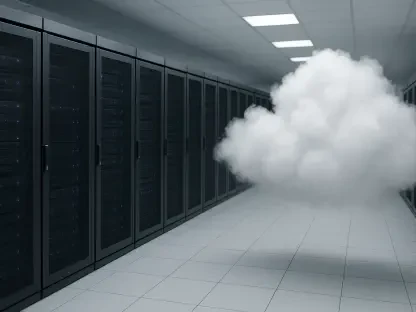
The global hunger for high-performance silicon has transformed raw computational power into a currency more volatile and valuable than the traditional assets once managed by the world’s largest financial institutions. This insatiable demand has catalyzed the rise of “neoclouds,” a new breed of specialized infrastructure providers that are challenging the long-standing dominance of traditional hyperscale giants. While the established triumvirate of Amazon Web Services, Google Cloud, and Microsoft Azure has defined the cloud era for over a decade, the specific and massive requirements of artificial intelligence have created a vacuum that these legacy systems were not initially built to fill. Neoclouds have seized this opportunity by offering lean, GPU-heavy environments that prioritize the massive parallel processing required for training modern large language models and running complex inference at scale.
The current market environment suggests that infrastructure is no longer just a support service but has become the primary commodity of the digital economy. Recent fluctuations in the availability of excess compute capacity have demonstrated how sensitive the global tech sector has become to even minor shifts in supply. When large-scale organizations attempt to offload their own surplus compute, the resulting market volatility highlights a fundamental truth: in a world facing a chronic shortage of energy and processing units, neoclouds serve as a necessary pressure valve. These providers allow the industry to navigate around the rigid structures of traditional clouds, providing a direct pipeline to the hardware that fuels the current wave of technological innovation.
These specialized entities are not merely small-scale versions of their larger predecessors; they represent a fundamental pivot in how digital resources are allocated and consumed. By focusing almost exclusively on accelerated compute, they offer a level of agility that massive, multi-service hyperscalers struggle to match. The emergence of the neocloud signals a maturation of the AI market, where businesses are moving away from general-purpose cloud solutions in favor of platforms that can handle the unique thermal, power, and networking demands of high-end hardware. As we navigate through the current fiscal year, the success of these newcomers is being measured by their ability to provide consistent access to the most advanced chips on the market.
Market Transformation: From General Purpose Clouds to Accelerated Compute Specialization
The primary distinction between a traditional hyperscaler and a neocloud lies in the philosophical approach to service delivery and technical architecture. Since the early days of the cloud revolution, the industry leaders have focused on building horizontally integrated ecosystems that include thousands of varied services, from basic storage to complex database management and identity systems. Building such a vast global footprint requires decades of investment and a commitment to serving every possible enterprise need. In contrast, the neocloud is a vertically specialized entity, designed with a deliberate narrowness that allows for extreme optimization of a single product: high-density GPU capacity.
This specialization is a direct response to the specific technical hurdles of the current era, where the traditional model of shared, general-purpose resources often falls short of the performance required for massive model training. Neoclouds provide the raw, accelerated compute that hyperscalers often lack in sufficient, immediate volume. Rather than navigating a labyrinth of managed services, developers can access “bare-metal” or containerized GPU clusters that are specifically tuned for performance rather than general enterprise compatibility. This narrow focus allows neoclouds to deploy the latest hardware iterations much faster than legacy providers, who must consider the impact of new hardware on a massive and diverse existing customer base.
While some of these specialized providers function as wholesale hardware providers, others are quickly developing sophisticated software and orchestration layers. These tools are designed to manage the complexities of distributed training and real-time agentic AI, which require seamless communication between thousands of interconnected chips. By building software that speaks directly to the hardware, neoclouds are creating a more efficient path for AI development. This evolution toward specialized software-defined infrastructure suggests that the neocloud model is moving beyond a simple hardware play and into a strategic role as the foundational layer of the intelligent economy.
Technical Frontiers: The Evolutionary Leap of High-Density Infrastructure
Mining to Modeling: Repurposing Crypto Roots for Artificial Intelligence
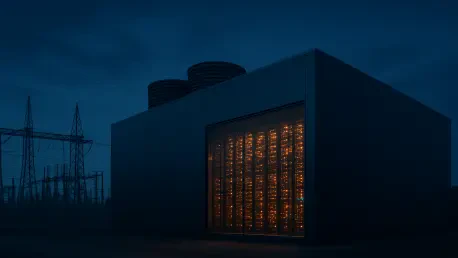
The origin of many prominent neoclouds can be traced back to the infrastructure built during the peak of the cryptocurrency mining era. This heritage provided these companies with a significant head start in the race to provide AI-ready data centers, as the engineering requirements for mining and AI training are surprisingly similar. Both activities require the management of extremely dense power environments and the ability to dissipate massive amounts of heat. Former mining operators already possessed the physical substations, utility relationships, and cooling expertise necessary to run thousands of power-hungry devices in a single facility, making them the ideal hosts for the current generation of GPU clusters.
Power Scarcity: Addressing the Global Energy Bottleneck
As the demand for processing power continues to escalate, the availability of electricity has become the primary constraint on the growth of the digital economy. Neoclouds are positioning themselves as “energy-first” enterprises, often constructing their own power infrastructure or securing land in regions where they can tap directly into high-voltage lines. With projections indicating that global energy consumption by AI-focused data centers could reach 945TWh by 2030, the ability to bypass traditional, overburdened grids is a major competitive advantage. These providers are effectively becoming power orchestrators, ensuring that the next generation of real-time AI agents has the consistent energy supply required to function.
Capital Constraints: Navigating Financial Risks and Hardware Depreciation
Despite their rapid rise, neoclouds operate in a high-stakes financial environment characterized by massive capital expenditures and rapid hardware cycles. Purchasing the tens of thousands of GPUs needed to compete requires immense debt and equity financing, which places significant pressure on these companies to maintain high utilization rates. A major risk involves the depreciation of the hardware itself; if new chip architectures render current inventories obsolete faster than the typical four-to-five-year cycle, many providers could find themselves facing severe financial strain. This volatility makes the sector highly sensitive to broader economic shifts and technological breakthroughs that could reset the value of existing assets overnight.
Strategic Projections: Anticipating Consolidation and the Future of Compute
As the industry moves deeper into the second half of the decade, the neocloud sector is likely to undergo a period of significant consolidation. The providers that survive this transition will be those that successfully pivot from being simple hardware wholesalers to becoming comprehensive service platforms. This shift requires the integration of advanced security protocols and multi-tenant reliability features that align with the rigorous standards of enterprise IT. Moving away from a “landlord” model toward a more integrated service model will be essential for building long-term resilience against both economic downturns and the eventual expansion of hyperscaler GPU capacity.
The broader outlook for the compute market remains optimistic, driven by the fact that artificial intelligence is becoming an ambient and omnipresent force in global society. Just as the internet became a fundamental utility, high-density accelerated compute is now a prerequisite for participation in the modern economy. The ongoing need for specialized infrastructure will likely ensure that a select group of neoclouds remains independent, serving as the “kingmakers” for companies that require maximum performance without the overhead of a general-purpose cloud. The future will belong to those who can master the intersection of high-density engineering, software orchestration, and sustainable energy management.
Enterprise Playbooks: Strategic Takeaways for the AI-Driven Economy
For businesses and investors navigating this shifting landscape, the most important lesson is the value of infrastructure diversification. Relying solely on a single hyperscaler can lead to bottlenecks when specialized compute needs arise, making neocloud partnerships a critical component of a modern digital strategy. Organizations must also prioritize partners who have secured long-term energy access, as power availability is increasingly becoming the bottleneck for scaling operations. Monitoring the “energy-first” capabilities of an infrastructure provider is now just as important as evaluating their software stack or hardware inventory.
Furthermore, professionals in the technology sector should focus on developing skills related to high-density environment management and specialized orchestration. As compute becomes more of a commodity, the ability to efficiently manage these physical and virtual resources will be a defining competitive advantage. Organizations that view compute not just as a service, but as a strategic asset governed by hardware lifecycles and power constraints, will be better positioned to adapt to the rapid changes of the next few years. This requires a shift in perspective that embraces the physical realities of the digital world, from cooling systems to debt-to-equity ratios.
Retrospective Analysis: Final Perspectives on the Infrastructure Pivot
The rise of the neocloud established a new tier of infrastructure that prioritized extreme performance and power density over general-purpose utility. This transition occurred because the massive requirements of the artificial intelligence boom exceeded the capacity of traditional providers to respond with sufficient speed. The sector demonstrated that specialized engineering, often salvaged from the crypto era, could be successfully repurposed to meet the most pressing technological needs of the decade. By 2026, the market realized that the “stranglehold” of the cloud giants was not absolute, particularly in the realm of high-performance accelerated compute.
The transition toward specialized providers represented a definitive moment in the history of internet infrastructure. Organizations that recognized the importance of diversifying their compute sources early avoided the most severe supply constraints and managed to scale their AI initiatives more effectively than their competitors. The period proved that energy access and specialized hardware expertise were the most critical factors in determining market dominance in the intelligent era. While financial risks remained a persistent challenge, the foundational role of these providers in the global economy became undeniable as they powered the shift toward an ambient AI reality.