
Deep within climate-controlled halls, machines the size of basketball courts hum with the collective power of millions of processing cores, yet their reign as the world’s most powerful intellects often ends before a typical toddler finishes preschool. These digital titans, capable of calculating quintillions of operations per second, represent the absolute zenith of human engineering. However, the relentless march of technological progress means that today’s record-breaker is tomorrow’s anchor. As the computational world shifts toward more specialized AI-driven architectures, the question of what becomes of these massive, energy-hungry behemoths has moved from a niche logistical concern to a central pillar of environmental policy and economic strategy.
The sheer scale of these systems makes their departure from the laboratory floor a monumental task. A modern supercomputer is not just a collection of servers; it is a complex ecosystem of specialized cooling pipes, high-speed interconnects, and thousands of high-end GPUs. When the power finally cuts out, these machines do not simply vanish into the annals of history. Instead, they enter a sophisticated global circular economy where components are harvested, repurposed, or refined. This transition is essential for an industry that consumes as much electricity as small cities, ensuring that the heavy environmental cost of manufacturing silicon is amortized over a much longer functional life than the initial three to five years of peak service.
The “Long Goodnight” of Digital Giants
A modern supercomputer can occupy the footprint of a full tennis court and consume enough electricity to power a small town, yet its tenure at the pinnacle of technology is often shorter than the lifespan of a typical smartphone. In 2022 alone, the world generated 62 million tonnes of electronic waste, a figure projected to climb as the demand for high-performance computing (HPC) intensifies toward the end of the decade. When these massive machines are decommissioned, they undergo a complex transition from cutting-edge research tools to components in a sophisticated global circular economy. This “long goodnight” involves more than just pulling a plug; it requires a coordinated effort between scientists, engineers, and specialized recycling experts who treat every rack as a treasure trove of rare earth metals and high-value semiconductors.
The physical departure of a supercomputer is often as much about logistics as it is about technology. These systems are frequently integrated into the very foundation of the buildings that house them, with direct liquid cooling lines and massive power arrays that must be carefully decoupled. As a system enters its final operational phase, it typically transitions from primary research—such as simulating the first moments of the universe—to more mundane but still vital tasks like climate modeling or data archiving. This gradual wind-down allows researchers to migrate their code to newer architectures while ensuring that the massive energy footprint of the older machine is still producing some form of scientific value during its final months of operation.
Ultimately, the retirement process serves as a bridge between generations of technology. The space vacated by an old system is often the only location within a facility capable of supporting the massive power and cooling requirements of its successor. Therefore, the removal of the old “giant” is the first step in the birth of the next. By treating the decommissioning phase as a strategic operation rather than an afterthought, organizations can recover significant value from the hardware, often selling parts to secondary markets or recycling centers that specialize in the recovery of gold, silver, and palladium from the high-density circuit boards found in HPC systems.
The E-Waste Crisis: Navigating the Accelerating Cycle of Obsolescence
The urgency of managing retired supercomputers is driven by a dramatic compression in hardware lifecycles. While early systems like the University of Cambridge’s Titan remained operational for nearly a decade, contemporary giants like the US Department of Energy’s Summit are being decommissioned in just over six years. This “competitive erosion” is fueled by relentless innovation in processor architecture and the massive power requirements of modern AI workloads. As the volume of global e-waste has surged by 82% over the last 12 years, the supercomputing industry has had to pivot from simple disposal to strategic lifecycle management to mitigate the environmental impact of its rapid turnover.
Innovation cycles have become so rapid that a processor might be considered “inefficient” long before it is actually broken. The transition from general-purpose CPUs to highly specialized AI accelerators has rendered many older supercomputing nodes obsolete for top-tier research, even if they remain perfectly functional. This creates a mountain of hardware that is technically sound but economically unviable to operate at a large scale due to the high cost of the electricity required to run it compared to newer, more efficient chips. This paradox is at the heart of the e-waste crisis: we are discarding functional intelligence because it is no longer the fastest or most efficient version of that intelligence.
Furthermore, the materials used in these machines represent a significant environmental investment. Each node contains a concentrated amount of rare minerals that are carbon-intensive to mine and refine. If a retired supercomputer ends up in a traditional landfill, those resources are lost, and the toxic components—such as lead and mercury—pose a long-term risk to the environment. Consequently, the industry has moved toward “design for disassembly” principles, where the eventual retirement of the machine is considered at the point of its creation. This proactive approach aims to ensure that the surge in computational demand does not lead to an unmanageable surge in toxic waste.
Divergent Paths: How Hyperscalers and National Labs Extend Hardware Value
The destiny of a retired supercomputer depends largely on who owns it. Hyperscalers like Google and Amazon employ a “cascade” model, where top-tier chips are phased out of primary service but repurposed for secondary, less intensive tasks within the same company. For instance, a GPU that is no longer fast enough for training a trillion-parameter large language model might still be perfectly adequate for serving less demanding web applications or handling internal data processing. This internal migration path maximizes the utility of every piece of silicon and avoids the immediate need for external disposal, effectively giving the hardware a second or even third life within the same ecosystem.
Conversely, national supercomputing centers utilize a tiered rotation strategy, moving older systems into supporting roles to handle secondary workloads while a new “frontier” system takes the lead. This internal repurposing ensures that the massive initial investment in silicon continues to provide utility even after the hardware loses its competitive edge. In these government-funded environments, an older system might be dedicated to educational purposes, allowing students and early-career researchers to run experiments that do not require the raw power of the flagship machine. This not only preserves the hardware but also builds a pipeline of talent that is prepared to work on the next generation of digital giants.
However, once these secondary and tertiary roles are exhausted, the paths of these machines diverge again toward specialized remarketing. Many organizations now work with third-party brokers who specialize in the resale of enterprise-grade hardware. While the supercomputer as a whole is retired, its individual components—memory sticks, power supplies, and storage drives—often find their way into smaller private data centers or boutique research firms. This creates a trickle-down effect where the cutting-edge technology of five years ago becomes the affordable foundation for smaller-scale innovation today, ensuring that the hardware remains productive until it is truly ready for the scrap heap.
Expert Perspectives: Insights Into the High-Efficiency Circular Economy
Industry experts highlight that the retirement of a supercomputer is often a matter of resource optimization rather than hardware failure. Simon McIntosh-Smith of the University of Bristol notes that systems are frequently retired because their physical footprint and power consumption are better utilized by newer, more efficient technology. When space is limited and every kilowatt-hour costs a premium, it simply makes more sense to replace ten racks of old equipment with one rack of new hardware that offers the same performance at a fraction of the cost. The decision to retire is therefore an economic calculation: the “cost of keeping” eventually exceeds the “cost of replacing” when performance-per-watt is factored into the equation.
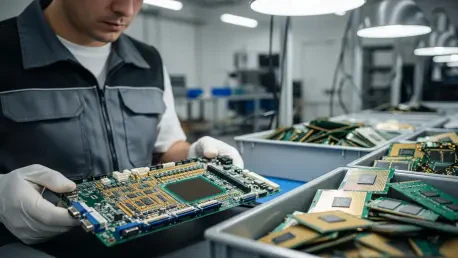
Data from Hewlett Packard Enterprise (HPE) reveals a surprisingly successful recovery rate; at specialized technology renewal centers, up to 98% of a decommissioned supercomputer’s components can be successfully remarketed or repurposed. This high rate of recovery is achieved through a meticulous process of testing, refurbishing, and recertifying hardware. By giving retired components a manufacturer’s seal of approval, these centers make it possible for smaller enterprises to purchase high-end computing power at a price point they could otherwise never afford. This “second market” is a vital component of the circular economy, turning potential waste into a revenue stream that can help fund the next round of technological investment.
The experts also emphasize the importance of data security in this process. Before any part of a supercomputer leaves a facility, it must undergo a rigorous data sanitization process. In the world of high-performance computing, where machines often process sensitive national security or proprietary corporate data, the “retirement” of a system includes the absolute destruction of any stored information. This is usually achieved through advanced software-based wiping or the physical destruction of storage media. This level of security is a prerequisite for the circular economy; without the guarantee that data is unrecoverable, organizations would be forced to destroy functional hardware rather than allow it to be repurposed.
Strategic Frameworks: Navigating the Future of Decommissioning
To maintain high sustainability rates, organizations are adopting specific strategies to handle increasingly complex hardware. As the industry shifts toward direct liquid cooling (DLC) to manage the heat of AI-intensive workloads, decommissioning becomes a more specialized logistical task. Unlike air-cooled systems, liquid-cooled racks involve coolant fluids that must be safely drained and disposed of or recycled. Effective strategies now include establishing disposal rights with manufacturers early in the procurement phase and developing specialized disassembly protocols for these complex systems. This foresight ensures that the shift toward more powerful cooling does not create a bottleneck when it comes time to retire the machine.
Furthermore, the rise of modular data center design is making the decommissioning process more efficient. By building supercomputers in standardized, modular “blocks,” organizations can replace specific parts of a system without needing to overhaul the entire infrastructure. This “ship-in-a-box” approach allows for the continuous modernization of a supercomputer facility, where individual components are retired and replaced on a rolling basis. This reduces the shock of a total system retirement and allows for a more steady stream of components to enter the recycling and repurposing pipeline, rather than a massive influx of waste every six years.
Finally, the adoption of specialized AI hardware requires new frameworks for value recovery. Traditional recycling methods that focus on recovering precious metals may not be sufficient for the complex multi-chip modules used in modern AI accelerators. Emerging strategies involve partnerships with semiconductor manufacturers to extract and reuse entire silicon wafers or specialized substrates. These frameworks are essential to ensuring that the next generation of specialized AI hardware can be effectively integrated back into the market cycle rather than contributing to the growing global e-waste burden. By planning for the end at the very beginning, the industry is transforming the “long goodnight” into a new dawn for sustainable computing.
The transition of these digital behemoths into their afterlife was successfully managed through a combination of industrial foresight and technical ingenuity. The supercomputing community realized that the environmental cost of their progress could no longer be ignored, and they implemented a robust circular economy that saved millions of tonnes of silicon from the furnace. Engineers redesigned the decommissioning process to be as rigorous as the initial assembly, ensuring that liquid cooling systems were safely neutralized and that data was permanently scrubbed. This shift toward responsible lifecycle management allowed the sector to thrive even as global regulations on electronic waste tightened. By prioritizing the recovery of 98% of components, the industry proved that scientific advancement and environmental stewardship could coexist in a balanced ecosystem. Through these actionable frameworks, the path toward a sustainable future for high-performance computing was firmly established, transforming obsolete giants into the foundational blocks of tomorrow’s innovations.