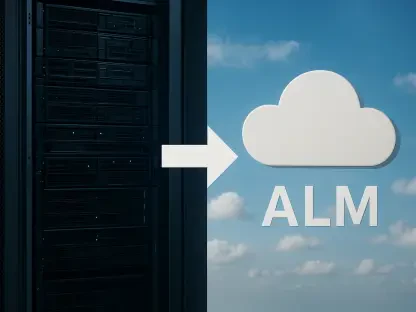

As the global demand for high-fidelity content continues to surge, creative studios are finding that traditional network infrastructures often buckle under the sheer weight of multi-terabyte raw video files. The disconnect between centralized cloud storage and the geographically dispersed editors who must access it has long created a bottleneck that slows down production cycles and inflates operational budgets. For years, the industry has looked for a way to harmonize the infinite scalability of the cloud with the instantaneous response times of a local hardware array. This tension is particularly acute in 2026, where the standard for production has shifted toward 8K resolution and complex real-time rendering. The introduction of the OpenDrives Edge platform represents a calculated move to resolve these discrepancies by moving the processing power and the data itself closer to the point of creation. It is not merely a tool for storage but a sophisticated architectural layer designed to remove the friction that has historically plagued the hybrid workflow.
Intelligent Caching: Reducing Latency in Distributed Environments
The technical mechanics of OpenDrives Edge center on its ability to perform intelligent edge synchronization and automated data movement without constant manual intervention. Instead of requiring an editor to wait hours for a massive file to download from a public cloud bucket or a distant primary data center, the system identifies the necessary assets and pulls them to a local cache once. This means that once the initial synchronization occurs, the creative professional can interact with the footage at Local Area Network speeds, effectively making the physical distance between the user and the central hub irrelevant. This automated background process ensures that the most relevant data is always available on-site, allowing the workforce to focus on the creative aspects of storytelling rather than the logistics of file transfers. By decoupling the user experience from the limitations of wide-area network bandwidth, the platform creates a more fluid environment for high-stakes post-production tasks.
Beyond the immediate performance gains, this hybrid approach addresses the economic burden of cloud egress fees and the risks associated with data integrity across multiple sites. When an editor makes a modification to a project file or adds a new visual effects layer at the edge, the software automatically synchronizes these specific changes back to the central repository. This ensures that the master version of the project remains the single source of truth while simultaneously keeping all secondary locations updated in near-real-time. The reduction in unnecessary data movement significantly lowers the costs typically associated with retrieving information from the cloud, making a hybrid model more financially viable for independent studios and large-scale enterprises alike. Moreover, the integration of these features into a unified dashboard allows IT managers to oversee global data distribution from a single interface, ensuring that security protocols and storage quotas are maintained regardless of where the physical hardware or the remote users are located.
The Software-Defined Pivot: Transitioning to Data Services
This technological shift reflects a broader strategic evolution for OpenDrives as it moves away from being a traditional hardware-focused storage provider toward becoming a comprehensive data services company. Industry leaders, including CTO Alex Dunfey and CEO Trevor Morgan, have recognized that in the current landscape of 2026, the value of a storage solution lies in its agility and its ability to manage data across disparate environments rather than in the proprietary nature of the hardware itself. The explosion of video volume across various platforms has necessitated a more flexible, software-defined approach that can operate seamlessly between on-premises servers and diverse cloud compute infrastructures. This transition allows the company to address the reality of a decentralized workforce that requires high-performance access without being tethered to a specific physical location. By prioritizing the software layer, the platform can evolve more rapidly to meet the changing needs of the media and entertainment sectors, providing a level of adaptability that rigid legacy systems cannot match.
The emphasis on a software-defined architecture also means that the benefits of high-speed storage are no longer confined to the proprietary Atlas platform. As the rollout of these services continues through 2027 and 2028, the roadmap includes expanding compatibility to allow the software to run on customer-owned servers and within various third-party cloud environments. This democratization of high-performance data management is essential for organizations that have already invested heavily in their own hardware ecosystems but still struggle with the latency inherent in hybrid workflows. By offering a solution that is objective regarding the underlying hardware, OpenDrives provides a path for companies to modernize their operations without undergoing a complete infrastructure overhaul. This focus on interoperability and scalability ensures that the platform can serve as the backbone for a wide variety of media-intensive applications, ranging from live sports broadcasting to complex corporate communications, where the rapid turnaround of high-quality assets is a critical requirement for business success.
Strategic Integration: Next Steps for Media Professionals
Implementing this type of edge-caching technology required a fundamental rethink of how assets were distributed across different geographical zones to ensure that no single point of failure could disrupt the creative pipeline. The introduction of advanced multi-site control features allowed administrators to pre-allocate bandwidth and prioritize critical projects, ensuring that high-priority renders received the necessary resources before less urgent tasks. As the technology matured throughout the year, the emphasis shifted toward ensuring that hardware certifications were expanded to include a wider array of off-the-shelf components. This move was designed to provide organizations with the maximum possible flexibility when designing their local edge nodes, allowing them to balance performance and cost based on the specific requirements of their regional offices. The goal was to create an environment where the transition between local work and cloud backup was completely transparent to the end user, thereby eliminating the mental overhead that often accompanies complex data management strategies in a professional setting.
Looking forward, organizations must evaluate their current data movement strategies to identify where latency is most impacting their bottom line. The adoption of a performance accelerator like OpenDrives Edge suggested that the future of media production would depend on a tightly integrated ecosystem where the cloud serves as a massive archive and the edge serves as the high-speed workspace. Decision-makers should have prioritized the audit of their egress costs and the assessment of their remote team’s productivity to determine if a software-defined storage layer could provide the necessary ROI. It became clear that those who invested in automated synchronization and intelligent caching were better positioned to handle the increasing complexity of modern file formats. Ultimately, the successful transition to a truly hybrid workflow required a commitment to decoupling data from physical location, ensuring that talent could be recruited from anywhere in the world without compromising the speed of delivery. This approach established a new benchmark for operational efficiency that will likely remain the standard for the industry for the foreseeable future.