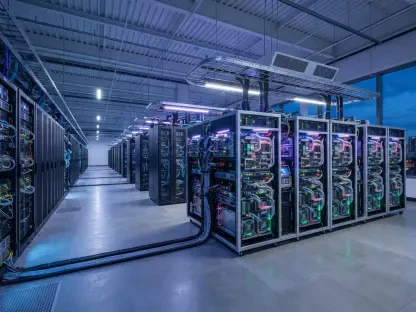

Organizations entering new geographic regions must treat environmental differences as version-controlled configurations to maintain a low marginal cost for supporting new infrastructure. In the current landscape of 2026, the reliance on a singular public cloud provider has shifted from a best practice to a potential bottleneck for global enterprises. Leaders have recognized that the complexity of artificial intelligence deployment cannot be solved by a one-size-fits-all approach. Instead, the focus has moved toward a “hybrid-by-design” methodology, where the architectural blueprint intentionally incorporates on-premises hardware, private clouds, and multiple public cloud environments. This strategy is not merely a reaction to technical limitations but a proactive response to the multifaceted requirements of data residency, security, and the rising costs of data egress. By designing systems that anticipate these constraints from the outset, organizations are avoiding the massive re-engineering efforts that typically follow rigid, cloud-only implementations. The priority has become the creation of a flexible framework where data and compute resources are allocated based on specific operational demands rather than being tethered to a single vendor’s ecosystem.
Strategic Placement of Data and Compute
Managing Data Residency through Localized Governance
The strategic placement of data has become the primary driver of modern AI architecture, especially as regional regulations become increasingly stringent regarding the storage and processing of sensitive records. Enterprises are now required to classify data with granular precision, distinguishing between raw records, metadata, and the embeddings used in machine learning models. In many cases, regulatory mandates or security policies dictate that sensitive documents must remain within a customer-controlled environment or a specific geographic territory. A hybrid-by-design approach facilitates this by allowing the bulk of data governance and metadata recording to happen on-premises. For instance, companies handling massive document migrations are successfully using secured connections to perform heavy-duty AI tasks like optical character recognition and classification in the cloud while keeping the original sensitive files localized. This dual-layered strategy ensures that the sensitive-data boundary is kept as small as possible, significantly reducing the risk of compliance failures and lowering the total cost of ownership by eliminating unnecessary data transfers.
Optimization for Real-Time Performance and Low Latency
In sectors where response time is measured in milliseconds, such as financial services or industrial automation, the physical distance between data and compute is a non-negotiable factor. Real-time transaction enrichment and credit authorizations require an architecture that can process inquiries almost instantaneously at the point of origin. This has led to the adoption of sophisticated models that separate real-time processing from heavy analytical queries. By utilizing high-performance transactional storage closer to the user and streaming enriched data to secondary clouds for long-term analytics, organizations are meeting strict service-level agreements without sacrificing the depth of their insights. This structural separation allows proprietary models to add contextual value, such as merchant location or risk scores, in under five milliseconds. The ability to maintain such low latency while still leveraging the analytical power of the public cloud demonstrates the efficiency of a well-orchestrated hybrid model. This setup ensures that critical operations remain functional even during peak loads or network fluctuations across broader cloud regions.
Modular Architecture and Deployment Efficiency
Integrating Best-Fit Services through Stable API Frameworks
Modularity has emerged as a cornerstone of successful AI scaling, allowing enterprises to integrate specialized managed services without being locked into a specific vendor’s full stack. By utilizing stable APIs and REST interfaces, development teams can decouple their core application logic from the underlying infrastructure components like vector databases or reranking models. This flexibility enables organizations to swap out specific parts of their technology stack to take advantage of better performance or lower pricing from different providers. For example, a search application might maintain its primary API on one cloud while outsourcing high-speed vector retrieval to a managed service on another. This approach has been shown to drastically reduce development time, sometimes by as much as ninety percent, because engineers no longer need to manage the complexities of every internal database or AI component. Instead, they focus on their core mission of data stewardship and user experience, relying on best-in-class managed services to handle the heavy lifting of specialized infrastructure tasks.
Streamlining Global Rollouts with Infrastructure as Code
The challenge of deploying AI applications across diverse environments, ranging from public clouds to air-gapped data centers, is now being met with standardized, configuration-driven automation. Transitioning away from custom, manual installations, enterprises are adopting infrastructure as code and containerization to manage environmental differences. By using reusable modules for provisioning virtual machines and Kubernetes clusters, companies have successfully slashed deployment timelines from weeks to just a few days. This methodology allows for the support of highly regulated environments where telemetry and external connections are strictly limited. The use of sandboxed compute tasks that terminate upon completion further enhances security while minimizing idle infrastructure expenses. When every environment is treated as a set of version-controlled parameters, the marginal cost of expanding into a new region or a more restrictive data center is kept at a minimum. This ensures that the AI solution remains consistently performant and secure across every deployment target, regardless of the unique hosting constraints involved.
Portability and Unified Governance Across Environments
Bridging the Gap Between Legacy Systems and AI Modernization
Portability is now recognized as a critical competitive advantage, especially for organizations burdened with vast amounts of information trapped in legacy systems. Modern AI designs utilize standardized interfaces to bridge the gap between existing data repositories and new machine learning tools. This allows businesses to link established platforms like document portals or older databases to advanced extraction and analysis engines without requiring a wholesale replacement of their current infrastructure. By separating the data extraction layer from the primary user interface, companies have significantly reduced the amount of manual data handling required in their workflows. This approach facilitates a smoother transition toward AI-enhanced operations, as the core application can be moved or expanded into different environments without the need for a total rewrite. The ability to run identical workloads on-premises or in a hybrid cloud configuration provides the agility needed to respond to shifting market demands or new regulatory requirements while preserving the value of long-term investments in legacy hardware.
Synchronizing Clinical and Operational Workflows in Healthcare
In the healthcare sector, the fragmentation of systems across different hospitals and providers has historically hindered the effective use of AI. However, the adoption of unified data layers that span multiple cloud environments is now providing a shared context for complex clinical and operational tasks. This coordination ensures that different specialized agents—whether they are handling patient intake, billing, or medical documentation—all have access to the same real-time case status. By implementing a central governance framework that oversees these disparate systems, organizations are preventing the fragmentation of security and privacy policies. This unified approach has led to significant gains in care provider efficiency, as the coordination of tasks is managed through a single, coherent workflow. Because the core AI architecture remains consistent across various hosting environments, healthcare providers can maintain a high standard of data privacy while still benefiting from the scalability and processing power offered by a multicloud strategy. This balance is vital for ensuring that technological advancements translate directly into improved patient outcomes.
The Evolution toward Repeatable AI Patterns
Developing a Connective Tissue for Multicloud Innovation
The most effective AI strategies in 2026 are those that focus on building a robust “connective tissue” between various data environments and compute resources. Success is no longer defined by the selection of a single winning cloud provider, but by how well an organization can integrate diverse tools for data management, governance, and workflow orchestration. This integration creates a repeatable pattern that can be applied to any new project or expansion effort, ensuring that the architecture itself becomes an asset. By using integrated platforms that offer consistent governance and data access regardless of where the servers reside, businesses are creating a unified ecosystem that functions as a single entity. This connective layer allows for the seamless movement of models and workloads, ensuring that innovation is not stalled by infrastructure silos. When the underlying patterns of placement, interfaces, and automation are in sync, the resulting AI solution is far more resilient and capable of scaling to meet the needs of a global enterprise.
Scaling Architecture Patterns Instead of Codebases
As organizations reach higher levels of maturity in their AI journey, the focus has shifted from scaling individual codebases to scaling architectural patterns. This distinction is vital for maintaining a manageable technology stack that does not become overly complex as the business grows. By turning hosting constraints into simple configuration choices, enterprises have empowered their teams to focus on the business value of AI insights rather than the mundane details of server management. This transition has allowed for the creation of a consistent user experience that remains unaffected by the physical location of the data or the specific cloud environment in use. The use of repeatable patterns ensures that every new deployment inherits the security, governance, and performance standards already established by the organization. This maturity in architecture signifies a move toward a more sustainable model for AI growth, where technical limitations are viewed as strategic choices that can be optimized through design. Consequently, the enterprise is better positioned to leverage AI as a driver of long-term economic value and operational excellence.
Strategic Imperatives for Enterprise AI Maturity
The transition toward a hybrid-by-design architecture demonstrated that technical flexibility was the most valuable asset for any organization seeking to scale its artificial intelligence capabilities. It was found that by prioritizing data residency and low-latency performance through strategic resource placement, businesses managed to protect the integrity of the user experience while adhering to global compliance mandates. This shift allowed leadership teams to stop viewing infrastructure as a secondary concern and instead treat it as the foundational layer for all future innovation. The adoption of modular APIs and automated deployment pipelines proved essential in reducing the total cost of ownership, as it removed the need for bespoke, manual configurations for every new regional office or data center. These efficiencies allowed engineering resources to be redirected toward higher-value tasks, such as model refinement and the development of new AI-driven features that directly addressed customer needs.
To ensure long-term viability, enterprises moved toward a model that emphasized the importance of unified governance across all environments, regardless of whether they were on-premises or in the public cloud. This approach mitigated the risks associated with fragmented security policies and provided a clear roadmap for future expansions. Moving forward, the focus shifted to the continuous refinement of these repeatable architectural patterns to keep pace with the rapid evolution of machine learning models. Organizations that successfully implemented these strategies were able to turn their technical constraints into competitive advantages, allowing them to enter new markets with speed and confidence. The ultimate lesson learned was that scaling AI required more than just powerful hardware; it demanded an intentional, flexible design that respected the physical and regulatory realities of the modern world. Such a foundation allowed companies to focus on the transformative potential of their insights rather than the friction of their infrastructure.