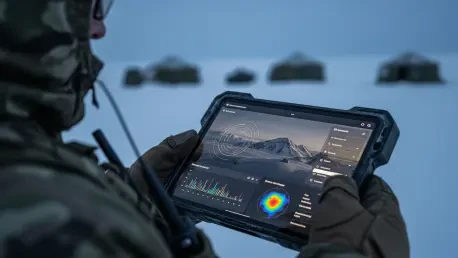

The frozen expanses of northern Norway currently serve as the ultimate proving ground for military technologies that must function in environments where standard hardware frequently fails and connectivity is often non-existent. Exercise Heimdall represents a fundamental shift in how NATO approaches the intersection of digital innovation and geographic adversity, specifically focusing on the deployment of a resilient digital backbone above the Arctic Circle. In this region, sub-zero temperatures and the weight of perpetual darkness are not the only enemies; the primary challenge lies in whether artificial intelligence and unmanned systems can maintain operational integrity under constant physical and electronic pressure. This initiative moves beyond simple cold-weather testing to address the deeper complexities of modern warfare, where data is as vital as ammunition. By integrating advanced cloud-to-edge computing and autonomous platforms, the alliance is building a framework that ensures mission success even when every traditional communication line is severed by environmental or hostile forces.
Navigating the Arctic’s Technological Barriers
The unique environmental stressors of the Arctic create a literal graveyard for standard IT infrastructure, where relentless icing can seize mechanical sensors and extreme cold rapidly depletes the energy reserves of advanced battery systems. During Exercise Heimdall, engineers observed that traditional hardware models designed for temperate climates often succumb to the sheer physical brutality of the high north, necessitating a radical rethink of equipment durability. Geographic isolation complicates this further, as the vast distances and magnetic interference common in polar regions create a vacuum of reliable long-range connectivity. Consequently, the focus of the exercise shifted from relying on distant data centers to empowering localized edge computing nodes that possess the ruggedness to survive these conditions. By prioritizing local processing power, NATO forces are attempting to eliminate the single point of failure inherent in centralized cloud architectures, ensuring that the technology serves the soldier on the ground.
Maintaining high-bandwidth communication in high-intensity conflict zones remains an elusive goal, particularly when an adversary actively targets satellite links and terrestrial networks. Exercise Heimdall addressed this vulnerability by implementing cloud-to-edge consistency through platforms such as IBM Fusion and Red Hat OpenShift, which allow mission-critical applications to run locally on small-form-factor devices. This approach ensures that forward operating bases can continue to execute complex algorithms and process sensor data even if their connection to the global network is completely severed. The ability to maintain operational momentum in a disconnected or denied environment is no longer just a luxury but a core requirement for modern defense strategies. By moving processing power closer to the physical site of action, the alliance is creating a more modular and survivable network that adapts to the shifting realities of the battlefield. This paradigm shift ensures that even the most isolated units remain operationally lethal regardless of external disruption.
Leveraging AI for Intelligent Data Management
The modern battlefield is saturated with data from an array of diverse sensors, ranging from overhead drones to ground-based acoustic monitors, which can quickly lead to cognitive overload for human operators. To combat this, Exercise Heimdall utilized the CX Edge platform, an artificial intelligence system capable of ingesting and analyzing feeds from more than fifteen different sensor types simultaneously. The primary objective is to transform a chaotic, data-heavy environment into one that is strictly intelligence-led, where AI acts as a sophisticated cognitive filter for the commander. By automatically sorting through background noise and identifying legitimate threats or significant environmental changes, the technology allows personnel to focus exclusively on high-stakes decision-making. This transition effectively solves the human capacity problem that arises when individuals are forced to manually interpret vast streams of telemetry. In these scenarios, AI does not replace the human element but provides a layer of clarity essential for tactical advantage.
As the scale of military operations grows to include hundreds of thousands of low-cost, replaceable devices, the logistical burden of managing such a vast digital fleet becomes a significant operational hurdle. Exercise Heimdall tested advanced management tools like Red Hat Device Edge, which empower a single operator to oversee massive numbers of assets across multiple domains with minimal manual intervention. Central to this large-scale management is the implementation of a zero trust architecture, a security model that treats every user and device as a potential threat until verified. This protocol ensures that even in a multi-vendor environment involving dozens of private partners and various national militaries, sensitive information remains protected through constant digital verification. This framework fosters a collaborative ecosystem where different nations can safely pool their resources and share intelligence without compromising the integrity of their own networks. Such a rigorous security posture is fundamental to building a digital backbone that is resilient.
Scaling Digital Assets and Cross-Sector Resilience
The insights gained from the Arctic frontiers of Exercise Heimdall possess profound implications for civilian industries that operate in similarly fragmented or hostile environments. For organizations involved in remote mining operations, global maritime logistics, or emergency disaster response, the necessity for decentralized and resilient digital infrastructure is a shared challenge. The exercise demonstrated that maintaining architectural consistency between a central data center and a remote field site dramatically reduces the risk of system failure during critical transitions. When a unified software platform is used across the entire operational spectrum, data and applications can be moved seamlessly, regardless of local connectivity constraints. This model provides a clear path forward for any sector where downtime is not an option and where human safety depends on the accuracy of real-time information. By proving that high-performance digital tools can thrive in extreme conditions, NATO provided a template for private sector innovation in ruggedized and decentralized computing solutions.
The conclusion of Exercise Heimdall established a definitive benchmark for how digital resilience must be integrated into modern strategic planning to ensure future success. NATO and its industrial partners successfully moved beyond theoretical models to prove that a combination of edge computing, artificial intelligence, and zero trust security could withstand the most grueling physical tests. The next logical step involved the wider adoption of these standardized software-defined operations across all member nations to ensure full interoperability during multi-domain conflicts. Future initiatives aimed to further refine the automation of asset management, reducing the technical footprint required to sustain a modern force in the field. Decision-makers were encouraged to prioritize the deployment of localized processing nodes that could function independently of a central cloud, thereby mitigating the risks associated with global network disruptions. By embedding these lessons into the core of their strategy, the alliance ensured that its capabilities remained a decisive advantage.