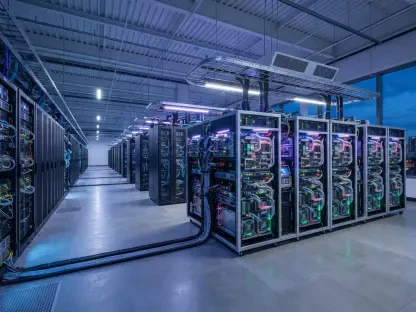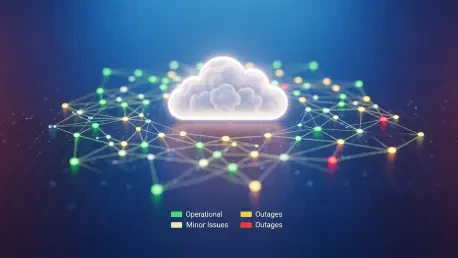

The landscape of high-performance computing is undergoing a seismic shift as specialized infrastructure providers demonstrate their ability to meet the extreme demands of next-generation silicon. Boost Run, a specialized NVIDIA Cloud Partner and Preferred Cloud Service Provider, recently achieved the prestigious NVIDIA Exemplar Cloud status on the Blackwell architecture, placing it within a select circle of global leaders. This technical certification confirms that the company possesses the sophisticated engineering required to optimize the latest GPU advances, matching the capabilities of established hyperscalers like Microsoft Azure and Oracle Cloud. The timing of this achievement is particularly critical as Boost Run prepares for a public listing on the Nasdaq under the ticker “BRUN” through a definitive merger with Willow Lane Acquisition Corp. This move from a niche provider to a verified global infrastructure powerhouse signals a new era for enterprise AI workloads that require more than just raw power or massive storage.
Technical Rigor: Performance Benchmarking
The attainment of this status reflects a meticulous validation process designed to move beyond subjective marketing claims and focus on objective, reproducible results. To secure the NVIDIA Exemplar Cloud designation, a provider must prove that its hardware and software configurations can deliver performance within a strict five percent margin of NVIDIA’s internal reference targets. This rigorous evaluation deviates from traditional synthetic testing by emphasizing real-world Large Language Model scenarios and massive multi-GPU production environments. For companies developing proprietary generative models, this level of predictability is essential because it eliminates the uncertainty typically associated with virtualized cloud instances. By proving they can sustain these high-throughput workloads, Boost Run has established a transparent standard for computational efficiency. This achievement ensures that developers can expect consistent latencies and bandwidth when deploying complex training pipelines across thousands of interconnected nodes.
Beyond raw speed, the certification highlights a commitment to the resiliency required by mission-critical industries such as finance and healthcare. These sectors demand infrastructure that can handle intricate time-to-train requirements without the risk of failure or performance degradation. Warren Barkley, NVIDIA’s Vice President of Product Management, noted that this initiative creates a standardized framework for evaluating how well a cloud provider integrates the Blackwell software stack with physical networking components. This integration is vital for maintaining the integrity of data processing tasks that span hundreds of billions of parameters in modern AI models. Consequently, the validation serves as a technical guarantee that the underlying architecture is not merely available but is fully optimized for the most demanding production-grade software stacks. This level of transparency allows enterprise decision-makers to select infrastructure partners based on verified data rather than promotional promises, fostering a more accountable ecosystem.
Strategic Positioning: Market Impact
Transitioning into the public market through the Nasdaq listing represents a pivotal moment for the organization as it scales to meet the burgeoning demand for specialized AI compute. The merger with Willow Lane Acquisition Corp provides the necessary capital to expand the footprint of Blackwell-based clusters, ensuring that more organizations can access state-of-the-art processing power. As the industry moves toward 2027 and 2028, the competition among specialized cloud providers will likely intensify, making these technical certifications a primary differentiator. Boost Run has effectively positioned itself as an agile alternative to massive general-purpose clouds, offering deep specialization in the Blackwell ecosystem. This strategic focus attracts developers who require fine-tuned control over their hardware environments to maximize the return on their computational investments. Furthermore, the ability to offer a verified environment for Blackwell chips gives the company a significant advantage in securing long-term contracts.
The integration of the Blackwell architecture into a globally verified cloud framework established a clear path forward for organizations seeking to modernize their artificial intelligence capabilities. Stakeholders identified that investing in high-fidelity infrastructure reduced the long-term operational costs associated with inefficient training cycles. This shift encouraged a broader adoption of performance-based standards across the entire cloud industry, forcing providers to prioritize hardware-software synergy over simple capacity expansion. Moving ahead, IT departments focused on migrating their most complex workloads to certified environments to ensure stability and cost-effectiveness. Enterprises evaluated their current cloud contracts against these new benchmarks to determine if their existing partners could match the efficiency of Exemplar-certified nodes. By securing this status, the company provided a blueprint for how specialized providers could outcompete larger rivals through engineering excellence. This achievement redirected the focus of the market toward measurable performance.