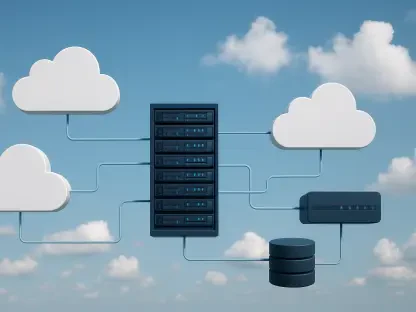

Cloud computing provides researchers with the ability to share access to massive datasets with collaborators at different institutions without the need for shipping hard drives. This shift represents a fundamental transformation in how biological data is processed, moving away from the constraints of local server rooms toward a more decentralized and fluid model. In the current landscape of 2026, the sheer volume of information generated by single-cell sequencing and high-resolution imaging has made traditional storage methods nearly obsolete for large-scale projects. By utilizing distributed systems, laboratories can now bypass the physical limitations of their own hardware, enabling a more agile approach to hypothesis testing and data re-analysis. Furthermore, the ability to spin up thousands of central processing units for a matter of hours allows for the completion of tasks that would have previously taken months on a standard departmental cluster. This technological evolution not only accelerates the pace of discovery but also democratizes access to high-tier computational power, allowing smaller institutions to compete with larger research hubs by only paying for the resources they actively consume during their analysis phases.
1. Evaluating Resource Needs: When to Prioritize Cloud Services
Cloud resources are most valuable when demand is inconsistent or when massive scale is required for a brief window of time. In modern life sciences, many projects operate on a “burst” cycle where intense periods of data generation are followed by months of relatively low activity. During these high-intensity phases, the ability to scale computational power instantly ensures that researchers are not waiting in long queues that are common in institutional settings. This elasticity allows for the rapid processing of thousands of genomes simultaneously, which is critical for time-sensitive clinical trials or competitive research environments. Beyond just raw power, cloud environments offer a standardized platform where software dependencies and data versions are consistent for every member of a global consortium. This eliminates the “it works on my machine” problem, as every collaborator can launch the exact same environment with a single click, regardless of their physical location or local hardware limitations.
The financial logic behind adopting cloud services often centers on the shift from capital expenditure to operational expenditure. Instead of investing hundreds of thousands of dollars in physical servers that will become deprecated within a few years, labs can use those funds to pay for specific compute hours as needed. This is particularly advantageous for projects with fluctuating funding or those that require specialized hardware, such as Graphical Processing Units for cryo-electron microscopy or deep learning applications, which might not be available on-site. Furthermore, the cloud environment provides an inherent backup system, with data replicated across multiple geographic regions to prevent loss due to localized hardware failure. This level of redundancy is often difficult and expensive to maintain in a private data center. By offloading the maintenance of physical infrastructure to commercial providers, research staff can refocus their energy on data interpretation rather than hardware troubleshooting or server room climate control.
2. Maintaining Stability: The Case for Institutional HPC
For facilities processing a steady, high-volume stream of data year-round, local infrastructure is often more cost-effective than commercial cloud alternatives. Institutional high-performance computing centers are designed to handle consistent workloads where the hardware is utilized at near-capacity levels daily. When a laboratory has a predictable throughput of samples, the “elasticity premium” charged by commercial providers becomes an unnecessary expense. Over a long-term horizon, the cost of purchasing and maintaining a dedicated cluster can be significantly lower than the cumulative hourly fees and data storage costs associated with a public cloud. Local HPC environments also provide a level of data sovereignty that some institutions prefer, especially when dealing with proprietary techniques or highly sensitive information that requires physical oversight. The administrative proximity of local IT staff can also lead to more personalized support for unique hardware requirements that might be difficult to configure in a standardized cloud environment.
However, the primary drawback of institutional HPC remains the risk of user congestion and limited scalability. During peak research seasons or right before major conference deadlines, university clusters often experience significant delays, with job wait times extending into days or weeks. This lack of flexibility can stall progress at critical moments. Additionally, the initial capital investment required for an HPC build-out is substantial, often necessitating large institutional grants that are not always available to individual investigators. There is also the matter of lifecycle management; hardware that was cutting-edge at the start of a five-year grant may be inefficient or unsupported by the time the project reaches its conclusion. Despite these challenges, for organizations with the budget for upfront costs and a need for constant, high-density computing, the local HPC remains a bedrock of the computational strategy, providing a fixed-cost environment where researchers can run as many simulations as the hardware allows without worrying about an escalating monthly bill.
3. Navigating the NIH Framework: Academic Incentives and STRIDES
The NIH provides a structured path for researchers to access commercial cloud providers at pre-negotiated rates, lowering the entry barrier for grant-funded labs. Through programs like STRIDES, the National Institutes of Health has established partnerships with major cloud vendors to provide significant discounts, specialized training, and technical support. This initiative aims to modernize the biomedical research ecosystem by making advanced computational tools more accessible to the wider academic community. By utilizing these pre-negotiated contracts, laboratories can avoid the complex procurement processes usually associated with enterprise-level technology. The framework also includes a suite of tools designed specifically for the needs of biologists, such as hosted versions of common genomic databases and integrated search tools that simplify the discovery of relevant datasets. This centralized approach helps to ensure that public funds are used more efficiently, as institutions can leverage the collective bargaining power of the NIH to secure lower rates than they would find on the open market.
In addition to financial discounts, the NIH framework offers a standardized model for data governance and financial management. One of the greatest hurdles for academic labs moving to the cloud is the unpredictability of monthly billing, which can be difficult to reconcile with rigid grant budgets. The STRIDES program addresses this by providing billing dashboards and cost-projection tools that are tailored to the academic workflow. Moreover, the program facilitates the sharing of data in a way that aligns with NIH data-sharing policies, making it easier for researchers to meet the requirements of their funding agreements. By providing a curated list of “cloud-native” tools and workflows, the NIH helps labs transition away from legacy scripts that were not designed for distributed environments. This guidance is essential for ensuring that research remains reproducible and that the data generated today remains accessible and usable by the scientific community throughout the 2026 to 2028 funding cycle and beyond.
4. Provider Profiles: Amazon Web Services and Life Science Specialization
Amazon Web Services is known for its maturity and extensive genomics-specific storage and batch processing capabilities. As the longest-standing player in the cloud market, AWS has built a deep catalog of services, such as Amazon Omics and AWS HealthLake, which are specifically engineered to handle the unique structure of biological data. These services provide pre-configured environments for running bioinformatics pipelines, such as those used for variant calling or protein folding, with minimal setup. The AWS ecosystem is also bolstered by a vast community of developers who have published thousands of documented pipelines and “CloudFormation” templates, allowing researchers to stand up complex architectures in a matter of minutes. This maturity means that almost any computational challenge a lab faces has likely been solved and documented by someone else in the AWS community, providing a level of “technical safety” that is highly valued in high-stakes research environments.
Despite these advantages, AWS requires careful management of complex configuration options and hidden costs like data transfer fees. The sheer number of services available can be overwhelming for those without a dedicated DevOps or bioinformatics engineer. Setting up a secure Virtual Private Cloud that complies with institutional security standards requires a deep understanding of networking and identity management. Furthermore, while the initial compute costs might seem low, “egress fees”—the cost of moving data out of the cloud—can become a significant financial burden if a lab frequently needs to download large datasets for local analysis. Managing “technical debt” is another concern; as AWS frequently updates its service offerings, older pipelines may require constant maintenance to remain optimized and secure. Therefore, labs choosing AWS must be prepared to invest in ongoing technical oversight to ensure their infrastructure remains both cost-effective and functionally modern.
5. Provider Profiles: Google Cloud and Open Source Integration
Google Cloud Platform is favored for its integration with open-source workflow languages and containerized pipelines. The platform has positioned itself as the preferred choice for many high-profile genomics projects due to its close ties with the Broad Institute and the development of the Terra platform. This integration allows researchers to run workflows written in WDL or Nextflow with extreme efficiency, leveraging Google’s deep expertise in container orchestration. The pricing for GCP is highly competitive with AWS, and the choice often depends on which platform better supports the lab’s existing software tools. Google’s focus on the “data scientist” experience is evident in its user interfaces and its robust support for Jupyter notebooks and machine learning frameworks like TensorFlow. For labs that are heavily invested in predictive modeling or artificial intelligence, Google’s hardware accelerators, such as Tensor Processing Units, offer a specialized advantage that can significantly speed up training times for complex biological models.
Another significant advantage of Google Cloud is its simplified approach to data analysis through services like BigQuery. For phenotypic and genomic data integration, BigQuery allows for near-instantaneous querying of petabyte-scale datasets using standard SQL, which is much faster than traditional file-based methods. This capability enables researchers to perform interactive data exploration that would be impossible on most other platforms. Google also tends to have a more straightforward pricing model for some of its storage and compute tiers, which can be less daunting for smaller teams without extensive IT support. However, Google’s ecosystem of third-party bioinformatics tools, while growing, is sometimes perceived as less exhaustive than that of AWS. Labs that rely on very niche or legacy commercial software may find better compatibility elsewhere. Ultimately, the decision to go with GCP often comes down to the lab’s reliance on open-source standards and their need for high-performance data analytics and machine learning capabilities.
6. Regulatory Responsibility: Legal Agreements and Data Security
Moving human data to a commercial provider necessitates a Business Associate Agreement under HIPAA, regardless of whether the data is encrypted. This legal document is a non-negotiable requirement for any laboratory handling protected health information, as it formally establishes the provider’s responsibility for maintaining security standards. In the cloud, security is a “shared responsibility” model; while the provider ensures the physical safety of the servers and the integrity of the underlying software, the research lab is responsible for how they configure their access controls and encryption keys. Failure to properly secure a storage bucket can lead to significant legal and financial consequences, even if the provider’s infrastructure is perfectly secure. It is imperative that labs work closely with their institutional compliance officers to ensure that every aspect of their cloud architecture meets the specific requirements of the data being handled, from the point of ingestion to the final archiving phase.
Labs must also distinguish between public, private, and hybrid cloud models to understand their specific security obligations. Public clouds offer the most flexibility but require the most rigorous configuration of security groups and identity policies. Private clouds, often managed by the institution but hosted in a commercial data center, provide more isolation but at a higher cost. Hybrid models allow labs to keep highly sensitive “identifiable” data on local servers while offloading de-identified or aggregate data to the cloud for heavy computation. NIH-funded projects must include clear plans for how data will be governed, stored, and eventually shared, adhering to specific institutional auditing standards. These plans must account for the entire data lifecycle, including how data will be securely deleted at the end of a project’s retention period. As the regulatory landscape continues to evolve in 2026, maintaining a robust and auditable security posture is no longer just a technical requirement; it is a fundamental part of the research ethics process.
7. Initial Migration Strategy: Implementing a Controlled Pilot Program
Moving a research workflow to the cloud should be treated as a controlled pilot program rather than an all-at-once transition. The first step in a successful migration is to pick a stable process; choose an existing, well-documented pipeline with known results to ensure the cloud version functions correctly. By comparing the outputs of the cloud-based run with a previous run on local hardware, researchers can verify the integrity of the new environment and identify any subtle differences in software versions or library dependencies. This initial “golden run” provides the baseline needed to troubleshoot more complex issues later. It is also the ideal time to prioritize ecosystem compatibility; select a provider based on existing community support for your specific workflow manager rather than brand familiarity. If the lab’s primary scripts are written for a specific environment, moving to a provider that natively supports that environment will reduce the need for extensive rewriting and debugging.
The second phase of the pilot involves establishing firm financial safeguards and operational templates. Before initiating any large-scale computations, it is vital to implement spending limits and billing notifications to prevent “bill shock” caused by runaway processes or orphaned resources. Once the budget controls are in place, the team should execute a small-scale trial, processing a minor portion of the dataset first to verify the output and project the total cost for the full dataset. This step is crucial for accurate grant reporting and resource planning. Finally, the successful configuration should be recorded to create a procedural template, simplifying the transition of future pipelines. Documentation should include everything from the specific machine types used to the firewall settings and storage classes. By creating a repeatable “recipe” for cloud deployment, the laboratory ensures that the transition is not dependent on a single staff member’s knowledge, thereby building a sustainable and scalable computational foundation for the entire department.
A Strategic Foundation for Computational Biology
The researchers found that the transition to modern infrastructure required a balance between technical ambition and fiscal reality. They discovered that while the allure of unlimited cloud scale was powerful, the most successful implementations were those that integrated local HPC stability with cloud-based flexibility. By adopting a hybrid approach, organizations managed to minimize their data egress costs while still utilizing high-performance clusters for their most intensive machine learning tasks. The technical teams recognized that the early investment in standardized workflow languages paid off by allowing them to migrate between providers as pricing and feature sets evolved. These efforts resulted in a more resilient research environment where data was no longer siloed but remained accessible to the global scientific community.
The successful implementation of these computational strategies provided a clear blueprint for future projects in the 2026 to 2028 research cycle. Leaders in the field moved toward a “data-first” architecture, where the choice of compute was secondary to the integrity and accessibility of the underlying biological information. They implemented automated cost-monitoring tools that prevented budget overruns and prioritized the training of staff in cloud-native security practices. These actions ensured that the laboratory remained compliant with increasingly strict international data privacy laws while maintaining a high pace of discovery. Looking forward, the emphasis shifted toward optimizing these environments for even larger multi-omic datasets, ensuring that the infrastructure could scale alongside the next generation of sequencing technology.