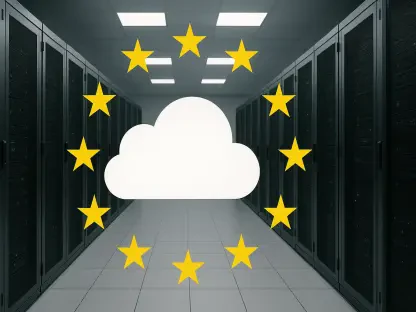

The decision by the European Commission to restrict how American cloud giants handle highly sensitive government data marks a definitive end to the era of unrestricted technological globalization. For years, the European Union has quietly voiced concerns over its dependence on Silicon Valley, but current deliberations suggest that Brussels is finally prepared to act. By contemplating a ban on United States-based hyperscalers—specifically Amazon Web Services, Microsoft Azure, and Google Cloud—from managing critical public sector workloads, the Commission is signaling a radical shift toward total digital sovereignty. This potential policy is not merely about storage; it is a fundamental reevaluation of national security in an age where data serves as the new cornerstone of state power. If implemented, it would force a massive migration of defense, tax, and healthcare systems from American servers to domestic European infrastructure. This move reflects a growing conviction that true political independence is impossible without absolute control over the digital foundations upon which modern governance now sits.
The Drive for Digital Autonomy
Sovereignty and Legal Jurisdictions
The primary catalyst for this regulatory escalation is the inherent conflict between European privacy standards and American legal requirements, specifically regarding the United States CLOUD Act. Under this legislation, U.S. law enforcement agencies have the authority to compel domestic technology companies to provide access to data stored on their servers, regardless of the physical location of that data center. For European officials, this creates an unacceptable risk, as it effectively subjects European government records to the jurisdiction of a foreign power. The proposed restrictions aim to draw a definitive line in the cloud market, ensuring that sensitive information remains entirely within European legal and physical control. This is not just a technical change but a legal firewall designed to decouple Europe’s critical infrastructure from foreign reach. By mandating that high-level data be processed by companies with no external legal obligations, the EU seeks to eliminate the possibility of extraterritorial data seizures.
Protecting classified government communications and sensitive citizen data requires a framework that operates independently of the global political climate or shifting international alliances. EU regulators have argued that reliance on foreign-owned hyperscalers leaves the continent vulnerable to systemic risks, including potential service shutdowns or intelligence gathering by outside entities. To address these vulnerabilities, the European Commission is defining strict criteria for what constitutes sensitive data, encompassing everything from social security records to strategic defense plans. The goal is to establish a “sovereign cloud” where the hardware, software, and operational staff are all subject exclusively to the laws of European member states. This approach acknowledges that in the digital age, physical borders are less important than the legal jurisdictions that govern the flow of information. Consequently, the push for autonomy is seen as a necessary defensive measure to preserve the integrity of the European democratic process and the privacy of its millions of residents.
Market Disparity and Protected Growth
A significant factor driving this policy shift is the staggering market imbalance where American cloud providers currently control approximately 70% of the European infrastructure. Despite numerous attempts to foster a competitive local ecosystem, domestic firms have struggled to gain meaningful traction against the massive economies of scale enjoyed by AWS, Azure, and Google. Previous initiatives, such as the Gaia-X project launched in 2020, were intended to create a federated data architecture, yet they failed to produce a true European hyperscale competitor capable of rivaling the technical depth of the U.S. giants. Currently, European providers like IONOS and OVHcloud hold less than 10% of the market share combined, often lacking the sophisticated artificial intelligence and data analytics tools that make American platforms so attractive. By implementing these new restrictions, Brussels is effectively using regulatory mandates to create a “protected market” for these domestic firms, forcing a demand that the open market failed to generate.
This strategy of mandated local sourcing is intended to provide European technology companies with the stable revenue and scale they need to innovate and eventually compete globally. When government agencies are required to use domestic providers for their most sensitive workloads, it creates a reliable “anchor” of demand that can support long-term investment in research and development. Furthermore, this move is expected to stimulate a broader ecosystem of secondary service providers and software developers who specialize in European-compliant cloud solutions. While some critics argue that this approach borders on protectionism, EU officials maintain that it is a strategic necessity to ensure the survival of the continent’s tech sector. Without such interventions, there is a legitimate fear that Europe will remain a “digital colony,” perpetually dependent on foreign technology for its basic administrative functions. The policy thus serves a dual purpose: securing sensitive government data and revitalizing the domestic digital economy.
Operational Hurdles and Economic Fallout
Technical Risks and Implementation Challenges
Transitioning massive government agencies away from established American cloud platforms presents a monumental technical challenge that could take several years to resolve. Over the past decade, most European departments have deeply integrated their digital workflows into the proprietary ecosystems of Microsoft or Amazon, utilizing specialized APIs and tools that are not easily portable. This high level of vendor lock-in means that a forced migration is not as simple as moving files from one server to another; it requires rewriting entire software architectures and retraining thousands of personnel. Industry experts warn that such a complex shift could lead to significant service disruptions, increased operational costs, and the accidental creation of security vulnerabilities during the transition period. The sheer scale of the move is unprecedented, and there are concerns that smaller European providers may not yet possess the technical capacity or the bandwidth to handle the sudden influx of high-security government workloads.
To mitigate these operational risks, the European Commission is reportedly considering a phased implementation period that would span approximately 18 to 24 months. This timeline is intended to allow agencies to audit their data, identify which workloads are truly “sensitive,” and execute a structured migration plan without compromising public services. During this period, bridge solutions and hybrid cloud models may be employed to maintain continuity while the domestic infrastructure is scaled up to meet the new demand. However, the technical debt accumulated over years of reliance on U.S. technology remains a significant obstacle. Many legacy systems are so tightly coupled with American cloud features that decoupling them will require substantial financial investment from member states. The success of this transition will depend heavily on the ability of European providers to rapidly advance their feature sets and offer the same level of reliability and performance that government users have come to expect from the current hyperscalers.
Financial and Geopolitical Consequences
The financial stakes of this policy are immense, with U.S. cloud giants standing to lose billions of dollars in annual revenue if they are barred from the European public sector. Beyond the direct loss of government contracts, these companies fear a “domino effect” where private-sector firms follow the government’s lead and move their data to sovereign providers to ensure future compliance. For a company like Amazon Web Services, which relies on its global scale to maintain profitability, losing a major portion of the European market could impact its ability to reinvest in its infrastructure. Furthermore, the U.S. government and trade representatives are likely to view these measures as a violation of international trade commitments, potentially leading to retaliatory tariffs or legal challenges through the World Trade Organization. This highlights a growing trend of “digital protectionism,” where the global internet is increasingly fragmented into regional zones governed by local politics rather than technical standards.
Geopolitically, this move signals a cooling of tech relations between Washington and Brussels, as Europe seeks to assert its independence from the American technological sphere of influence. While the two regions remain close allies in many respects, the divergence in data privacy philosophies has created a persistent friction point that is now manifesting in concrete trade barriers. U.S. officials argue that the CLOUD Act includes safeguards to prevent the abuse of power, but these assurances have failed to satisfy European regulators who demand total legal certainty. The resulting tension could lead to a more fractured global digital economy, where companies are forced to choose between competing regulatory regimes. This fragmentation may ultimately lead to higher costs for consumers and a slower pace of innovation as global technical standards are replaced by regional requirements. Nevertheless, the EU appears willing to accept these economic and geopolitical costs as the price of ensuring its long-term digital security and political autonomy.
A Broader Regulatory Strategy
Curbing the Power of Big Tech
The proposed cloud restrictions are a central component of the European Union’s much broader effort to regulate the technology sector and limit the dominance of “Big Tech.” Over the past several years, Brussels has established itself as the world’s most aggressive regulator through landmark legislation like the Digital Markets Act and the AI Act. These laws are specifically designed to foster a more competitive environment by preventing a few massive firms from acting as “gatekeepers” to the digital economy. By targeting the foundational layer of cloud infrastructure, the EU is addressing what it sees as the ultimate source of American technological leverage. If domestic providers can capture the high-security government market, they will gain the capital and scale necessary to challenge the global incumbents in other areas. This regulatory push is part of a coordinated vision to ensure that the digital future of Europe is shaped by European values and companies rather than those of a distant foreign power.
Building this domestic capacity is viewed as essential for maintaining economic self-sufficiency in an increasingly volatile world. By fostering local innovation, the EU aims to reduce its exposure to global supply chain disruptions and technological embargoes that could be used as political leverage. This approach also seeks to keep high-value tech jobs and research within the continent, preventing a “brain drain” to American tech hubs. The Commission’s strategy involves not only negative restrictions on foreign firms but also positive incentives for local developers, such as grants and streamlined procurement processes for sovereign-compliant startups. By aligning its cloud policy with its broader industrial goals, Brussels is attempting to create a self-sustaining digital ecosystem that can thrive independently of the global hyperscalers. This shift represents a move toward “strategic autonomy,” where the ability to develop and control critical technology is seen as a prerequisite for maintaining a high standard of living and political stability.
The Global Shift in Infrastructure Philosophy
The deliberations within the European Commission represent a watershed moment in the global philosophy of digital infrastructure, moving it from a utility to a core element of national defense. For years, the convenience and cost-efficiency of global cloud platforms outweighed concerns about data control, but that calculation has changed as digital systems have become essential to every facet of modern life. Other nations, from Canada to Australia, have begun to watch the European model closely, considering whether they should also reclaim control over their digital ecosystems. This shift suggests that the era of a single, unified global internet may be ending, replaced by a “splinternet” of regional clouds and localized data laws. If the European experiment succeeds, it will likely serve as a template for other countries seeking to protect their citizens’ privacy and their own national security from the concentration of power held by a handful of global corporations.
In light of these developments, organizations and government departments adjusted their long-term digital strategies to prioritize sovereignty over sheer technical performance. The European Commission moved forward with a clear mandate to diversify the continent’s infrastructure, ensuring that critical data remained under the watchful eye of domestic regulators. Local providers responded by expanding their data center capacities and refining their security protocols to meet the stringent new standards. Although the transition was marked by significant initial costs and technical hurdles, the focus eventually shifted toward building a more resilient and independent digital landscape. Government agencies worked closely with domestic firms to develop custom solutions that addressed the specific needs of the European public sector. Ultimately, this proactive stance on digital sovereignty established a new global standard for data protection, proving that national security and technological advancement could coexist within a localized framework.