
The persistent disconnect between high-level administrative digital ambitions and the daily reality of citizen-facing services has become a defining challenge for modern public sector leadership. While the private sector has rapidly pivoted toward cloud-native ecosystems, government agencies must navigate a far more treacherous path where technical upgrades are frequently secondary to the demands of national sovereignty and strict social accountability. For instance, whereas a commercial retail platform might tolerate a brief window of downtime during a migration, a government payment system or emergency response network carries a life-critical burden that makes failure an unacceptable outcome. This high-stakes environment demands a transformation strategy that is as much about risk management and legal compliance as it is about infrastructure modernization. By leveraging cloud computing, these organizations are seeking to build a foundation that is resilient enough to handle massive data surges while being flexible enough to integrate emerging tools like generative artificial intelligence without compromising the security of sensitive citizen records.
Navigating the Complexities of Hybrid and Multi-Cloud Environments
The transition from traditional on-premise hardware to the cloud has evolved into a sophisticated hybrid reality where various legacy systems must coexist with modern public platforms. This mosaic of environments is not merely a transitional phase but a permanent operational strategy designed to balance the need for innovation with the preservation of historical data integrity. Government departments often find themselves managing an accumulated history of departmental needs, where ancient mainframes handling social security or healthcare data are too vital to be discarded overnight. Instead of a “rip and replace” approach, modern cloud strategies involve using integration layers to “wrap” around these legacy assets, allowing newer applications to access old data via secure interfaces. This method ensures that vital social services remain functional while the agency incrementally adopts the scalability and cost-efficiency of the cloud, effectively bridging the gap between decades-old code and contemporary digital demands.
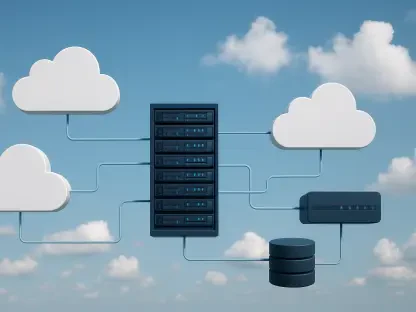
Adopting a multi-cloud architecture has also become a strategic necessity for agencies looking to avoid the risks associated with vendor lock-in and geographical data residency requirements. Since critical national infrastructure, such as tax collection or the management of power grids, represents a significant political risk, Chief Information Officers often distribute workloads across multiple providers like Amazon Web Services, Microsoft Azure, and Google Cloud. This diversification ensures that a service outage at one provider does not result in a total national blackout of digital services. Furthermore, many countries have implemented strict laws requiring citizen data to remain within national borders, prompting major hyperscalers to build specialized, sovereign cloud regions. These dedicated environments provide the same advanced computing power as their commercial counterparts but are governed by local legal frameworks, ensuring that sensitive information is shielded from foreign jurisdictional reach while still benefiting from global innovation cycles.
Securing Public Assets with Zero Trust and Edge Computing
Security frameworks within the public sector are undergoing a fundamental shift toward the Zero Trust model, which operates on the assumption that no user or device is inherently safe regardless of their location on the network. Following several high-profile supply chain breaches, the traditional “castle-and-moat” defense strategy is widely considered obsolete in an era where remote work and interconnected services are the norm. Implementing Zero Trust in a government context requires a rigorous focus on identity and access management, where every request for data is continuously verified through multi-factor authentication and device health checks. This approach is particularly challenging for agencies that must apply these modern protocols to hundreds of disconnected legacy systems that were never designed for such granular security. Nevertheless, the move toward micro-segmentation—dividing networks into isolated zones—prevents attackers from moving laterally through a system, thereby limiting the potential damage of any single point of entry.
To complement these robust security measures, edge computing has emerged as a vital extension of the cloud, specifically designed to handle data processing at the source for public safety and defense operations. In scenarios where millisecond response times are non-negotiable, such as in hospital intensive care units or urban traffic management systems, the latency involved in sending data to a centralized data center is simply too great. Edge devices allow for real-time analysis and action, which is particularly crucial for military field operations or emergency responders working in areas with limited or compromised connectivity. By utilizing ruggedized hardware that can run cloud services locally, governments can maintain operational continuity even when disconnected from the broader internet. This “outer rim” of the cloud infrastructure ensures that intelligence is available exactly where it is needed, transforming how public safety officials respond to crises and how smart cities manage the flow of citizens and resources.
Deploying Responsible Artificial Intelligence and Data Analytics
Government interest in Artificial Intelligence has matured beyond experimental pilot programs into production-ready projects that solve complex operational problems with unprecedented efficiency. For example, tax authorities are now utilizing machine learning algorithms to audit millions of records in real-time, identifying patterns of fraud that would be impossible for human teams to detect manually. Similarly, civil services are beginning to adopt secure, localized versions of large language models to assist with the drafting of policy documents and the processing of public inquiries. However, the deployment of AI in the public sector is intentionally more deliberate than in the private sector because the consequences of an algorithmic error can lead to individuals being incorrectly flagged by law enforcement or losing access to essential benefits. Successful implementation therefore relies on a strategy that prioritizes accountability and maintains a “human-in-the-loop” to oversee critical decisions.
The effectiveness of these AI initiatives is fundamentally tied to the quality and accessibility of the underlying data, which requires a robust governance framework to break down traditional departmental silos. Many leading digital governments have implemented integrated data exchange platforms that allow diverse databases to communicate securely without compromising privacy. By establishing clear data classification standards before any analysis begins, agencies can ensure that sensitive information is only used for its intended purpose and that the insights generated are based on accurate, representative datasets. This focus on data integrity is essential for building public trust, as citizens are more likely to support the use of advanced technologies when they see tangible improvements in service delivery and know that their personal information is being handled with the highest level of care. As these systems evolve, they provide a feedback loop that allows governments to become more proactive rather than reactive in addressing social issues.
Overcoming Structural Barriers to Digital Evolution
A significant but often overlooked barrier to government digital transformation is the “Procurement Gap,” where traditional budgeting cycles fail to align with the flexible, consumption-based nature of cloud computing. Historically, government procurement was designed for purchasing physical hardware and perpetual software licenses, which involve large upfront capital expenditures. In contrast, the cloud operates on an operational expenditure model where costs fluctuate based on real-time usage. This shift often creates friction between IT architects who need to scale resources rapidly and procurement officers who are accustomed to fixed, multi-year contracts. To bridge this divide, agencies are increasingly adopting FinOps practices, utilizing specialized tools to monitor and optimize cloud spending in real-time to avoid the “bill shock” that can occur when services are scaled without proper oversight. Moving toward “evergreen” contracting models allows for the agility required to stay current with rapid technological changes.
Beyond the financial and legal hurdles, successful cloud migration is heavily dependent on the presence of empowered executive sponsorship and the establishment of a dedicated Cloud Center of Excellence. These specialized internal teams serve as the bridge between technical staff and policy makers, providing the governance, standardization, and training necessary to ensure that cloud adoption is consistent across the entire organization. Without such central guidance, individual departments often procure their own disparate tools, leading to a fragmented “shadow IT” landscape that is difficult to secure and maintain. By focusing on cultural change alongside technical implementation, these centers help to upskill the existing workforce and foster an environment where innovation is encouraged rather than feared. Evidence from successful public sector projects shows that when leadership clearly defines the scope of a project and resists “feature creep,” the resulting digital services are more reliable and better aligned with the needs of the citizen.
Preparing for Future Innovations and Regulatory Demands
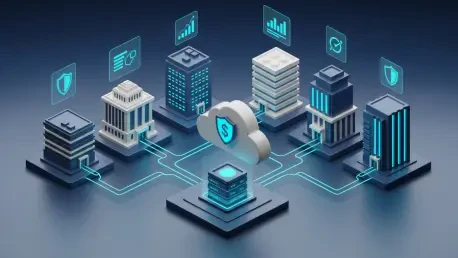
As we look toward the immediate future, the rise of sovereign clouds is set to become the standard for federal and national infrastructure as global data regulations continue to tighten. These specialized environments allow governments to harness the massive computational power of global hyperscalers while ensuring that the physical hardware and operational personnel remain under local jurisdiction. This trend reflects a broader push for technological sovereignty, where nations seek to protect their digital borders from foreign interference while still participating in the global digital economy. The implementation of these sovereign solutions is becoming a prerequisite for any major government cloud project, as it addresses the core concerns of security, privacy, and legal compliance in a single architecture. This evolution ensures that the public sector can innovate at a pace comparable to the private market without sacrificing the control required to protect national interests.
Furthermore, the public sector is currently preparing for the dual challenges of rigorous AI regulation and the emergence of quantum computing threats. New legislative frameworks now mandate that any high-risk AI application used in government must be accompanied by audit-ready documentation and transparency reports, forcing agencies to build compliance into their software development lifecycles from day one. Simultaneously, defense and intelligence agencies have begun auditing their long-term data storage to implement post-quantum cryptography, ensuring that information encrypted today remains secure against the future decryption capabilities of quantum computers. The focus has moved from simply migrating to the cloud to building resilient, future-proof architectures that can adapt to these looming technical and regulatory shifts. By investing in these advanced security and governance measures now, governments are positioning themselves to bridge the gap between the promise of a digital society and the reliable, secure reality that citizens expect in their daily lives.
The successful transformation of the public sector through cloud computing was ultimately achieved by those leaders who recognized that technology was only a single component of a much larger institutional shift. By the mid-2020s, the focus had moved away from the novelty of cloud adoption toward the practicalities of managing complex hybrid environments and securing them with Zero Trust principles. Agencies that prioritized the creation of Cloud Centers of Excellence and implemented robust FinOps practices found themselves better equipped to handle the fluctuating costs and technical demands of modern infrastructure. Furthermore, the integration of responsible AI and edge computing allowed for more proactive service delivery, directly improving the lives of citizens through faster response times and more efficient bureaucracy. As these organizations moved toward 2026, the emphasis remained on maintaining technological sovereignty and preparing for the next wave of innovation, ensuring that the digital foundation of the state was as resilient and accountable as the public it served.