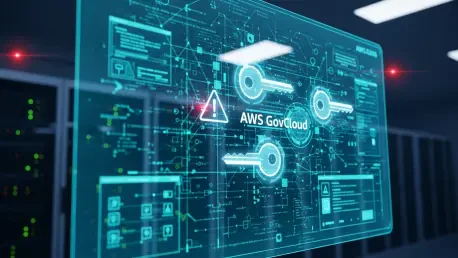

The sudden realization that the nation’s primary cybersecurity defense agency has been compromised by a single unsecured file on a public website serves as a chilling wake-up call for federal security operations. In late 2025, a third-party contractor working for the Cybersecurity and Infrastructure Security Agency (CISA) inadvertently exposed high-level administrative credentials on a public GitHub repository, leaving them visible to anyone with an internet connection for over six months. This incident involved the compromise of AWS GovCloud, an environment specifically engineered to handle the most sensitive government workloads and data subjects to strict federal compliance. The breach was not the result of a sophisticated state-sponsored cyberattack but rather a fundamental failure in basic security hygiene. The repository, ironically named “Private-CISA,” remained public until independent security researchers discovered the leak and alerted the authorities, uncovering a massive oversight in the protection of federal cloud assets.
Technical Failures: The Breakdown of Basic Credential Hygiene
The granular details of this exposure reveal a staggering disregard for established security standards, particularly regarding the handling of sensitive credentials within high-stakes government projects. Researchers discovered a file titled “AWS-Workspace-Firefox-Passwords.csv” which contained an extensive list of usernames and passwords for internal agency systems stored in an unencrypted, plaintext format. This specific finding suggests that the contractor deliberately bypassed secure, enterprise-grade password management solutions in favor of a primitive spreadsheet that provided zero protection against unauthorized access. By maintaining such a file in an environment that was accidentally shared with the world, the individual effectively handed over the keys to the internal kingdom, allowing any casual observer to harvest login information for multiple restricted federal networks without needing to employ any technical hacking tools or social engineering.
Beyond the internal password spreadsheets, the exposure included “importantAWStokens” that granted full administrative control over at least three distinct AWS GovCloud environments. These environments are specifically designed to meet the most rigorous regulatory requirements and are typically isolated from standard commercial cloud infrastructure to prevent data leakage. The presence of these tokens in a public repository represents a catastrophic failure in access management, as they provided the capability to manipulate cloud infrastructure, access sensitive datasets, and potentially alter the security configurations of other connected systems. The danger of lateral movement was particularly acute in this scenario; an attacker possessing these keys could have moved from a relatively low-priority development environment into the core of the agency’s operational infrastructure, posing a significant threat to national security interests.
The Convenience Trap: Circumventing Internal Safety Mechanisms
Perhaps the most alarming aspect of this incident was the evidence suggesting that the contractor intentionally disabled automated safety features designed to prevent such leaks from occurring. GitHub’s native secret scanning tools are specifically built to alert developers when they attempt to upload sensitive keys or passwords to a public space, yet these safeguards were seemingly bypassed or ignored. This suggests that the exposure was not merely a passive oversight or a simple misconfiguration of visibility settings, but rather a conscious effort to remove the guardrails that the contractor likely perceived as obstacles to their daily workflow. When security protocols are viewed as inconveniences, employees often find ways to work around them, and in this case, the circumvention of these automated tools allowed the vulnerability to persist undetected by both the contracting firm and the federal agency.
This behavior is a classic example of “Shadow IT,” where individuals use unauthorized personal tools and public platforms to facilitate their professional tasks outside the purview of official IT oversight. The contractor appeared to be using the public GitHub repository as a convenient personal synchronization tool to transfer files between their home office and their government-issued equipment. By prioritizing personal convenience over the stringent security mandates required for federal work, the employee created a massive vulnerability that existed for approximately half a year. The fact that such a repository remained active and accessible for six months highlights a significant gap in the monitoring capabilities of the agency, as there were no internal systems in place to detect that its own administrative keys were being hosted on a non-sanctioned, public-facing web platform.
Institutional Vulnerabilities: Workforce Turnover and Systemic Risk
The timing of this leak coincides with a period of intense organizational volatility for the agency, which has recently lost approximately one-third of its total workforce due to a wave of early retirements and resignations. Security analysts point out that such high turnover rates often lead to a significant degradation in internal security practices and a general breakdown in institutional oversight. When an agency is understaffed and operating under budget constraints, the rigorous auditing of third-party contractor activities is frequently the first process to suffer, creating an environment where preventable individual mistakes can go unnoticed for extended periods. This internal instability likely contributed to the oversight, as the remaining staff were likely stretched too thin to maintain the necessary level of vigilance over every external partner and their development environments.
The irony of this situation is profound, given that the agency is the primary body responsible for educating the rest of the federal government on how to secure their software supply chains. The exposure of the agency’s Artifactory repository, which serves as a central hub for storing code packages and software builds, presented a particularly dangerous vector for a supply-chain attack. If a malicious actor had discovered these credentials during the six-month window, they could have potentially inserted backdoors into software packages that the agency then distributed to other federal partners. Such a compromise would have had a cascading effect, undermining the security of numerous government departments and agencies that rely on CISA for trusted software and guidance. This incident underscores the reality that even the most prestigious cybersecurity organizations are vulnerable to the human element.
Remediation Strategies: Future Protocols and Agency Accountability
In the immediate aftermath of the disclosure, the agency worked to revoke all compromised access tokens and launched an exhaustive audit of its cloud logs to identify any signs of unauthorized activity. While the official statement noted that there was no current evidence of data being stolen by malicious actors, the long duration of the exposure makes it difficult to provide a definitive guarantee that the systems remained untouched. The agency has also pledged to implement more rigorous oversight for its contractors, including mandatory automated scanning of all development repositories and stricter adherence to hardware-based authentication. This incident has already drawn the attention of lawmakers, who are expected to demand more transparency regarding the agency’s internal security audits and the specific failures that allowed a contractor to operate an unsecured repository for half a year without being detected.
Moving forward, the primary takeaway for the cybersecurity community was the necessity of eliminating single points of failure that depend on human behavior. The agency emphasized that future projects must utilize hardware security keys for all administrative access, which would render leaked plaintext passwords useless to an outside attacker. Additionally, the implementation of continuous, real-time monitoring for leaked secrets across the entire internet has become a non-negotiable standard for federal agencies and their partners. By shifting toward a zero-trust architecture where no single set of credentials can grant wide-ranging access without secondary verification, the agency aimed to prevent a recurrence of this nature. This event served as a definitive lesson that technical excellence cannot compensate for a lack of basic security discipline, and the path toward rebuilding institutional credibility began with a return to fundamental defensive principles.