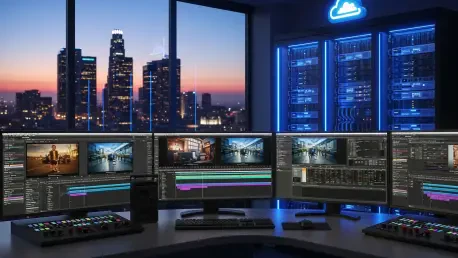

The traditional logistical nightmare of physical media transport is rapidly becoming a relic of the past as high-stakes television productions shift toward a decentralized, cloud-first model that prioritizes immediate data accessibility over geographical proximity. A prime illustration of this evolution is found in the production of the HBO series It’s Florida, Man, where the creative team must navigate the complexities of dramatizing eccentric local stories through a hybrid of interviews and high-end reenactments. By deploying a workflow that spans from on-location filming in Florida to a post-production hub in Los Angeles, the industry has demonstrated that the thousand-mile gap between the camera and the edit suite is no longer an obstacle to tight delivery schedules. This transition is not merely about convenience; it is a fundamental reconfiguration of how creative assets are managed, shared, and protected in a landscape where every second of downtime carries a significant financial penalty. The ability to bypass the historical reliance on overnight couriers and localized server rooms has allowed productions to maintain a continuous creative loop that was previously impossible.
Decentralization and Real-Time Collaboration: The New Standard
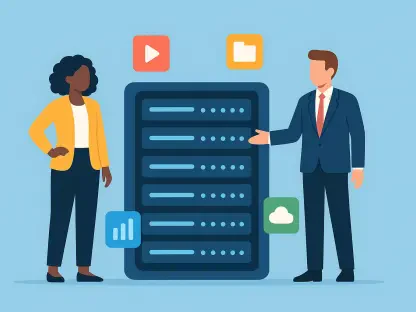
The integration of specialized cloud-based file systems, such as LucidLink, has revolutionized the way disparate teams interact with massive media assets by providing a virtualized space that behaves like a local hard drive. In the specific case of It’s Florida, Man, this technology enables up to fifteen team members, including editors, assistants, and producers, to access the same project files simultaneously from virtually any location. Gone are the days when a production had to wait for a physical shuttle drive to arrive via FedEx before the first cut could begin; instead, a basic internet connection and a standard solid-state drive are now the only physical requirements for a professional-grade workstation. This structural shift allows for a more fluid exchange of ideas, as a lead editor in California can review a take just minutes after it has been captured in the humid landscapes of the Southeast. The removal of these physical bottlenecks has transformed post-production from a sequential, siloed process into a dynamic, parallel environment where collaboration happens in real time.
Furthermore, this level of connectivity demands a rigorous approach to user permissions and data integrity to ensure that the creative process remains organized despite the lack of a central physical office. The software facilitates a seamless link with industry-standard editing tools, allowing the post-production team to maintain their established creative habits while benefiting from the global reach of the cloud. This flexibility is particularly vital for modern episodic television, where late-stage script changes or sudden editorial pivots require immediate responses from all departments. By utilizing a cloud-native file system, the production ensures that everyone is working on the most recent version of a sequence, effectively eliminating the version-control errors that frequently plagued legacy workflows. The result is a highly efficient machine that leverages the collective expertise of a distributed workforce, proving that the physical location of a creative professional is now secondary to their talent and their ability to connect to a centralized digital repository.
Optimization of High-Volume Data Management
Managing the sheer volume of data generated by modern high-definition cameras remains one of the most significant challenges in television production, often reaching two terabytes of raw footage daily. To maintain a brisk pace, digital imaging technicians have adopted a strategy of creating “proxy” files—highly compressed versions of the original media that range from one hundred to two hundred gigabytes. These smaller files are rapidly uploaded to the cloud, allowing the editorial team to begin their work without waiting for the massive original camera files to transfer over potentially unstable hotel or location internet connections. This dual-track system ensures that the creative flow remains uninterrupted while the full-resolution “master” files are moved in the background or stored for the final color grading process. It is a pragmatic solution that acknowledges the current limitations of global bandwidth while maximizing the speed of the narrative assembly, ensuring that the post-production team can meet aggressive broadcast deadlines.
Despite the heavy reliance on digital transmission, modern workflows have not entirely abandoned traditional safety nets, reflecting a sophisticated blend of innovation and caution. Production teams still maintain local backups on physical shuttle drives, creating a redundant fail-safe in the event of a catastrophic network failure or unexpected cloud downtime. This hybrid approach demonstrates that the industry is in a phase of calculated transition, where the speed of the cloud is augmented by the reliability of physical storage. By utilizing these localized hardware backups alongside the cloud, technicians provide a multi-layered security blanket for the production’s most valuable assets. This careful management of data volume and storage redundancy represents a gold standard for the industry, where the priority is always the preservation of the footage and the continuity of the workflow. The ability to pivot between proxy-based editing and full-resolution finishing highlights the versatility that cloud-integrated infrastructures provide to contemporary television creators.
Balancing Human Expertise with Technological Advancement
While the acceleration of television production through cloud technology is undeniable, the prevailing consensus among industry veterans is that these tools must serve the creative vision rather than replace the human element. The objective of adopting sophisticated software is to streamline the logistical and technical chores that previously drained time and energy, thereby allowing editors and producers to focus entirely on the art of storytelling. As seen in the production of It’s Florida, Man, the technology acts as an invisible facilitator that enables human creators to work more intuitively and responsively. There is a clear understanding that while the cloud can move data at unprecedented speeds, it cannot replace the nuanced decision-making and creative instincts of a professional editor. The successful implementation of these workflows relies on a synthesis of cutting-edge software and the disciplined oversight of technical experts who ensure that the digital architecture remains robust and secure.
To maintain a competitive edge, production houses should focus on upskilling their workforce to manage these cloud-native environments while simultaneously investing in resilient cybersecurity protocols. The transition to the cloud was not a temporary response to global disruptions but a permanent shift that has redefined the professional landscape of media production. Moving forward, the focus must be on refining these remote collaboration models to ensure they remain sustainable and accessible for productions of all scales. Organizations should prioritize the implementation of standardized data management practices that allow for seamless handoffs between different departments and external vendors. By fostering a culture that embraces technological flexibility while valuing the irreplaceable contributions of human talent, the television industry will continue to push the boundaries of what is possible in the digital age. The ultimate success of these modern workflows was evidenced by the ability to turn chaotic, real-world stories into polished entertainment with a speed and efficiency that was once considered impossible.