
The rapid evolution of distributed computing has reached a definitive turning point as the global economy shifts toward decentralized, intelligent infrastructures that prioritize local compliance over generic global scaling. Alibaba Cloud is currently at the forefront of this transformation, announcing a significant expansion into the European market with the establishment of a dedicated hub in Paris. This strategic move represents more than just an increase in physical server capacity; it marks the introduction of highly sophisticated autonomous technologies designed to operate within the stringent regulatory frameworks of the European Union. By merging high-performance infrastructure with a new philosophy of “Agentic AI,” the provider is positioning itself to handle the complex demands of modern enterprises that require both high-speed data processing and the ability to deploy self-governing intelligent systems that can execute tasks without constant human intervention. This shift is essential for companies navigating the increasingly intricate digital landscapes of the mid-2020s, ensuring that global innovation remains grounded in regional accountability.
Strengthening the European Cloud Infrastructure
Establishing a Strategic Presence in France
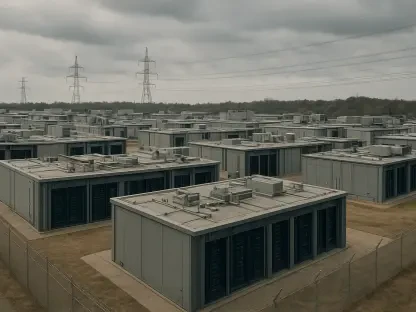
The centerpiece of this expansion strategy is the state-of-the-art French hub, which is scheduled to begin full commercial operations in June 2026. This new facility will feature two distinct availability zones, effectively bringing the total global network of the provider to an impressive 105 zones across 32 key geographical regions. By establishing a physical presence in Paris, the company directly addresses the urgent demand for low-latency computing within high-stakes industries such as retail, software development, and sports technology. This physical footprint ensures that local enterprises can access a comprehensive suite of elastic computing and database services while benefiting from the speed and reliability of a localized data center.
The proximity of these resources allows for near-instantaneous data processing, which is a critical requirement for businesses operating in highly competitive markets where every millisecond of latency can translate into lost revenue. Furthermore, the inclusion of two availability zones provides a robust level of redundancy, ensuring that business-critical services remain online even in the event of unforeseen technical challenges. This commitment to reliability is paired with a focus on energy efficiency, aligning the data center’s operations with contemporary environmental standards. The result is a cloud environment that is not only powerful and fast but also sustainable for the long-term growth of the European digital economy, providing a secure foundation for future scaling.
Prioritizing Data Sovereignty and Compliance
Operating within the borders of the European Union necessitates a profound and unwavering commitment to some of the most rigorous data privacy and cybersecurity regulations found anywhere in the world. To meet these challenges, the provider has engineered its French infrastructure to prioritize what are known as sovereign solutions, which are designed to allow businesses to maintain absolute control over their data residency. This means that sensitive information remains within the specified jurisdiction, satisfying the legal requirements of both national governments and regional bodies. By aligning its operations with these strict regulatory frameworks, the company creates a secure and transparent environment where multinational corporations can scale their digital efforts without fear of non-compliance.
This approach is particularly important for sectors like finance and healthcare, where data integrity and privacy are mandated by law to protect public interests. The focus on data sovereignty is also a strategic move to build trust with European enterprises that are often hesitant to store their most valuable digital assets on foreign-managed platforms. By providing clear documentation and technical guarantees regarding data handling and storage locations, the provider is effectively removing the barriers to entry for cautious firms. This level of accountability is achieved through a combination of hardware-level security features and a transparent governance model that allows clients to audit their data usage, ensuring that they remain the sole owners of their digital intellectual property.
Pioneering the Era of Agentic AI
Transforming Operations: The Rise of Autonomous AI Agents
As the calendar progresses through 2026, the focus of the technology sector is shifting toward the rollout of specialized suites designed to build and manage autonomous entities. These tools represent a significant evolution from the static machine learning models of previous years, moving the industry toward a paradigm where AI is no longer a passive recipient of instructions but a proactive participant in business logic. These autonomous agents are capable of handling complex, multi-step workflows with minimal human oversight, which allows organizations to automate entire departments or specific functions that were previously too nuanced for traditional software.
To facilitate this shift, the provider is launching platforms like AgentRun for comprehensive lifecycle management and STAROps for streamlining large-scale operations. These systems provide the necessary framework for developers to design, test, and deploy agents that are tailored to specific industry needs, whether in automated financial trading or complex logistical planning. By offering a standardized environment for agent development, the provider reduces the technical debt and complexity that often accompany the adoption of experimental technologies. This systematic approach allows companies of all sizes to leverage the power of autonomous AI without building the underlying infrastructure from scratch, paving the way for a more efficient and technologically integrated global marketplace.
Integrating Security and AI Governance
The deployment of autonomous agents brings with it a unique set of challenges, particularly regarding the security and integrity of the models themselves. To address these concerns, specialized environments such as the ACS Agent Sandbox have been introduced to provide a controlled space where agents can operate without risk to the broader system. This sandbox utilizes hardware-level isolation to ensure that even if an agent encounters a malicious prompt, the sensitive data of the parent organization remains entirely protected from exposure. This level of isolation is crucial for enterprises that are integrating AI into their core business processes, as it prevents the lateral movement of threats within a network.
In addition to hardware isolation, the provider has updated its governance tools to include the Agent Security Center and the AI Security Guardrails 2.0. These systems offer real-time risk interception and provide end-to-end transparency into how agents are making decisions and interacting with external data sources. This is particularly important for maintaining ethical standards and preventing the unintended biases that can sometimes emerge in autonomous systems. By providing developers with a clear view of an agent’s logic and actions, the platform allows for immediate intervention if a model begins to deviate from its intended purpose. This comprehensive approach to governance ensures that the shift toward autonomous digital operations remains both secure and manageable for enterprise users.
Strategic Partnerships and Global Integration
Demonstrating Capability: Sporting Events as Proof Points
The practical application of these advanced cloud and AI technologies has been demonstrated on a global stage, most notably during the high-pressure environment of the Paris 2024 Olympic Games. Through the implementation of the OBS Cloud 3.0 platform, the provider successfully managed the distribution of live broadcast signals via the cloud for the first time in the history of the event. This feat required immense computational power and nearly zero latency to ensure that billions of viewers around the world could experience the competition in real time without interruption. The success of this project served as a rigorous testing ground, proving that cloud infrastructures are now capable of handling the most demanding and time-sensitive workloads imaginable.
Building on this momentum, a multi-year collaboration with UEFA has leveraged the sophisticated Qwen Large Language Model to revolutionize how fans engage with professional football. This partnership focuses on using AI to manage vast amounts of media content and to provide fans with personalized experiences that were previously impossible to deliver at scale. These high-profile partnerships are more than just marketing opportunities; they are essential proof points that demonstrate the platform’s ability to operate under extreme pressure and deliver consistent results. As these technologies become more integrated into the sports and entertainment industries, they are setting new standards for how digital content is produced and consumed, proving that the cloud is the future of global media.
Facilitating Expansion: International Enterprise Growth
Beyond the world of international sports, the provider is deepening its strategic ties with enterprise leaders like SAP to assist European companies in their efforts to expand into rapidly growing markets. This collaboration is particularly focused on helping firms navigate the complexities of entering burgeoning economies in Asia and the Middle East, where local regulations and digital landscapes can be significantly different from those in Europe. By providing a unified cloud platform that bridges these regions, the company allows businesses to maintain a consistent digital strategy while adapting to local requirements. This partnership facilitates a smoother transition for companies looking to globalize their operations by managing cross-border data flows.
The transition from a commodity cloud provider to a full-stack AI and cloud partner was finalized by organizations seeking to integrate agentic systems into their core workflows. Companies focused on identifying specific areas where autonomous agents provided immediate value, such as in automated auditing or real-time logistical optimization. Leaders in the industry recognized that the successful adoption of these technologies required a commitment to both technical training and a robust governance framework. By prioritizing data sovereignty, enterprises established a foundation for sustainable digital growth. The shift toward self-governing systems provided a clear path for enterprises to enhance their operational resilience and remain competitive in an increasingly automated global economy.