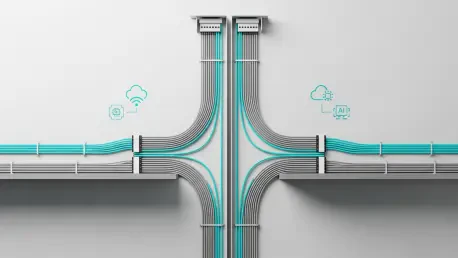

The rapid acceleration of generative artificial intelligence and high-velocity data processing has placed an unprecedented strain on the foundational systems that facilitate global communication and enterprise operations. While much of the public discourse surrounds the latest GPU advancements and the sheer scale of large language models, the silent hero—or the potential failure point—remains the enterprise network. Without a robust and agile infrastructure, even the most sophisticated digital initiatives risk stagnation, as data movement becomes the primary constraint in a world where speed is synonymous with competitive advantage. The current landscape reveals a stark contrast between high-flying software ambitions and the grounded reality of physical hardware and cabling. As organizations attempt to integrate real-time analytics and autonomous systems into their daily workflows, the fragility of legacy networks becomes increasingly apparent. This necessitates a fundamental rethink of how connectivity is deployed and managed, ensuring that the plumbing of the digital age is ready to support the next generation of technological innovation without collapsing under the weight of its own data.
Addressing the Looming Connectivity Crisis
Identifying Infrastructure Limits: The Data Center Divide
Recent industry assessments indicate that a significant portion of enterprises are rapidly approaching a critical threshold where their existing network capacity will no longer support operational requirements. Estimates suggest that nearly three-quarters of businesses are on track to encounter severe throughput limitations between 2026 and 2028 if current infrastructure trajectories remain unchanged. This looming capacity crunch is not merely a theoretical concern; many organizations have already been forced to pause or scale back ambitious artificial intelligence projects because their internal pipelines cannot handle the massive data loads required for training and inference. The disconnect highlights a growing disparity between capital investment in software and the often-overlooked physical layer of the network. When the transport mechanism fails to keep pace with the processing power of the data center, the resulting bottlenecks negate the benefits of high-speed computing, turning what should be a seamless digital flow into a series of disconnected and inefficient data silos that hinder growth.
Technical barriers are particularly pronounced in the high-speed corridors that link processing units with specialized storage hardware, where latency and bandwidth are most critical. While top-tier hyperscale data centers have successfully implemented cutting-edge 800Gbps Ethernet solutions to facilitate rapid data exchange, these advancements rarely penetrate the broader enterprise environment or reach the edge where users interact with applications. Bridging this gap is essential for maintaining parity across the entire ecosystem, as the speed of the core network must eventually align with the performance expectations of decentralized employees and various IoT devices. Without this alignment, the massive investments made in centralized AI hubs remain locked behind a wall of antiquated local area network technology. Modernizing these connections involves more than just swapping out old cables; it requires a holistic approach to network design that anticipates the exponential growth of telemetry and machine-to-machine communication, ensuring that the high-performance capabilities of the data center are actually accessible to the systems that need them most.
Enhancing Performance: Closing the Operational Gap
The challenge of scaling modern technology is frequently a physical infrastructure problem rather than a lack of institutional interest or capital funding for new applications. Organizations that have successfully deployed large-scale AI models often find that the initial training phase is only the beginning of their connectivity struggles, as the subsequent deployment phase requires consistent and low-latency data streams to end-users. This operational gap creates a scenario where the internal network becomes a bottleneck, preventing the delivery of real-time insights to the edge of the business. Consequently, the focus of IT strategy must shift toward upgrading the switching fabric and the interconnects that define the modern data center. By implementing more efficient data paths and reducing the number of hops between storage and compute, businesses can unlock the latent potential of their existing investments. This approach requires a detailed audit of current port densities and transceiver capabilities to ensure that every link in the chain can support the high-intensity workloads that define the modern digital enterprise.
Furthermore, the rise of specialized hardware for AI workloads has introduced new requirements for power delivery and cooling within the network rack, adding another layer of complexity to infrastructure modernization. Networking equipment must now be designed to operate in higher-density environments while providing the telemetry data needed for automated management systems to optimize performance. The integration of advanced monitoring tools allows IT departments to visualize traffic patterns in real-time, identifying congestion points before they impact the end-user experience. This visibility is crucial for organizations that are transitioning toward a more data-centric model, where every second of latency translates into a loss of efficiency. By prioritizing the physical health of the network and ensuring that it can scale alongside compute and storage, businesses create a resilient foundation that can support the rapid evolution of digital tools. Modernization, therefore, is not a singular event but a continuous process of aligning physical capabilities with the shifting demands of the software and services that define the contemporary competitive landscape.
Adapting to New Standards and Architectural Shifts
Enhancing Wireless Access: Redesigning Internal Data Paths
For the contemporary workforce, wireless connectivity has transitioned from a supplementary convenience to a primary strategic asset, effectively supplanting traditional wired connections for the vast majority of office-based tasks. The rollout of Wi-Fi 7 has introduced transformative speeds and lower latency, but these advancements have inadvertently exposed significant weaknesses in the supporting wired backhaul. As access points reach multi-gigabit capabilities, the standard 1Gbps copper cabling found in many existing buildings has become a restrictive bottleneck that prevents users from realizing the full potential of the latest wireless standards. To rectify this, organizations must prioritize the upgrade of internal wiring to at least 10Gbps, ensuring that the physical foundation can support the high-density traffic generated by modern collaborative tools and data-heavy applications. This shift is no longer a luxury but a practical requirement for maintaining productivity in an environment where high-speed wireless is the expected norm for every employee and device within the corporate footprint.
The fundamental movement of data has undergone a radical transformation due to the widespread adoption of cloud-native services and the persistence of distributed work models. Traditional network architectures, which historically routed all traffic through a single central hub for security and management, are now proving to be grossly inefficient and prone to high latency. Modern design philosophy dictates that the internet must be treated as the new center of the network, requiring a decentralized approach that creates direct and efficient paths to cloud resources. By implementing advanced SD-WAN solutions and edge computing nodes, businesses can bypass the congestion of centralized data centers, providing the low-latency response times necessary for real-time AI interactions and high-definition video conferencing. This architectural pivot moves the network away from a rigid, hub-and-spoke model toward a fluid and adaptable fabric that can dynamically adjust to changing traffic patterns. Such a transition is vital for ensuring that performance remains consistent regardless of where a user or application is located in the global landscape.
Rebuilding Technical Expertise: Strategic Operational Strategy
A formidable obstacle to the successful modernization of enterprise systems is the widening skills gap among IT professionals who have increasingly focused on software layers at the expense of physical networking. Many developers and even some senior technical leaders have lost sight of the fundamental principles of data transport, often assuming that the network will simply function as a commoditized utility. This lack of deep technical expertise in the physical and link layers can lead to poor architectural decisions that prioritize application features over system reliability and throughput. Reconnecting with these networking fundamentals is essential for fostering a culture where network health is recognized as a prerequisite for any digital transformation initiative. Organizations must invest in retraining programs that emphasize the intersection of software-defined networking and traditional hardware management, ensuring that their teams possess the comprehensive knowledge required to troubleshoot complex connectivity issues and advocate for the necessary infrastructure investments at the executive level.
Beyond the immediate need for hardware upgrades, businesses focused on long-term sustainability adopted more intelligent strategies for managing their increasing data traffic through automation and policy-driven governance. This shift involved the deployment of sophisticated monitoring tools that used machine learning to predict congestion and automatically reroute critical business applications during periods of peak demand. By treating the network as a strategic priority rather than a background service, forward-thinking organizations secured their digital transformation efforts and ensured that AI-driven tools remained operational and efficient. The transition toward automated management allowed IT teams to move away from reactive troubleshooting and toward proactive optimization, creating a resilient environment capable of supporting rapid scaling. Ultimately, the most successful enterprises recognized that modernizing the network was not a one-time project but a continuous evolution. They prioritized cross-functional collaboration and technical education, which empowered their staff to navigate the complexities of a hyper-connected world and provided a stable platform for future innovations.