
As a seasoned authority in cloud technology, Maryanne Baines has spent years evaluating complex tech stacks and their real-world applications across various industries. With a sharp eye for both the potential and the pitfalls of emerging software, she is uniquely positioned to deconstruct the

The rapid evolution of sovereign cloud capabilities and generative artificial intelligence has fundamentally reshaped the Australian business environment, requiring a level of infrastructure that many small organizations previously found unattainable. As local enterprises grapple with the
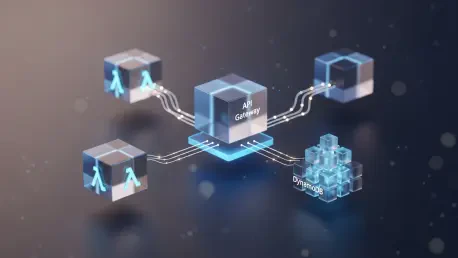
The evolution of cloud computing has reached a point where manual infrastructure management is increasingly viewed as a technical debt rather than a core competency for modern software development teams. By the middle of 2026, serverless architectures have matured into highly resilient,

Bridging the Gap Between Semiconductor Innovation and Physical Scale The global landscape of artificial intelligence development has shifted from the laboratory into the physical world where massive power consumption and cooling requirements dictate the pace of innovation for semiconductor giants.

The Australian technology landscape is currently witnessing a transformative consolidation as global cloud providers seek deeper penetration into local markets while establishing more resilient distribution networks. This strategic alliance between Ingram Micro Australia and Oracle marks a

The digital era has entered a phase where the sheer scale of distributed denial-of-service attacks has transitioned from a manageable nuisance to a genuine threat against the foundations of modern society. As major security providers react to this shifting landscape, the focus has shifted toward