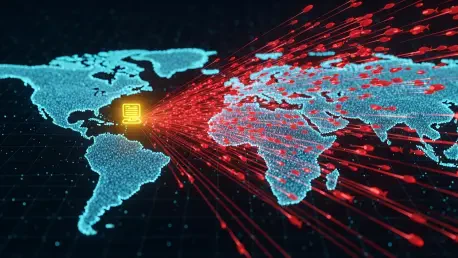

The traditional boundaries between state-sponsored cyber warfare and grassroots digital activism have blurred significantly as sophisticated threat actors leverage the power of mass mobilization to destabilize global infrastructures. Since the emergence of the pro-Russian hacktivist collective known as NoName057(16), the digital landscape has faced an escalating series of disruptive operations that prioritize public visibility over clandestine data extraction. Unlike many contemporary groups that hunt for sensitive intellectual property or high-value financial credentials, this collective specializes in Distributed Denial-of-Service attacks designed to render critical websites and public services entirely inaccessible. By focusing on public-facing assets, they generate immediate media headlines and exert considerable pressure on international governments that oppose specific geopolitical interests. This strategy of “disruptive hacktivism” creates a persistent sense of vulnerability among the general population, making it one of the most visible challenges for cybersecurity professionals navigating the current digital environment.
The Evolution of Decentralized Cyber Threats
The Shift Toward Disruptive Hacktivism
The primary objective of NoName057(16) is not to operate in the shadows but to ensure their actions are felt by as many people as possible through the systematic dismantling of online services. This approach represents a significant departure from traditional cyber espionage, where the goal is often to remain undetected for as long as possible while siphoning data. Instead, this group focuses on causing tangible public frustration by knocking out government portals, public transportation systems, and major news outlets. The psychological impact of a non-functional government website or a halted airport check-in system often outweighs the technical complexity of the attack itself. These incidents serve as a form of political retaliation, aimed at signaling that no nation is beyond the reach of their digital influence. The collective effectively uses the resulting downtime to create a narrative of technical dominance, often mocking their targets on social media platforms to further damage the reputation of the affected institutions.
Resilience Against Law Enforcement Interventions
International law enforcement agencies have attempted to dismantle the infrastructure of NoName057(16) on multiple occasions, yet the group has shown an uncanny ability to rebuild and rebrand with remarkable speed. Even after significant disruptions, such as the comprehensive multinational crackdown known as Operation Eastwood in early 2025, the collective managed to reconstitute its primary command structures within weeks. Their inherent strength lies in a decentralized organizational model that does not depend on a static central hub or a small group of elite operators. By distributing their operations across a global network of volunteers and temporary servers, they ensure that the loss of any single node does not result in the collapse of the entire organization. This resilience forces security teams to adopt a strategy of continuous monitoring rather than relying on the hope of a single, permanent shutdown. The group’s ability to maintain continuity despite intense international pressure highlights the limitations of traditional legal and technical countermeasures in the face of decentralized hacktivism.
The Mechanics of Modern Mass-Participation Attacks
Operationalizing the DDoSia Infrastructure
The hallmark of this collective’s operational success is the DDoSia platform, a custom-built software suite that simplifies the process of launching coordinated cyberattacks for the average user. Distributed primarily through dedicated channels on Telegram, this tool lowers the barrier to entry for digital combat to an unprecedented level. Once a volunteer joins the ranks, they download a package that automates the entire attack process, requiring little more than a simple installation and an active internet connection. The software automatically receives target lists and technical instructions from the group’s leadership, allowing for the rapid scaling of attacks across thousands of individual nodes. This crowdsourced model transforms personal computers and home networks into a distributed weapon, making the origin of the attack traffic nearly impossible to trace back to a single orchestrator. By democratizing the ability to participate in high-level disruption, the group has successfully built a digital “army” that can be mobilized at a moment’s notice to swarm a specific target.
Financial Incentivization and Hybrid Botnet Power
To ensure their volunteer force remains active and committed, the leaders of NoName057(16) have implemented a sophisticated reward system that utilizes cryptocurrency to pay top performers. This gamification of cybercrime incentivizes participants to keep their machines running the DDoSia software for extended periods, as those who contribute the most traffic are frequently rewarded with digital assets. This financial motivation creates a loyal and persistent workforce that supplements the group’s more traditional technical assets. Beyond the human volunteers, the collective also integrates the Bobik botnet, which consists of thousands of devices infected with malware, to amplify the sheer volume of their traffic floods. This hybrid approach—combining the moral or political conviction of volunteers with the raw power of a compromised botnet—results in a volume of requests that can overwhelm even the most robust enterprise-level defenses. The synergy between these two components allows the group to maintain high-intensity campaigns over several days, making it difficult for targets to recover quickly.
Geopolitical Impacts and Strategic Targeting
Timing and Coordination of Transnational Strikes
The selection of targets by NoName057(16) is rarely random and is almost always synchronized with major geopolitical developments or symbolic international events. They have demonstrated a keen ability to strike during high-profile summits, military aid negotiations, or national elections to ensure their actions receive maximum political leverage. Their reach is truly global, with documented attacks spanning across North America, Europe, and Asia, often focusing on nations that have taken a firm stance against Russian policy. By coordinating their strikes with other threat actors, such as pro-Iranian hacking groups, they are able to create a multi-front digital conflict that stretches the resources of international security agencies. For instance, during recent European parliamentary elections, the collective focused its efforts on election-related infrastructure to sow doubt about the integrity of the digital voting process. This level of coordination suggests a strategic awareness that transcends simple nuisance attacks, pointing instead toward a sophisticated understanding of how digital disruption can influence public perception on the world stage.
Identifying High-Visibility Vulnerabilities in Public Infrastructure
A core component of the group’s strategy involves identifying sectors where a digital outage will cause the most significant disruption to daily life, such as the transportation and financial sectors. By targeting the websites of major airlines, railway systems, and international airports, the group can cause immediate logistical chaos that affects thousands of travelers. Similarly, hitting the online banking portals of large financial institutions creates immediate panic among consumers, even if the underlying financial data remains secure. These sectors are chosen specifically because they represent the intersection of public trust and essential service delivery. When a local government portal in a supportive nation is taken offline, it prevents citizens from accessing vital records or paying for essential services, which in turn breeds domestic frustration. The collective frequently pivots their focus to nations providing significant support to Ukraine, using these localized attacks to punish the civilian population for the policy decisions of their leaders.
Calculating Economic Fallout and Systemic Risks
The Impact of Resource Exhaustion and Psychological Operations
The technical methodology utilized by NoName057(16) primarily revolves around the HTTP flood, a tactic that overwhelms a target server with a massive influx of web requests. This causes the server to exhaust its available memory and processing power, leading to a total system failure for legitimate users. While the primary goal is not the theft of data, the financial consequences of such downtime can be devastating for an organization. Beyond the immediate loss of revenue, companies often face long-term reputational damage as customers lose confidence in the reliability of their digital services. To maximize this damage, the group maintains a robust presence on social media, where they post screenshots of crashed websites as “proof” of their success. This psychological warfare is designed to demoralize the IT staff of the target organizations and project an image of invincibility. By framing every outage as a definitive victory, the collective manages to keep its name in the news cycle, ensuring that the fear of their next strike remains a constant concern for digital infrastructure managers.
Supply Chain Fragility and the Blast Radius Effect
One of the most significant risks posed by these coordinated attacks is the potential for collateral damage across the broader digital supply chain. An organization does not necessarily have to be the primary target of NoName057(16) to suffer the consequences of their actions. Because many businesses rely on the same cloud providers, content delivery networks, and telecommunications companies, a massive attack on a single high-profile target can create a “blast radius” that impacts secondary businesses. If a major infrastructure provider is overwhelmed by a flood of traffic intended for a government site, all of its clients may experience latency or complete outages. This interconnectedness means that a political dispute between nations can quickly evolve into a systemic risk for the global economy. Companies are now finding it necessary to evaluate the political associations of their vendors and partners, as being adjacent to a controversial entity can make them a target by association. This shift in the risk landscape requires a more holistic approach to security that looks beyond the perimeter of a single organization.
Developing a Proactive Defense Posture
Technical Mitigation Through Advanced Layered Security
Traditional cybersecurity measures, such as patching software vulnerabilities or implementing complex password policies, are often insufficient when facing a massive, crowdsourced DDoS attack. These strikes do not exploit a specific bug in the code but rather the fundamental way the internet handles incoming traffic requests. To build a truly resilient defense, organizations had to adopt a layered security architecture that includes robust Content Delivery Networks and specialized Web Application Firewalls. These technologies were designed to act as a buffer, absorbing the initial impact of a traffic spike and filtering out malicious requests before they could reach the core servers. By implementing advanced rate-limiting and behavioral analysis, security teams were able to distinguish between a legitimate surge in user interest and a coordinated attack from the DDoSia platform. This shift toward automated, cloud-based mitigation allowed businesses to remain operational even while under intense digital bombardment, effectively neutralizing the group’s primary weapon of service disruption.
Intelligence-Driven Resilience and Future Security Frameworks
Navigating the volatile landscape of modern hacktivism required a move away from reactive security models toward a framework rooted in proactive threat intelligence. Since NoName057(16) often publicized its intentions and target lists on social media and Telegram, monitoring these channels became a critical component of a successful defense strategy. Organizations that integrated real-time threat feeds into their security operations centers were able to anticipate attacks before they began, allowing them to scale their defenses and alert their service providers in advance. This proactive approach also involved deeper collaboration between the public and private sectors to share information on emerging attack patterns and new versions of tools like DDoSia. As the digital environment became increasingly politicized, the most successful entities were those that recognized cybersecurity as a strategic necessity rather than just a technical hurdle. By prioritizing resilience and information sharing, the global community began to mitigate the effectiveness of crowdsourced disruption, ensuring that digital services remained accessible despite the ongoing efforts of decentralized threat groups.